
Public art & sculpture · London
Piano
In or near City of London.
Piano — a public art in england-london, United Kingdom.

Malc McDonald — CC BY-SA 2.0 via Wikimedia Commons licence

Plan your visit
- Typical visit
- 1 h–2 h
- Nearest railway station
- Star Lane · 0.2 km
- Free entry
- Dog-friendly
Getting there & planning your visit
To visit the Piano public art installation in Newham, London, you can take the train to Star Lane station, which is 0.2 km away. The postcode for the location is E16 4SR, and entry is free.
About
Piano is a public art located in england-london, United Kingdom. Sourced from OpenStreetMap (ODbL licence); see local listings for visitor information, opening hours and admission details.
Photo gallery
From the Wikipedia article
A piano is a keyboard instrument that produces sound when its keys are pressed, activating an action mechanism where hammers strike strings. Modern pianos have a row of 88 black and white keys—with the exception of the Bosendörfer and Stuart & Sons pianos—and tuned to a chromatic scale in equal temperament. A musician who specializes in piano is called a pianist. There are two main types of piano: the grand piano and the upright piano. The grand piano offers better sound and more precise key control, making it the preferred choice when space and budget allow. The grand piano is also considered a necessity in venues hosting skilled pianists. The upright piano is more commonly used because of its smaller size and lower cost. When a key is depressed, the strings inside are struck by felt-coated wooden hammers. The vibrations are transmitted through a bridge to a soundboard that amplifies the sound by coupling the acoustic energy to the air. When the key is released, a damper stops the string's vibration, ending the sound. Most notes have three strings, except for the bass, which graduates from one to two. Notes can be sustained when the keys are released by the use of pedals at the base of the instrument, which lift the dampers off the strings. The sustain pedal allows pianists to connect and overlay sound, and achieve expressive and colorful sonority. In the 19th century, influenced by Romantic music trends, the fortepiano underwent changes such as the use of a cast iron frame, which allowed much greater string tensions. Aliquot stringing gave grand pianos a more powerful sound, a longer sustain, and a richer tone. Later in the century, as the piano became more common it allowed families to listen to a newly published musical piece by having a family member play a simplified version. The piano is widely employed in classical, jazz, traditional and popular music for solo and ensemble performances, accompaniment, and for composing, songwriting and rehearsals. Despite its weight and cost, the piano's versatility, the extensive training of musicians, and its availability in venues, schools, and rehearsal spaces have made it a familiar instrument in the Western world.
Excerpt from Wikipedia under CC BY-SA 4.0. See the source article linked in Sources below.
Background
History
The piano was based on earlier technological innovations in struck-string instruments and keyboard instruments. The earliest known keyboard instrument was the Ancient Greek hydraulis, a type of pipe organ invented in the third century BC. Pipe organs continued to be used in Europe through the middle ages, and as such the development of pipe organs enabled instrument builders to learn about creating keyboard mechanisms for sounding pitches. The first string instruments with struck strings were the hammered dulcimers, which originated in the Middle East and were introduced in Europe in the Middle ages. During the Middle Ages, there were several attempts at creating stringed keyboard…
Architecture
Pianos can have over 12,000 individual parts, supporting six functional features: keyboard, action (including hammers, hammer shanks, and whippens), dampers and their underlevers, bridges, soundboard, and strings. Many parts of a piano are made of materials selected for strength and longevity. This is especially true of the outer rim, which is most commonly made of hardwood, typically hard maple or beech, and its massiveness serves as an essentially immobile object from which the flexible soundboard can best vibrate. According to Harold A. Conklin, the purpose of a sturdy rim is so that, "... the vibrational energy will stay as much as possible in the soundboard instead of dissipating…
Sourced from Wikipedia under CC BY-SA 4.0.
- Coordinates
- 51.5212, 0.0012
- District
- Newham
- Parish
- Newham, unparished area
- Postcode
- E16 4SR
- Parliamentary constituency
- West Ham and Beckton
- Nearest railway station
- Star Lane — 0.2 km
Sources
- osm: node/12496349233 (ODbL)
- wikipedia: Piano (CC BY-SA 4.0)
Other places nearby

DLR Star Lane
Public art & sculpture · 0.2 km

Talk to Me
Public art & sculpture · 0.4 km

Cody Dock
Natural landmarks · 0.4 km

Cody Dock Rolling Bridge
Historic bridges · 0.4 km
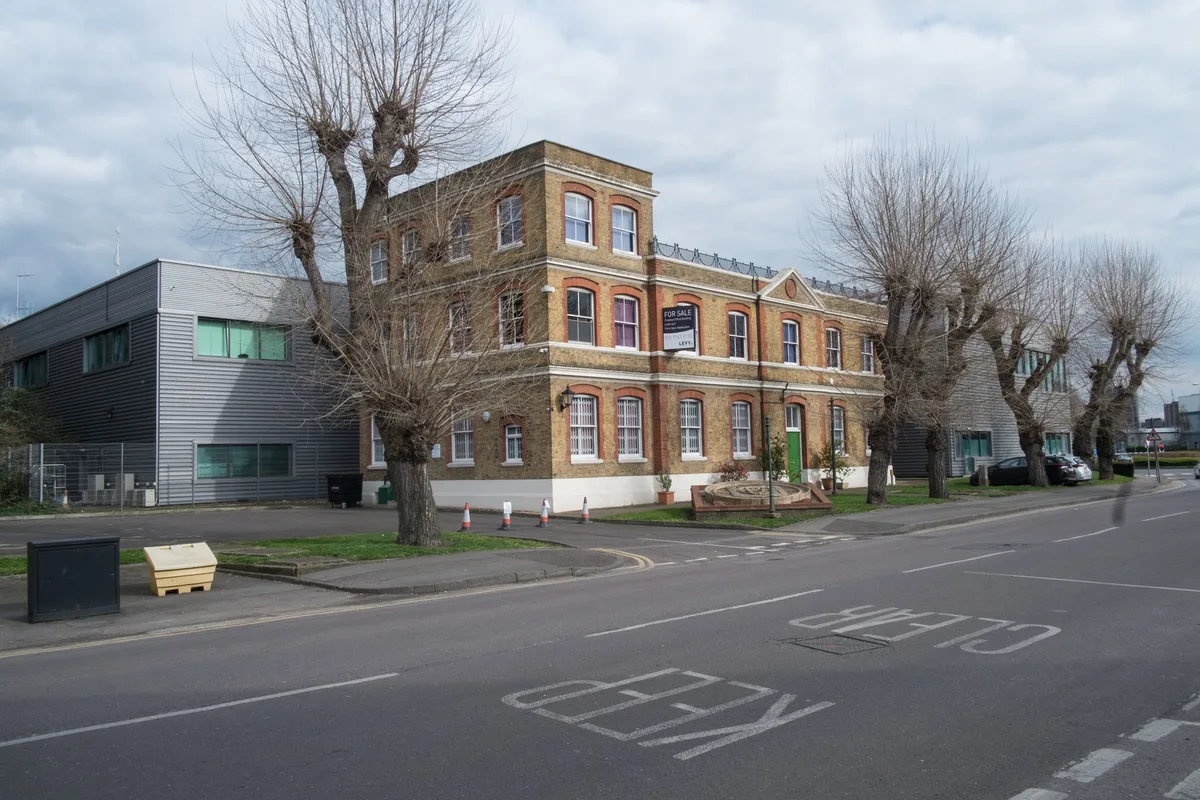
London Gas Museum
Museums · 0.4 km

War Memorial Lamp
Memorials & monuments · 0.5 km

Gas Light and Coke Company War Memorial Lamp
Memorials & monuments · 0.5 km
Gas Light and Coke Company War Memorial Plaque
Memorials & monuments · 0.5 km
Gas Light and Coke Company War Memorial Rotunda
Memorials & monuments · 0.5 km

War Memorial Rotunda
Memorials & monuments · 0.5 km

Sir Corbett Woodall
Heritage railway stations · 0.5 km

On WindTides
Public art & sculpture · 0.6 km
Nearby
📷 5Public art & sculpture · London
DLR Star Lane
DLR Star Lane — a public art in england-london, United Kingdom.
📷 5Public art & sculpture · London
Talk to Me
Talk to Me — a public art in england-london, United Kingdom.
📷 5Natural landmarks · London
Cody Dock
Cody Dock — a other in england-london, United Kingdom.
📷 5Historic bridges · London
Cody Dock Rolling Bridge
Cody Dock Rolling Bridge is a historic bridge in the United Kingdom.
📷 5📷 5Memorials & monuments · London
War Memorial Lamp
War Memorial Lamp is a memorial in the United Kingdom.
Where to eat & stay near Piano
Places to stay
 📷 5
📷 5Hotels · London
The Westbridge Hotel
The Westbridge Hotel — a hotel in england london.
 📷 5
📷 5 📷 7
📷 7Hotels · London
InterContinental London - The O2
InterContinental London - The O2 — a hotel in england london. Brand: InterContinental.
 📷 5
📷 5 📷 5
📷 5Hotels · London
Marriott Executive Apartments
Marriott Executive Apartments — a hotel in england london. Brand: Marriott Executive Apartments.
 📷 7
📷 7Places to eat & drink
 📷 7
📷 7Historic pubs · London
The Widow's Son, London
The Widow's Son, London in England London, United Kingdom.
 📷 7
📷 7Historic pubs · London
Greenwich Pensioner Public House
Greenwich Pensioner Public House in England London, United Kingdom.
 📷 7
📷 7Historic pubs · London
King Edward VII, Stratford
King Edward VII, Stratford in England London, United Kingdom.
 📷 5
📷 5 📷 5
📷 5Historic pubs · London
Charlie Brown's, Limehouse
Charlie Brown's, Limehouse in England London, United Kingdom.
.jpg?width=1200) 📷 5
📷 5Historic pubs · London
The Lord Tredegar
The Lord Tredegar — Historic pub — listed building or notable heritage status.
More places in this region
 📷 5
📷 5 📷 5
📷 5Public art & sculpture · London
A Conversation with Oscar Wilde
A Conversation with Oscar Wilde — Public artwork (sculpture).
 📷 5
📷 5Public art & sculpture · London
A Sculpture for Mary Wollstonecraft
A Sculpture for Mary Wollstonecraft — Public artwork (sculpture) by Maggi Hambling.
 📷 5
📷 5Public art & sculpture · London
A Slice of Reality
A Slice of Reality — Public artwork (installation) by Richard Wilson.
Frequently asked questions
- Where is Piano?
- Piano is in London, United Kingdom (postcode E16 4SR), in the parish of Newham, unparished area.
- What is Piano?
- Piano — a public art in england-london, United Kingdom.
- How do I get to Piano?
- The nearest railway station is Star Lane, about 0.2 km away. The nearest town is City of London. Drivers can use postcode E16 4SR.
- Is Piano free to visit?
- Yes, Piano is free to enter.
- How do I get to Piano?
- The nearest railway station is Star Lane, about 0.2 km away. Drivers can navigate to postcode E16 4SR.