
Memorials & monuments · East of England
Oliver Goldsmith
In or near Chelmsford.
Oliver Goldsmith — a memorial in england-london, United Kingdom.

Robert Edwards — CC BY-SA 2.0 via Wikimedia Commons licence

Plan your visit
- Typical visit
- 15 min–45 min
- Nearest railway station
- Chelmsford · 1.6 km
- Free entry
- Family-friendly
- Dog-friendly
Getting there & planning your visit
The Oliver Goldsmith memorial is located in Chelmsford, Essex, with the postcode CM1 7HZ. The nearest railway station is Chelmsford, which is 1.6 km away. Entry to the memorial is free.
About
Oliver Goldsmith is a memorial located in england-london, United Kingdom. Sourced from OpenStreetMap (ODbL licence); see local listings for visitor information, opening hours and admission details.
Photo gallery
From the Wikipedia article
Oliver Goldsmith (10 November 1728 – 4 April 1774) was an Anglo-Irish poet, novelist, playwright, and hack writer. He produced literary works in a variety of genres and is regarded as one of the most versatile writers of the Georgian era. His works are known for their realistic depictions of British society, and his comedy plays for the English stage are considered second in importance only to those of playwright William Shakespeare. Credited with introducing sentimentalism in English literature in 18th-century Great Britain, several of Goldsmith's publications are popular classics of the period, including his only novel, The Vicar of Wakefield (1766), and the comedy play She Stoops to Conquer (1773). He wrote the play The Good-Natur'd Man (1768) and is additionally thought by commentators such as Washington Irving to have written the children's novel The History of Little Goody Two-Shoes (1765), one of the earliest classical works of children's literature. Goldsmith also produced a number of poems during his career, such as The Deserted Village (1770), and contributed to the flourishing of idyllic poetry during the Georgian era. After spending his early years in Dublin, he settled in London in 1756, where he met many of the writers who shaped his later career, and the majority of his works were written after this period. His first works were published in his The Citizen of the World series in 1760, often under the pseudonym James Willington. Beginning in the 1760s, he maintained a close friendship with Samuel Johnson, another prolific English writer who played a significant role in promoting his poems. His personal mentorship and guidance resulted in Goldsmith expanding his literary writings to include political works. This long-term collaboration between the two authors has been described as "one of the most fruitful intellectual partnerships in 18th-century English letters." In 1764, he became one of the earliest members of Johnson's literary intellectual circle, popularly known as The Club. Although Goldsmith wrote extensively to supplement his income, he was constantly in financial debt and regularly suffered from ill health. He died in 1774 in London at the age of 45 and was buried in Temple Church. During the 19th century, Goldsmith became regarded as a seminal figure of sentimental literature, having influenced later English authors Charles Dickens, Jane Austen, George Eliot, and Mary Shelley, all of whom mentioned his characters in their own novels. He continues to be held in high regard in his native Ireland and Great Britain, with many statues, libraries, schools, and streets named after him. Since his death, his magnum opus, The Vicar of Wakefield, has retained its reputation as one of the best-known novels of 18th-century English literature, and his play She Stoops to Conquer remains a popular study in theater classes.
Excerpt from Wikipedia under CC BY-SA 4.0. See the source article linked in Sources below.
Background
Visiting
His life was dramatised in the 1940 Australian radio play A Citizen of the World. Two characters in the 1951 comedy The Lavender Hill Mob quote the same line from Goldsmith's poem The Traveller – a subtle joke, because the film's plot involves the recasting of stolen gold. During the opening credits of the Sky One adaptation of Sir Terry Pratchett's Christmas-like story "The Hogfather", a portrait of Goldsmith is shown as part of a hall of memorials to those "inhumed" by the "Ankh-Morpork Assassins' Guild". In the 1925 novel The Painted Veil by W. Somerset Maugham, the last words of the poem An Elegy on the Death of a Mad Dog, "The dog it was that died", are the dying words of…
Sourced from Wikipedia under CC BY-SA 4.0.
- Coordinates
- 51.7437, 0.4891
- County
- Essex
- District
- Chelmsford
- Parish
- Chelmsford, unparished area
- Postcode
- CM1 7HZ
- Parliamentary constituency
- Chelmsford
- Nearest railway station
- Chelmsford — 1.6 km
- Official site
- www.grayandsons.co.uk
Sources
- osm: node/9458437877 (ODbL)
- wikipedia: Oliver Goldsmith (CC BY-SA 4.0)
Other places nearby
.jpg?width=1200)
The Tulip
Historic pubs · 0.4 km

Essex Police Museum
Museums · 0.7 km

Chelmer Valley Riverside LNR
Forests & woodlands · 0.8 km

Old Court Theatre
Theatres · 0.8 km

Harmony
Public art & sculpture · 1.0 km

The Ali Reza Islamic Centre
Historic churches · 1.1 km
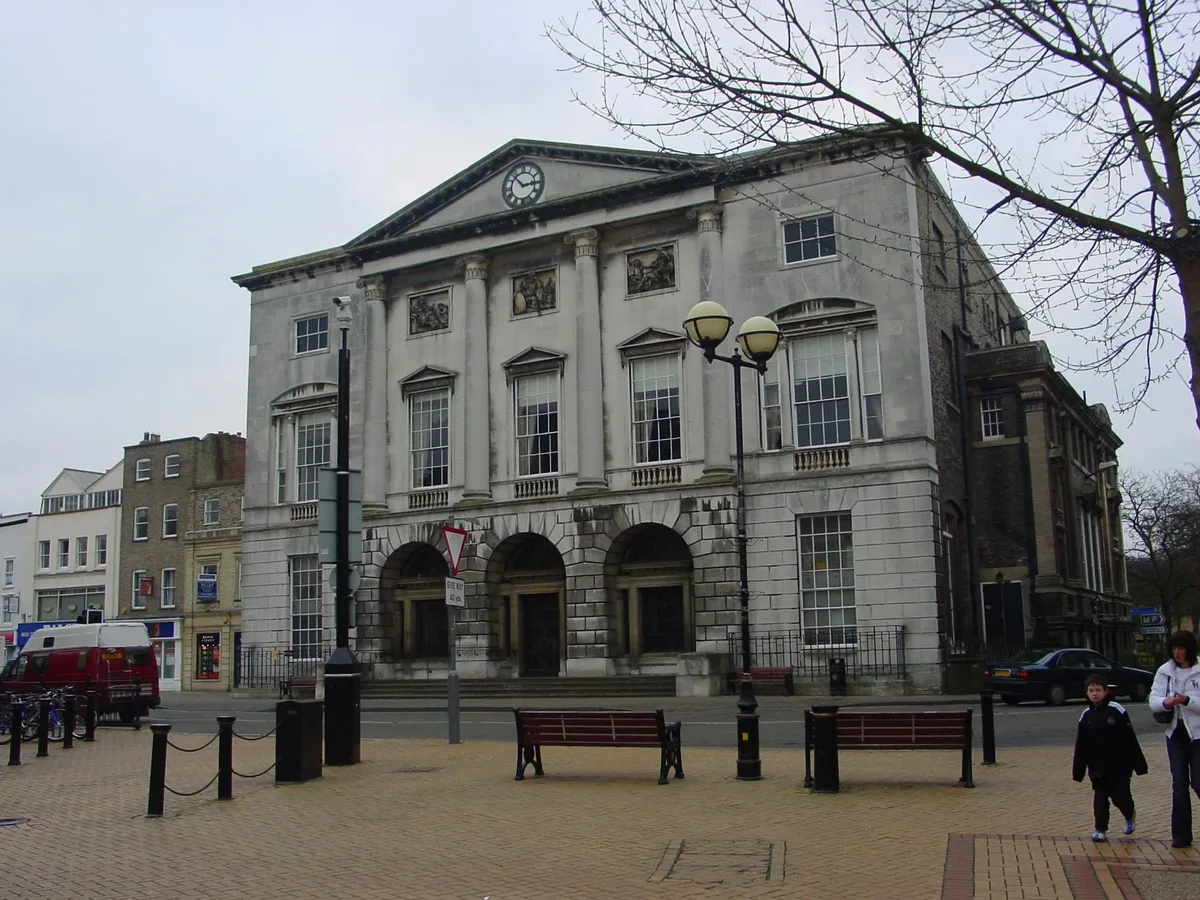
Chelmsford
Towns & cities · 1.1 km

Joseph Strutt
Memorials & monuments · 1.1 km
The Hoffmann Manafacturing Company
Memorials & monuments · 1.1 km

Springfield Hall Outbuildings
Historic houses · 1.1 km
City of Chelmsford
Museums · 1.2 km
Marconi New Street Factory
Natural landmarks · 1.2 km
Nearby
📷 5Historic pubs · East of England
The Tulip
The Tulip — Historic pub — listed building or notable heritage status.
📷 5Museums · East of England
Essex Police Museum
Essex Police Museum — a museum in england-london, United Kingdom.
📷 5Forests & woodlands · East of England
Chelmer Valley Riverside LNR
Chelmer Valley Riverside LNR is a forest or woodland in the United Kingdom.
📷 5Theatres · East of England
Old Court Theatre
Old Court Theatre is a theatre in the United Kingdom.
📷 5Public art & sculpture · East of England
Harmony
Harmony — a public art in england-london, United Kingdom.
📷 5Historic churches · East of England
The Ali Reza Islamic Centre
The Ali Reza Islamic Centre — a church in england-london, United Kingdom.
Where to eat & stay near Oliver Goldsmith
Places to stay
 📷 5
📷 5 📷 5
📷 5Caravan parks · East of England
The Courts Campsite
The Courts Campsite — a caravan park in england east.
 📷 5
📷 5Campsites · East of England
Skreens Park Activity Centre
Skreens Park Activity Centre — a campsite in england london.
📷 5📷 5📷 5Places to eat & drink
📷 5Historic pubs · East of England
The Tulip
The Tulip — Historic pub — listed building or notable heritage status.
 📷 5
📷 5Historic pubs · East of England
The Nags Head
The Nags Head — Historic pub — listed building or notable heritage status.
 📷 5
📷 5Historic pubs · East of England
The Bay Horse
The Bay Horse — Historic pub — listed building or notable heritage status.
 📷 5
📷 5Historic pubs · East of England
The Star & Garter
The Star & Garter — Historic pub — listed building or notable heritage status.
📷 5Historic pubs · East of England
The Anchor
The Anchor — Historic pub — listed building or notable heritage status.
 📷 5
📷 5Historic pubs · East of England
The Angel
The Angel — Historic pub — listed building or notable heritage status.
More memorials in this region
 📷 5
📷 5Memorials & monuments · East of England
386th B.G.(M), 9th Air Force USAAF Memorial
386th B.G.(M), 9th Air Force USAAF Memorial is a memorial in the United Kingdom.
 📷 5
📷 5Memorials & monuments · East of England
Ailesbury Mausoleum
Ailesbury Mausoleum is a memorial in the United Kingdom.
 📷 5
📷 5Memorials & monuments · East of England
Archie F. Daniels Memorial
Archie F. Daniels Memorial is a memorial in the United Kingdom.
 📷 5
📷 5Memorials & monuments · East of England
Barnwell War Memorial
Barnwell War Memorial is a memorial in the United Kingdom.
Frequently asked questions
- Where is Oliver Goldsmith?
- Oliver Goldsmith is in Essex, East of England, United Kingdom (postcode CM1 7HZ), in the parish of Chelmsford, unparished area.
- What is Oliver Goldsmith?
- Oliver Goldsmith — a memorial in england-london, United Kingdom.
- How do I get to Oliver Goldsmith?
- The nearest railway station is Chelmsford, about 1.6 km away. The nearest town is Chelmsford. Drivers can use postcode CM1 7HZ.
- Is Oliver Goldsmith free to visit?
- Yes, Oliver Goldsmith is free to enter.
- How do I get to Oliver Goldsmith?
- The nearest railway station is Chelmsford, about 1.6 km away. Drivers can navigate to postcode CM1 7HZ.