
Cemeteries · East of England
Nonconformist Cemetery
Also known as: Anghydffurfiaeth, Neamhaontach (Protastúnachas)
In or near Willingham.
Nonconformist Cemetery is a cemetery in the United Kingdom.

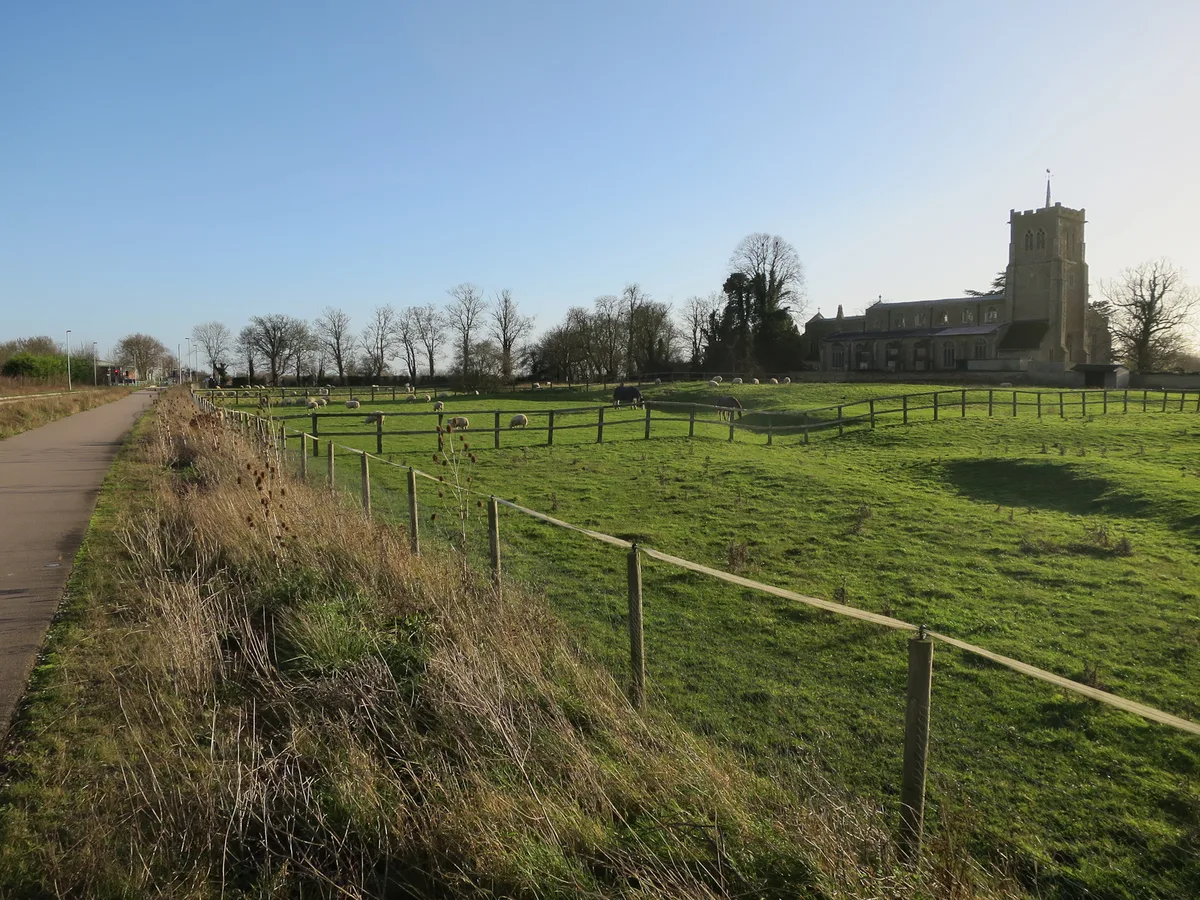
John Sutton — CC BY-SA 2.0 via Wikimedia Commons licence

Plan your visit
- Typical visit
- 30 min–1 h
- Free entry
- Dog-friendly
About
Nonconformist Cemetery is a named cemetery in the United Kingdom. Coordinates: 52.3023°, -0.0093°. This entry is part of The Great Britain Guide, a free, ad-free, open-data tourist directory.
Photo gallery
From the Wikipedia article
Nonconformists are Protestant Christians who do not "conform" to the governance and usages of the established church in England, and in Wales until 1914, the Church of England. Use of the term Nonconformist in England and Wales was precipitated by the Restoration of the Stuart monarchy in 1660, when the Act of Uniformity 1662 renewed opposition to reforms within the established church. By the late 19th century the term specifically included other Reformed Christians (English Presbyterians and Congregationalists), plus the Baptists, Brethren, Methodists, and Quakers. English Dissenters, such as the Puritans, who violated the Act of Uniformity 1558 – typically by practising radical, sometimes separatist, dissent – were retrospectively labelled as Nonconformists. The concept of Nonconformists does not encompass Jews, Catholics, atheists, or other non-Protestant groups, though those groups were often subject to legal disabilities apart from the regulation of Nonconformists. In Ireland, the comparable term until the disestablishment of the Church of Ireland in 1869 was Dissenter (the term earlier used in England), typically a reference to Irish Presbyterians who refused, or dissented from, the approved Anglican communion. By law and social custom, Nonconformists in England and Wales, and Dissenters in Ireland, were restricted from many spheres of public life – not least, from access to public office, civil service careers, or degrees at university – and were referred to as suffering from civil disabilities. In England and Wales in the late 19th century the new terms "free church" and "Free churchman" (or "Free church person") started to replace Nonconformist or Dissenter. One influential Nonconformist minister was Matthew Henry, who beginning in 1710 published his multi-volume biblical commentary that is still used and available in the 21st century. Isaac Watts is an equally recognised Nonconformist minister whose hymns are still sung by Christians worldwide. The term…
Excerpt from Wikipedia under CC BY-SA 4.0. See the source article linked in Sources below.
Background
History
in Bedford. Dissenter John Bunyan purchased a barn in 1672 for a meeting place. A meeting house replaced it in 1707 and this chapel was built in 1850.|left]] The Act of Uniformity 1662 required churchmen to use all rites and ceremonies as prescribed in the Book of Common Prayer. It also required episcopal ordination of all ministers of the Church of England – a pronouncement most odious to the Puritans, the faction of the church which had come to dominance during the English Civil War and the Interregnum. Consequently, nearly 2,000 clergy were "ejected" from the established church for refusing to comply with the provisions of the act, an event referred to as the Great Ejection. The strict…
Visiting
Today, Protestant churches independent of the Anglican Church of England or the Presbyterian Church of Scotland are often called "free churches", meaning they are free from state control. This term is used interchangeably with "Nonconformist". The steady pace of secularisation picked up faster and faster during the 20th century, until only pockets of nonconformist religiosity remained in England.
Sourced from Wikipedia under CC BY-SA 4.0.
- Coordinates
- 52.3023, -0.0093
- County
- Cambridgeshire
- District
- South Cambridgeshire
- Parish
- Swavesey
- Postcode
- CB24 4QP
- Parliamentary constituency
- St Neots and Mid Cambridgeshire
Sources
- osm: w13873518 (ODbL)
- wikipedia: Nonconformist (Protestantism) (CC BY-SA 4.0)
Featured in this guide
Other places nearby

Swavesey Castle Hill
Castles · 0.1 km
Castle Hill earthworks
Castles · 0.2 km

Swavesey
Public art & sculpture · 0.3 km

Hale Windmill
Windmills · 0.5 km
Swavesey Priory
Hill forts · 0.6 km

Mare Fen
Forests & woodlands · 1.2 km
Mare Fen
Parks · 1.2 km

Fen Drayton Lakes Nature Reserve
Forests & woodlands · 1.4 km

War Memorial
Memorials & monuments · 1.9 km

Fen Drayton War Memorial
Memorials & monuments · 1.9 km
Fen Drayton Lakes
Wildlife reserves · 2.0 km

Bird lookout
Viewpoints · 2.0 km
Nearby
📷 5📷 5Castles · East of England
Castle Hill earthworks
Castle Hill earthworks — scheduled monument-listed castle in england-london, United Kingdom.
📷 5Public art & sculpture · East of England
Swavesey
Swavesey — a public art in england-london, United Kingdom.
📷 5📷 5Hill forts · East of England
Swavesey Priory
Swavesey Priory — priory in Swavesey, South Cambridgeshire, England, UK.
📷 5Forests & woodlands · East of England
Mare Fen
Mare Fen is a forest or woodland in the United Kingdom.
Where to eat & stay near Nonconformist Cemetery
Places to stay
 📷 5
📷 5Hotels · East of England
The Old Ferry Boat
The Old Ferry Boat — a hotel in england london.
 📷 5
📷 5Campsites · East of England
Cuckoo Fen Campsite
Cuckoo Fen Campsite — a campsite in england london.
 📷 5
📷 5Caravan parks · East of England
Longview
Longview — a caravan park in england london.
 📷 5
📷 5Caravan parks · East of England
Crystal Lakes Leisure
Crystal Lakes Leisure — a caravan park in england london.
 📷 5
📷 5Hotels · East of England
Dolphin Hotel
Dolphin Hotel — a hotel in england london.
 📷 5
📷 5Hotels · East of England
Slepe Hall Hotel
Slepe Hall Hotel — a hotel in england london.
Places to eat & drink
 📷 5
📷 5 📷 5
📷 5Historic pubs · East of England
The Queenshead
The Queenshead in England East, United Kingdom.
 📷 5
📷 5Historic pubs · East of England
Golden Lion
Golden Lion in England East, United Kingdom.
 📷 5
📷 5Historic pubs · East of England
Nelsons Head
Nelsons Head in England East, United Kingdom.
 📷 5
📷 5Historic pubs · East of England
Black Horse Public House
Black Horse Public House in England East, United Kingdom.
 📷 5
📷 5Historic pubs · East of England
Three Jolly Butchers Public House
Three Jolly Butchers Public House in England East, United Kingdom.
More cemeteries in this region
 📷 5
📷 5Cemeteries · East of England
Arbory Trust Woodland Cemetery
Arbory Trust Woodland Cemetery is a cemetery in the United Kingdom.
 📷 5
📷 5Cemeteries · East of England
Ascension Parish Burial Ground
Ascension Parish Burial Ground is a cemetery in the United Kingdom.
 📷 5
📷 5Cemeteries · East of England
Baldock Cemetery
Baldock Cemetery is a cemetery in the United Kingdom.
 📷 5
📷 5Cemeteries · East of England
Bassingbourn Cemetery
Bassingbourn Cemetery is a cemetery in the United Kingdom.
Frequently asked questions
- Where is Nonconformist Cemetery?
- Nonconformist Cemetery is in Cambridgeshire, East of England, United Kingdom (postcode CB24 4QP), in the parish of Swavesey.
- What is Nonconformist Cemetery?
- Nonconformist Cemetery is a cemetery in the United Kingdom.
- How do I get to Nonconformist Cemetery?
- The nearest town is Willingham. Drivers can use postcode CB24 4QP.
- Is Nonconformist Cemetery free to visit?
- Yes, Nonconformist Cemetery is free to enter.
- How do I get to Nonconformist Cemetery?
- Drivers can navigate to postcode CB24 4QP. It sits within the St Neots and Mid Cambridgeshire parliamentary constituency.