
Public art & sculpture · North West England
Noah's Ark
In or near Upton-by-Chester.
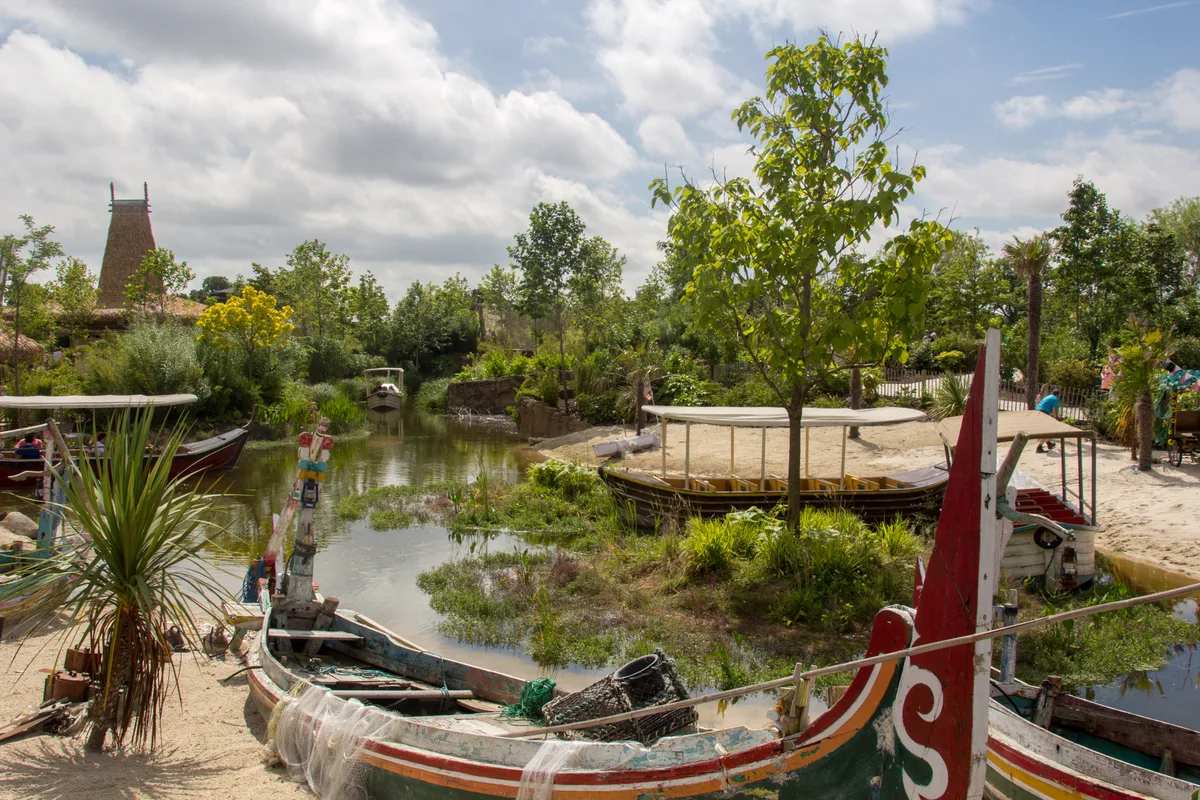
Noah's Ark — a public art in wales-north, United Kingdom.

John S Turner — CC BY-SA 2.0 via Wikimedia Commons licence

Plan your visit
- Typical visit
- 1 h–2 h
- Nearest railway station
- Bache · 1.8 km
- Free entry
- Dog-friendly
Getting there & planning your visit
To visit Noah's Ark, the nearest railway station is Bache, located 1.8 km away. The postcode for navigation is CH2 4BA, and entry to the site is free. Accessibility information is not provided.
About
Noah's Ark is a public art located in wales-north, United Kingdom. Sourced from OpenStreetMap (ODbL licence); see local listings for visitor information, opening hours and admission details.
Photo gallery
See it from the streetimagery from 2025
Imagery © Mapillary contributors, CC BY-SA 4.0
From the Wikipedia article
Noah's Ark (Hebrew: תיבת נח; Biblical Hebrew: Tevat Noaḥ) is the boat in the Genesis flood narrative through which God spares Noah, his family, and one pair of every animal species in the world from a global deluge. The story in Genesis is based on earlier Mesopotamian flood myths. The myth of the global flood that destroys all life begins to appear in the Old Babylonian Empire period (20th–16th centuries BCE). The version closest to the biblical story of Noah, as well as its most likely source, is that of Utnapishtim in the Epic of Gilgamesh. Scholars note shared themes, dimensions, and language but different causes for the flood. Scholars also link its structure to the Jewish Temple. Religious traditions from Judaism, Christianity, Islam, Gnosticism, Mandaeism, and the Baháʼí Faith each developed distinct interpretations, often assigning spiritual symbolism to the Ark, its construction, or its occupants. Early Christian and Jewish writers, such as Flavius Josephus, believed that Noah's Ark existed. Unsuccessful searches for Noah's Ark have been made from at least the time of Eusebius (c. 275–339 CE). The story is repeated, with variations, in the Quran, where the Ark appears as Safinat Nūḥ (Arabic: سَفِينَةُ نُوحٍ "Noah's ship") and al-fulk (Arabic: الفُلْك). Its cultural legacy endures in literature, theology, art, and large-scale modern reconstructions. Believers in the Ark continue to search for it in modern times, but no scientific evidence that the Ark existed has ever been found, nor is there scientific evidence for a global flood. According to Robert Moore, the boat and the natural disaster as described in the Bible would have been contingent upon physical impossibilities. Some researchers believe that a real (though localized) flood event in West Asia could potentially have inspired the oral and later written narratives; a Persian Gulf flood, or a Black Sea Deluge 7,500 years ago has been proposed as such a historical candidate.
Excerpt from Wikipedia under CC BY-SA 4.0. See the source article linked in Sources below.
Background
History
The first edition of the Encyclopædia Britannica from 1771 describes the Ark as factual. It also attempts to explain how the Ark could house all living animal types: "... Buteo and Kircher have proved geometrically, that, taking the common cubit as a foot and a half, the ark was abundantly sufficient for all the animals supposed to be lodged in it ... the number of species of animals will be found much less than is generally imagined, not amounting to a hundred species of quadrupeds." It also endorses a supernatural explanation for the flood, stating that "many attempts have been made to account for the deluge by means of natural causes: but these attempts have only tended to discredit…
Description
The structure of the Ark (and the chronology of the flood) is homologous with the Jewish Temple and with Temple worship. Accordingly, Noah's instructions are given to him by God (Genesis 6:14–16): the ark is to be 300 cubits long, 50 cubits wide, and 30 cubits high (approximately 134 *). These dimensions are thought by some to be based on a numerological preoccupation with the number 60, the same number characterizing the vessel of the Babylonian flood hero. Its three internal divisions reflect the three-part universe imagined by the ancient Israelites: heaven, the earth, and the underworld. Each deck is the same height as the Temple in Jerusalem, itself a microcosmic model of the universe,…
Sourced from Wikipedia under CC BY-SA 4.0.
- Coordinates
- 53.2244, -2.8904
- District
- Cheshire West and Chester
- Parish
- Moston
- Postcode
- CH2 4BA
- Parliamentary constituency
- Chester North and Neston
- Nearest railway station
- Bache — 1.8 km
Sources
- osm: node/11280205097 (ODbL)
- wikipedia: Noah's Ark (CC BY-SA 4.0)
Other places nearby

Anoa
Natural landmarks · 0.3 km

Tree Kangaroo
Natural landmarks · 0.3 km
Manado Town
Natural landmarks · 0.4 km

Black Rhino
Natural landmarks · 0.4 km

Banteng
Natural landmarks · 0.4 km
Babirusa
Natural landmarks · 0.4 km

Mandrill
Natural landmarks · 0.5 km
Macaque
Natural landmarks · 0.5 km
Chester Zoo
Zoos & aquariums · 0.5 km

Sun Bears
Natural landmarks · 0.5 km
Greater One-Horned Rhino & Brow Antlered Deer
Natural landmarks · 0.6 km

African Painted Dogs
Natural landmarks · 0.6 km
Nearby
📷 3📷 3Natural landmarks · North West England
Tree Kangaroo
Tree Kangaroo — a other in wales-north, United Kingdom.
📷 3Natural landmarks · North West England
Manado Town
Manado Town — a other in wales-north, United Kingdom.
📷 3Natural landmarks · North West England
Black Rhino
Black Rhino — a other in wales-north, United Kingdom.
📷 3Natural landmarks · North West England
Banteng
Banteng — a other in wales-north, United Kingdom.
📷 3Natural landmarks · North West England
Babirusa
Babirusa — a other in wales-north, United Kingdom.
Where to eat & stay near Noah's Ark
Places to stay
 📷 5
📷 5Caravan parks · North West England
Wervin Mobile Home Park
Wervin Mobile Home Park — a caravan park in wales north.
 📷 7
📷 7 📷 7
📷 7 📷 5
📷 5 📷 5
📷 5Hotels · North West England
DoubleTree by Hilton Hotel & Spa Chester
DoubleTree by Hilton Hotel & Spa Chester — a hotel in wales north. 4-star. Brand: DoubleTree.
 📷 5
📷 5Campsites · North West England
Kings Acre
Kings Acre — a campsite in wales north.
Places to eat & drink
 📷 7
📷 7Historic pubs · North West England
George and Dragon Public House and signpost
George and Dragon Public House and signpost in Wales North, United Kingdom.
 📷 5
📷 5Historic pubs · North West England
Town Crier
Town Crier in Wales North, United Kingdom.
 📷 5
📷 5Historic pubs · North West England
The Catholic Club
The Catholic Club in Wales North, United Kingdom.
 📷 5
📷 5Historic pubs · North West England
Bull and Stirrup Hotel
Bull and Stirrup Hotel in Wales North, United Kingdom.
 📷 7
📷 7Historic pubs · North West England
Pied Bull Hotel
Pied Bull Hotel in Wales North, United Kingdom.
 📷 5
📷 5Historic pubs · North West England
Oddfellows Arms Public House
Oddfellows Arms Public House in Wales North, United Kingdom.
More places in this region
 📷 3
📷 3Public art & sculpture · North West England
Anyone Who Has a Heart
Anyone Who Has a Heart — Public artwork (sculpture).
 📷 3
📷 3Public art & sculpture · North West England
Generation of Possibilities
Generation of Possibilities — Public artwork (sculpture) by Paul Frank Lewthwaite.
 📷 3
📷 3Public art & sculpture · North West England
Inhuman barriers
Inhuman barriers — Public artwork (mural) by Never Crew.
 📷 3
📷 3Public art & sculpture · North West England
James Fraser
James Fraser — Public artwork (statue) by Thomas Woolner.
Frequently asked questions
- Where is Noah's Ark?
- Noah's Ark is in North-West England, United Kingdom (postcode CH2 4BA), in the parish of Moston.
- What is Noah's Ark?
- Noah's Ark — a public art in wales-north, United Kingdom.
- How do I get to Noah's Ark?
- The nearest railway station is Bache, about 1.8 km away. The nearest town is Upton-by-Chester. Drivers can use postcode CH2 4BA.
- Is Noah's Ark free to visit?
- Yes, Noah's Ark is free to enter.
- How do I get to Noah's Ark?
- The nearest railway station is Bache, about 1.8 km away. Drivers can navigate to postcode CH2 4BA.