
Cemeteries · Central Scotland
Mortonhall Cemetery
In or near Danderhall.
Mortonhall Cemetery is a cemetery in the United Kingdom.

Richard Webb — CC BY-SA 2.0 via Wikimedia Commons licence

Plan your visit
- Typical visit
- 30 min–1 h
- Nearest railway station
- Slateford · 5.1 km
- Free entry
- Dog-friendly
Getting there & planning your visit
To visit Mortonhall Cemetery, the nearest railway station is Slateford, located 5.1 km away. The postcode for sat-nav is EH17 8BP. Entry to the cemetery is free.
About
Mortonhall Cemetery is a named cemetery in the United Kingdom. Coordinates: 55.9022°, -3.1738°. This entry is part of The Great Britain Guide, a free, ad-free, open-data tourist directory.
Photo gallery
From the Wikipedia article
Mortonhall is an area of Edinburgh, Scotland, on the south edge of the city. The area is along the western end of the Frogston Road between Fairmilehead and Gilmerton; it is just to the south of Liberton and the Braid Hills. The area was the estate of Mortonhall House, a fine country mansion house of 1769, with an exceptional interior. It is thought to be designed by the Edinburgh architect, John Baxter, with interior work added by Thomas Bonnar. The main house has been converted into offices and flats. The stable range (now a bar) dates from around 1780 and is also particularly fine, including an intact cobbled courtyard. The immediate grounds of the Hall contain a caravan site and a garden centre. To the north, the land has been developed as Mortonhall Golf Club; to the east, there is a 1970s housing estate. The land to the south, on the far side of Frogston Road, is mostly farmland. Some half a mile to the west, on Frogston Road lies Morton House, the Dower house to Mortonhall. This is smaller and less ornate but still impressive, sitting in a small group of historic properties all originally connected to the estate. Ironically, being built in 1702, it pre-dates the current Mortonhall House. This is because the current main house replaced an earlier house marked on early maps from the 17th century. The area is perhaps best known for the Mortonhall Crematorium, designed by Sir Basil Spence, which is considered to be an outstanding example of Scottish modern architecture. It is based on the same design as his work at Coventry Cathedral. The crematorium opened in 1967. It has a lush woodland setting, and acts as a local park. The land to the north-west acts as a Garden of Remembrance. The large expanse of open ground to the west acts as a Cemetery, but owing to a policy of all stones having to be laid flat, it has a rather sterile appearance.
Excerpt from Wikipedia under CC BY-SA 4.0. See the source article linked in Sources below.
Background
History
The Mortonhall scabbard was recovered nearby although its exact findspot is uncertain. This scabbard is from a sword dating to the first century AD, probably from around the time of the first Roman invasion of Scotland. The land of Morton, Mortonhall, Pentland and part of the Moor of Pentland, was originally granted to Sir Henry St Clair of Rosslyn in 1317 by Robert I. In 1630, Morton came into the ownership of one William Rigg, whose son sold it to the Porterfield family of Comiston; it was later bought back by another son, and in 1789 it was sold to the Trotter family, who had acquired the Mortonhall estate in 1635. They built a modern house on the land, Mortonhall House, in 1769, which…
Sourced from Wikipedia under CC BY-SA 4.0.
- Coordinates
- 55.9022, -3.1738
- District
- City of Edinburgh
- Postcode
- EH17 8BP
- Parliamentary constituency
- Edinburgh South
- Nearest railway station
- Slateford — 5.1 km
Sources
- osm: w26403520 (ODbL)
- wikipedia: Mortonhall (CC BY-SA 4.0)
Other places nearby

Mortonhall Caravan and Camping Park
Campsites · 0.4 km

Balm Well
Archaeological sites · 0.6 km

Galach Law
Mountains & hills · 1.3 km

Poor Clare's Convent, 105-109 Lasswade Road, Edinburgh
Abbeys & priories · 1.4 km

Liberton Tower
Castles · 1.4 km

Liberton Tower
Literary houses · 1.4 km

War Memorial, Liberton Cemetery, Liberton Brae, Edinburgh
Memorials & monuments · 1.4 km

War Memorial, Guthrie Court, 10 Lasswade Road, Edinburgh
Memorials & monuments · 1.4 km
Doctor Guthrie's Schools War Memorial
Memorials & monuments · 1.4 km

Liberton
Villages · 1.4 km
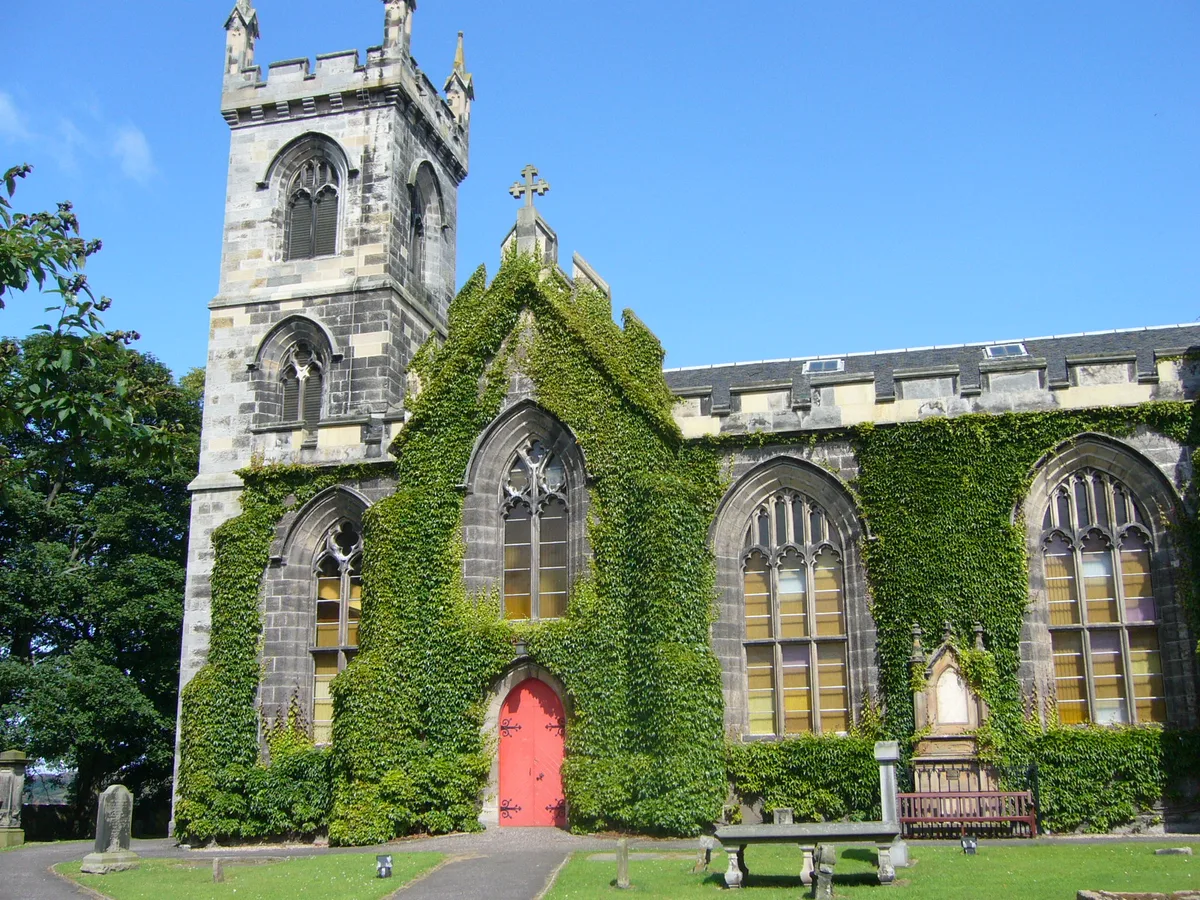
Liberton Parish Church, Edinburgh
Abbeys & priories · 1.5 km

Liberton Parish Church, Edinburgh
Cathedrals · 1.5 km
Nearby
📷 5Campsites · Central Scotland
Mortonhall Caravan and Camping Park
Mortonhall Caravan and Camping Park — a campsite in scotland central.
📷 3Archaeological sites · Central Scotland
Balm Well
Balm Well — a archaeological in scotland-central, United Kingdom.
📷 5Mountains & hills · Central Scotland
Galach Law
Galach Law — mountain in scotland central. Elevation: 205 m.
★ Iconic📷 5Abbeys & priories · Central Scotland
Poor Clare's Convent, 105-109 Lasswade Road, Edinburgh
Poor Clare's Convent, 105-109 Lasswade Road, Edinburgh — category B listed building-listed abbey in scotland-central, United Kingdom.
📷 3Castles · Central Scotland
Liberton Tower
Liberton Tower — a castle in scotland-central, United Kingdom.
📷 5Literary houses · Central Scotland
Liberton Tower
Liberton Tower — a literary house museum in scotland central.
Where to eat & stay near Mortonhall Cemetery
Places to stay
📷 5Campsites · Central Scotland
Mortonhall Caravan and Camping Park
Mortonhall Caravan and Camping Park — a campsite in scotland central.
 📷 7
📷 7Hotels · Central Scotland
Kildonan Lodge Hotel
Kildonan Lodge Hotel — a hotel in scotland central.
 📷 5
📷 5 📷 5
📷 5 📷 5
📷 5Hotels · Central Scotland
The Scholar
The Scholar — a hotel in scotland central.
 📷 5
📷 5Hostels · Central Scotland
Argyle Backpackers
Argyle Backpackers — a hostel in scotland central.
Places to eat & drink
 📷 7
📷 7Historic pubs · Central Scotland
Leslie's Bar, 45, 47, 49 Ratcliffe Terrace, Edinburgh
Leslie's Bar, 45, 47, 49 Ratcliffe Terrace, Edinburgh in Scotland Central, United Kingdom.
 📷 5
📷 5Historic pubs · Central Scotland
The Canny Man's, 237, 239 Morningside Road, Edinburgh
The Canny Man's, 237, 239 Morningside Road, Edinburgh in Scotland Central, United Kingdom.
 📷 5
📷 5Historic pubs · Central Scotland
Physician and Firkin Public House, 58 Dalkeith Road, Edinburgh
Physician and Firkin Public House, 58 Dalkeith Road, Edinburgh in Scotland Central, United Kingdom.
 📷 7
📷 7Historic pubs · Central Scotland
1, 3 and 5 Newington Road, Edinburgh
1, 3 and 5 Newington Road, Edinburgh in Scotland Central, United Kingdom.
 📷 5
📷 5Historic pubs · Central Scotland
22, 24, 26, 28, 30 Marchmont Crescent, Edinburgh
22, 24, 26, 28, 30 Marchmont Crescent, Edinburgh in Scotland Central, United Kingdom.
 📷 7
📷 7Historic pubs · Central Scotland
15-16 Argyle Place, Edinburgh
15-16 Argyle Place, Edinburgh in Scotland Central, United Kingdom.
More cemeteries in this region
 📷 3
📷 3Cemeteries · Central Scotland
Greenock Cemetery & Crematorium
Greenock Cemetery & Crematorium is a cemetery in the United Kingdom.
 📷 3
📷 3Cemeteries · Central Scotland
Kilmartin Churchyard
Kilmartin Churchyard is a cemetery in the United Kingdom.
 📷 3
📷 3Cemeteries · Central Scotland
Millhouse Cemetery
Millhouse Cemetery is a cemetery in the United Kingdom.
 📷 4
📷 4Cemeteries · Central Scotland
Pennyfuir Cemetery
Pennyfuir Cemetery is a cemetery in the United Kingdom.
Frequently asked questions
- Where is Mortonhall Cemetery?
- Mortonhall Cemetery is in central Scotland, United Kingdom (postcode EH17 8BP).
- What is Mortonhall Cemetery?
- Mortonhall Cemetery is a cemetery in the United Kingdom.
- How do I get to Mortonhall Cemetery?
- The nearest railway station is Slateford, about 5.1 km away. The nearest town is Danderhall. Drivers can use postcode EH17 8BP.
- Is Mortonhall Cemetery free to visit?
- Yes, Mortonhall Cemetery is free to enter.
- How do I get to Mortonhall Cemetery?
- The nearest railway station is Slateford, about 5.1 km away. Drivers can navigate to postcode EH17 8BP.