
Castles · West Midlands
Moated site, 230m west of St Michael's Church
In or near Sutton-under-Brailes.
Moated site, 230m west of St Michael's Church — scheduled monument-listed castle in england-west-midlands, United Kingdom.

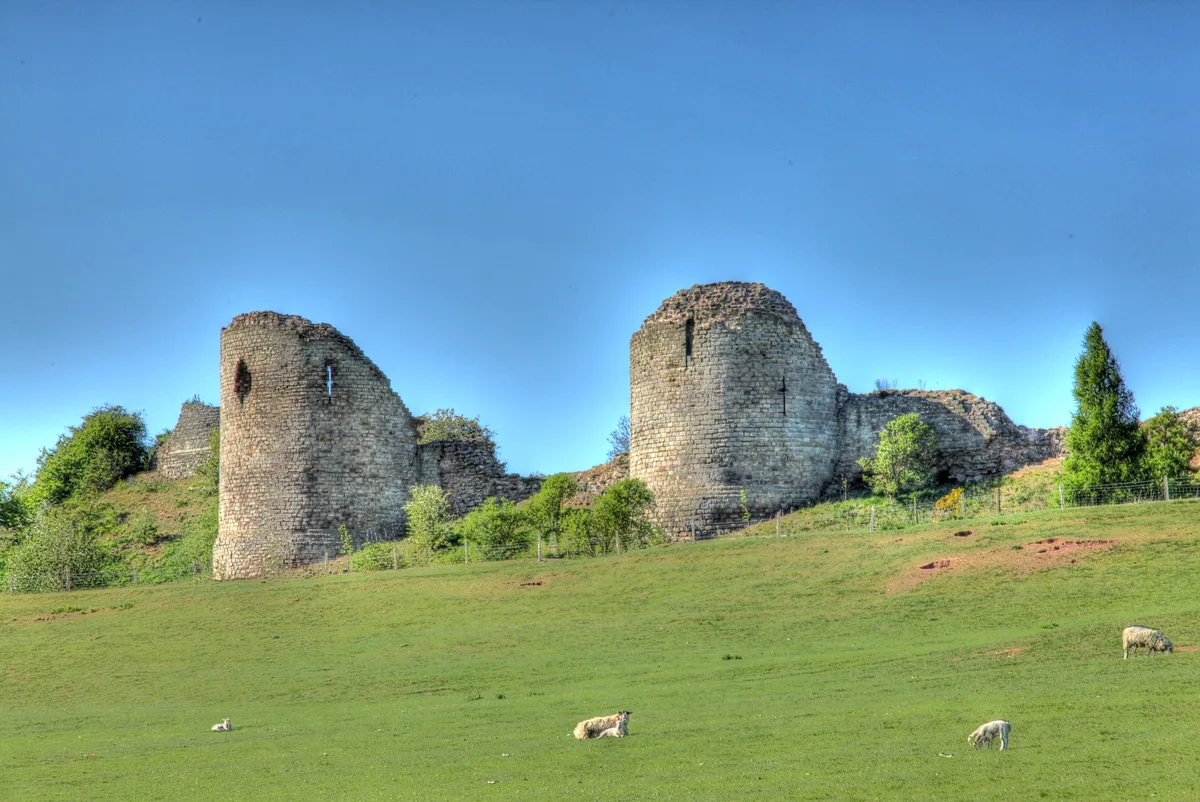
Philip Halling — CC BY-SA 2.0 via Wikimedia Commons licence

Plan your visit
- Typical visit
- 1.5 h–3 h
- Family-friendly
- Limited wheelchair access
About
Moated site, 230m west of St Michael's Church is a scheduled monument-listed castle in england-west-midlands, United Kingdom, registered on the National Heritage List for England (NHLE entry 1017761). Listed status protects buildings and structures of special architectural or historic interest. See the linked Wikipedia article for further details.
Photo gallery
Heritage listing
Details The monument is situated on the western outskirts of Whichford village and includes the earthwork and buried remains of a moated site believed to have been built by Reginald Mohun in the early 13th century. By the mid-14th century the estate passed to the Stanleys, Earls of Derby, who held it for approximately 200 years. It was during this latter period that the moated site is thought to have fallen into disrepair and was abandoned. The moated site is roughly square in plan with external dimensions of approximately 100m east-west by 90m north-south and the ground falls away to the north. The moat ditches are dry, with the exception of part of the west arm, and some 4.6m wide. Beyond the east side of the moated site the ground falls away sharply and here an external, retaining bank which has been reinforced in recent times runs parallel with the moat arm. A break in the southern moat ditch is considered to be the original means of access to the moated island. A further causeway to the north gives access to a levelled platform which projects out of the hillslope and is thought to be an annexe of the moated site. There are intermittent traces of an inner bank around the perimeter of the moated island which itself retains evidence of slight earthworks. An excavation in the western half of the island in the early 1950s uncovered the foundations of stone buildings, believed to date from the early 13th century, and fragments of painted glass, fine quality pottery and stone-lined drains. The remains of a curtain wall of large ironstone blocks was also located along the inner edge of the western moat ditch. All fence posts are excluded from the scheduling, although the ground beneath them is included. MAP EXTRACT The site of the monument is shown on the attached map extr
From the Historic England List Entry under OGL v3.
Protected designations
- Area of Outstanding Natural Beauty: Cotswolds
Designations sourced from Natural England open data under OGL v3.
Place summary
The Moated site, located 230m west of St Michael's Church in the West Midlands, is a scheduled monument. This site represents the remains of a medieval castle, characterised by its defensive moat, indicating the historical significance of the area.
AI-generated from the structured facts on this page (operator, designation, listing, era). Not a substitute for visiting.
- Coordinates
- 52.0091, -1.5500
- County
- Warwickshire
- District
- Stratford-on-Avon
- Parish
- Whichford
- Postcode
- CV36 5PH
- Parliamentary constituency
- Stratford-on-Avon
Sources
- wikidata: Q17675567 (CC0)
Other places nearby

Cotswolds Camping at Holycombe
Campsites · 0.0 km

Whichford Castle
Castles · 0.1 km

Cotswolds Distillery
Distilleries · 2.1 km

Cherington
Villages · 2.6 km

Sutton under Brailes
Villages · 2.7 km

Cherington Arms Public House
Historic pubs · 2.8 km

Long Compton
Villages · 2.8 km

Sutton-under-Brailes
Towns & cities · 2.9 km
_-_geograph.org.uk_-_1930395.jpg?width=1200)
Long Compton Millennium Chronolog
National landscapes (AONB) · 3.0 km

Sharp's Hill Quarry
Quarries · 3.0 km

Traitor's Ford
Natural landmarks · 3.2 km

King Stone
Archaeological sites · 3.9 km
Nearby
📷 5Campsites · West Midlands
Cotswolds Camping at Holycombe
Cotswolds Camping at Holycombe — a campsite in england west midlands.
📷 5📷 3Distilleries · West Midlands
Cotswolds Distillery
Cotswolds Distillery — Whisky/spirit distillery.
📷 5📷 5Villages · West Midlands
Sutton under Brailes
Sutton under Brailes — a village in england west midlands.
📷 5Historic pubs · West Midlands
Cherington Arms Public House
Cherington Arms Public House in England West Midlands, United Kingdom.
Where to eat & stay near Moated site, 230m west of St Michael's Church
Places to stay
📷 5Campsites · West Midlands
Cotswolds Camping at Holycombe
Cotswolds Camping at Holycombe — a campsite in england west midlands.
 📷 5
📷 5Campsites · South East England
Merryweather Farm Campsite
Merryweather Farm Campsite — a campsite in england west midlands.
 📷 5
📷 5Campsites · West Midlands
Aylesmore Farm Campsite
Aylesmore Farm Campsite — a campsite in england west midlands.
 📷 5
📷 5Campsites · West Midlands
Hardiman Fields
Hardiman Fields — a campsite in england west midlands.
 📷 5
📷 5Hotels · South East England
Heythrop Park Resort
Heythrop Park Resort — a hotel in england west midlands.
 📷 5
📷 5Caravan parks · South East England
Newton Grove CL
Newton Grove CL — a caravan park in england west midlands.
Places to eat & drink
📷 5Historic pubs · West Midlands
Cherington Arms Public House
Cherington Arms Public House in England West Midlands, United Kingdom.
 📷 7
📷 7 📷 5
📷 5Historic pubs · South East England
Chandler's Arms Public House And Attached Mounting Block
Chandler's Arms Public House And Attached Mounting Block in England West Midlands, United Kingdom.
 📷 7
📷 7Historic pubs · South East England
The Bunch Of Grapes Public House
The Bunch Of Grapes Public House in England South East, United Kingdom.
 📷 7
📷 7Historic pubs · West Midlands
The White Bear Public House
The White Bear Public House in England West Midlands, United Kingdom.
 📷 7
📷 7Historic pubs · West Midlands
The Old Red Lion Inn Licensed Restaurant
The Old Red Lion Inn Licensed Restaurant in England West Midlands, United Kingdom.
More castles in this region
 📷 3
📷 3 📷 3
📷 3Castles · West Midlands
Hoar Cross Hall
Hoar Cross Hall — a castle in england-east-midlands, United Kingdom.
 📷 3
📷 3Castles · West Midlands
Chartley Castle, Chartley Old Hall and associated water control systems including garden remains
Chartley Castle, Chartley Old Hall and associated water control systems including garden remains — scheduled monument-listed castle in england-east-midlands, United Kingdom.
 📷 5
📷 5Frequently asked questions
- Where is Moated site, 230m west of St Michael's Church?
- Moated site, 230m west of St Michael's Church is in Warwickshire, the West Midlands, United Kingdom (postcode CV36 5PH), in the parish of Whichford.
- What is Moated site, 230m west of St Michael's Church?
- Moated site, 230m west of St Michael's Church — scheduled monument-listed castle in england-west-midlands, United Kingdom.
- How do I get to Moated site, 230m west of St Michael's Church?
- The nearest town is Sutton-under-Brailes. Drivers can use postcode CV36 5PH.
- Is Moated site, 230m west of St Michael's Church a listed building?
- Moated site, 230m west of St Michael's Church is officially recognised as scheduled monument listed.
- Is Moated site, 230m west of St Michael's Church a protected site?
- Yes — Moated site, 230m west of St Michael's Church is part of the Cotswolds National Landscape (AONB).
- Does Moated site, 230m west of St Michael's Church charge admission?
- Moated site, 230m west of St Michael's Church typically charges admission. Check the official site for current ticket prices and opening hours.
- How do I get to Moated site, 230m west of St Michael's Church?
- Drivers can navigate to postcode CV36 5PH. It sits within the Stratford-on-Avon parliamentary constituency.