
Stadiums · South Wales
Millennium Stadium
In or near Cardiff.
Millennium Stadium — national stadium of Wales.

Wikimedia Commons contributors — see linked file page for photographer and licence licence

Plan your visit
- Typical visit
- 1.5 h–3 h
- Nearest railway station
- Cardiff Central · 0.3 km
- Paid entry
- Limited wheelchair access
Getting there & planning your visit
To visit the Millennium Stadium in Cardiff, the nearest railway station is Cardiff Central, which is 0.3 km away. The postcode for sat-nav is CF10 1NS. Accessibility is limited for wheelchair users.
About
Millennium Stadium is a stadium in the United Kingdom. Records date its origin to 1997. It covers approximately 40,200 km². Designed by Populous. Owned by Welsh Rugby Union. Managed by Welsh Rugby Union. Named after 3rd millennium. Address: http://www.wikidata.org/entity/Q123281241, CF10 1NS. Wikidata describes it as: "national stadium of Wales". Coordinates: 51.4781°, -3.1825°.
Photo gallery
Summary from the official site
Principality Stadium, located in Cardiff, is a prominent venue for major sporting events and concerts. Visitors can explore its iconic features through guided tours, and it hosts a variety of events including football matches and rugby games.
Read more on the official property page.
From the Wikipedia article
The Millennium Stadium (Welsh: Stadiwm y Mileniwm), known since 2016 as the Principality Stadium (Welsh: Stadiwm Principality) for sponsorship reasons, is the national stadium of Wales in Cardiff. It has a retractable roof and a usual capacity of 73,931. It is the home of the Wales national rugby union team and has also held Wales national football team games. Initially built to host the 1999 Rugby World Cup and replacing the National Stadium on the site known as Cardiff Arms Park, it has hosted other events including the Tsunami Relief Cardiff concert, the Super Special Stage of Wales Rally Great Britain, the Speedway Grand Prix of Great Britain and various concerts. It also hosted FA Cup, League Cup and Football League play-off finals while Wembley Stadium was being redeveloped between 2001 and 2006, as well as football matches during the 2012 Summer Olympics. The stadium is owned by Millennium Stadium plc, a subsidiary company of the Welsh Rugby Union (WRU). The architects were Bligh Lobb Sports Architecture. The structural engineers were WS Atkins and the building contractor was Laing. The total construction cost of the stadium was £121million, of which the Millennium Commission funded £46 million. The Millennium Stadium opened in June 1999 and its first major event was an international rugby union match on 26 June 1999, when Wales beat South Africa by 29–19 before a crowd of 29,000. With a total seating capacity of 73,931, it is the largest stadium in Wales and the fourth largest in the United Kingdom by capacity. It is also the second-largest stadium in the world with a fully retractable roof and was the second stadium in Europe to have this feature. Listed as a category four stadium by UEFA, the stadium was chosen as the venue for the 2017 UEFA Champions League Final, which took place on 3 June 2017 and was won by Real Madrid. In 2015, the Welsh Rugby Union announced a 10-year sponsorship deal with the Principality Building Society that saw the stadium…
Excerpt from Wikipedia under CC BY-SA 4.0. See the source article linked in Sources below.
Background
History
Until 1969, Cardiff RFC and Wales both played their home matches on the same pitch at Cardiff Arms Park, but all this changed in the 1969–70 season. As a result of an agreement between Cardiff Athletic Club and the WRU, the National Stadium project established that a new stadium for international matches and events was required, with Cardiff RFC moving to a new, purpose-built stadium on the original cricket ground at the site of the former Cardiff Arms Park stadium. The options for the new stadium included adding a third tier to the existing National Stadium, or moving to a new site. This last option was discounted because it would have required a vast car parking facility, and that would…
Architecture
The stadium was designed by a team led by Rod Sheard at Lobb Sport Architecture, who later merged with HOK Sport to become Populous. The building contractor was Laing and the structural engineers were WS Atkins. Mike Otlet of WS Atkins designed the stadium's retractable roof, which was constructed by Kelsey Roofing Industries. Cimolai S.p.A. from Italy fabricated and erected the 72 steel plane frames for the stands and all the 4,500 components of the roof. Construction involved the demolition of a number of buildings, primarily the existing National Stadium (Cardiff Arms Park), Wales Empire Pool (swimming pool) in Wood Street, Cardiff Empire Telephone Exchange building (owned by BT) in Park…
Description
The all-seater stadium has the capacity for 74,500 supporters and features a retractable roof, only the second stadium of its type in Europe. When opened the stadium was the largest stadium with this feature in the world It remained the largest in Europe until the renovations of the Bernabéu in Madrid, Spain were completed in 2024. Additional seating is sometimes added for special events such as a rugby Test against the New Zealand All Blacks, or for the FA Cup Final. The current record attendance is set at just over 78,000, recorded at the Anthony Joshua v Carlos Takam fight, on 28 October 2017, in which Joshua successfully retained his WBA, IBF and IBO titles. The natural grass turf was…
Sourced from Wikipedia under CC BY-SA 4.0.
- Coordinates
- 51.4781, -3.1825
- District
- Cardiff
- Parish
- Castle
- Postcode
- CF10 1NS
- Parliamentary constituency
- Cardiff South and Penarth
- Phone
- +44 2922 331 333
- Established
- 1997
- Nearest railway station
- Cardiff Central — 0.3 km
- Official site
- www.principalitystadium.wales
Sources
- wikidata: Q204496 (CC0)
- wikipedia: Millennium Stadium (CC BY-SA 4.0)
- commons: Principality Stadium May 3, 2016.jpg (CC BY-SA 4.0)
Other places nearby

Principality Stadium
Stadiums · 0.0 km

National Stadium, Cardiff
Stadiums · 0.1 km

Vue Cardiff
Theatres · 0.1 km

Millennium Music Hall
Theatres · 0.1 km

Sir Tasker Watkins Statue
Public art & sculpture · 0.2 km

Seeds and Spices
Heritage railway stations · 0.2 km

The Riverhouse
B&Bs · 0.2 km

Betty Campbell
Public art & sculpture · 0.2 km

Statue of Betty Campbell
Public art & sculpture · 0.2 km

Water tower, Cardiff Central station
Memorials & monuments · 0.2 km

The Gatekeeper
Theatres · 0.2 km

BBC Wales headquarters building
Gardens · 0.3 km
Nearby
★ Iconic📷 3Stadiums · South Wales
Principality Stadium
Wales's 74,000-seat national stadium with a retractable roof, in central Cardiff.
📷 3Stadiums · South Wales
National Stadium, Cardiff
National Stadium, Cardiff — Demolished stadium in Cardiff, Wales.
📷 5📷 3Theatres · South Wales
Millennium Music Hall
Millennium Music Hall is a theatre in the United Kingdom.
📷 3Public art & sculpture · South Wales
Sir Tasker Watkins Statue
Sir Tasker Watkins Statue — a public art in wales-south, United Kingdom.
📷 3Heritage railway stations · South Wales
Seeds and Spices
Seeds and Spices — Public artwork (installation).
Where to eat & stay near Millennium Stadium
Places to stay
📷 5B&Bs · South Wales
The Riverhouse
The Riverhouse — a bed-and-breakfast in wales south.
 📷 5
📷 5 📷 5
📷 5Hotels · South Wales
The Royal Hotel
The Royal Hotel — a hotel in wales south.
 📷 7
📷 7Hotels · South Wales
The Angel Hotel
The Angel Hotel — a hotel in wales south.
 📷 5
📷 5Hotels · South Wales
Sandringham Hotel
Sandringham Hotel — a hotel in wales south.
 📷 7
📷 7Places to eat & drink
 📷 5
📷 5 📷 5
📷 5Historic pubs · South Wales
The Corner House
The Corner House in Wales South, United Kingdom.
 📷 5
📷 5 📷 5
📷 5 📷 7
📷 7 📷 3
📷 3Other works by Populous
 📷 5
📷 5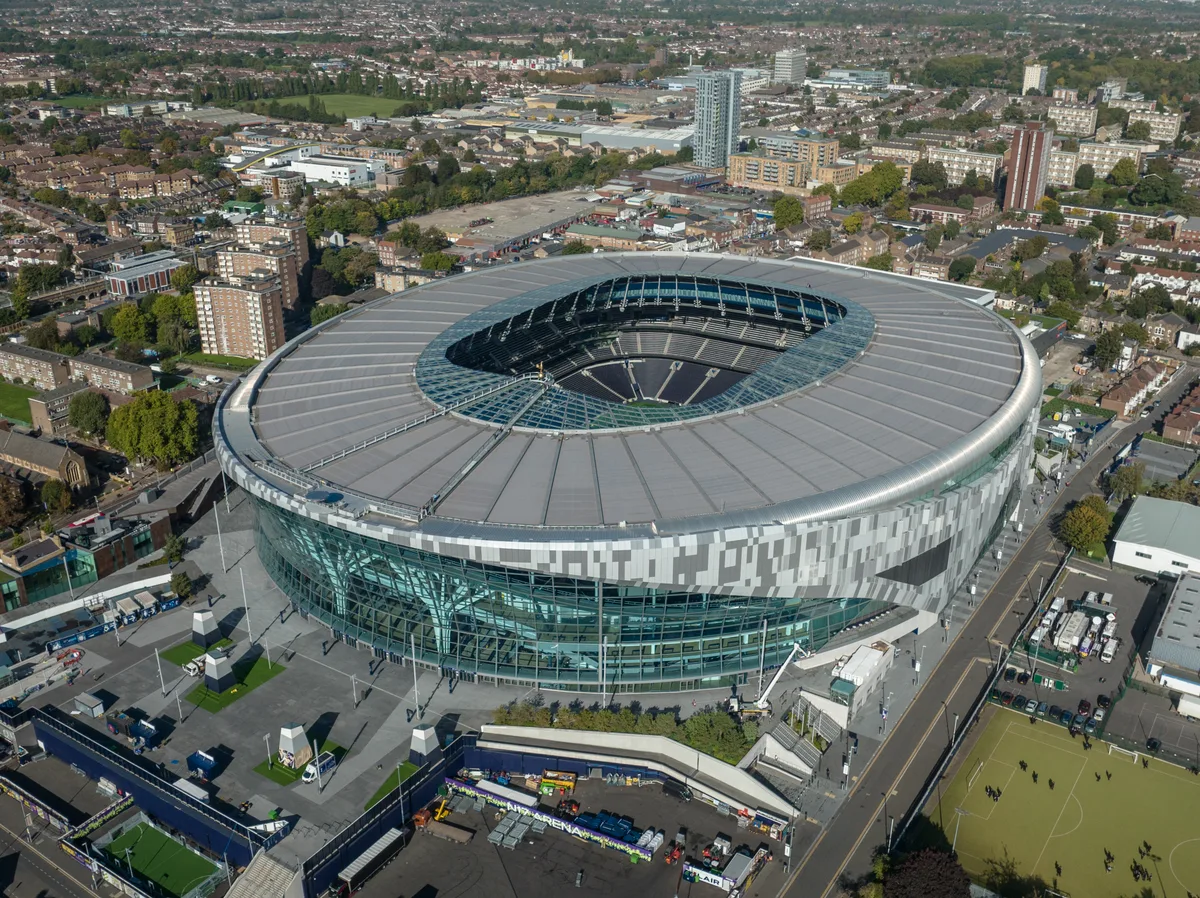 📷 5
📷 5Stadiums · London
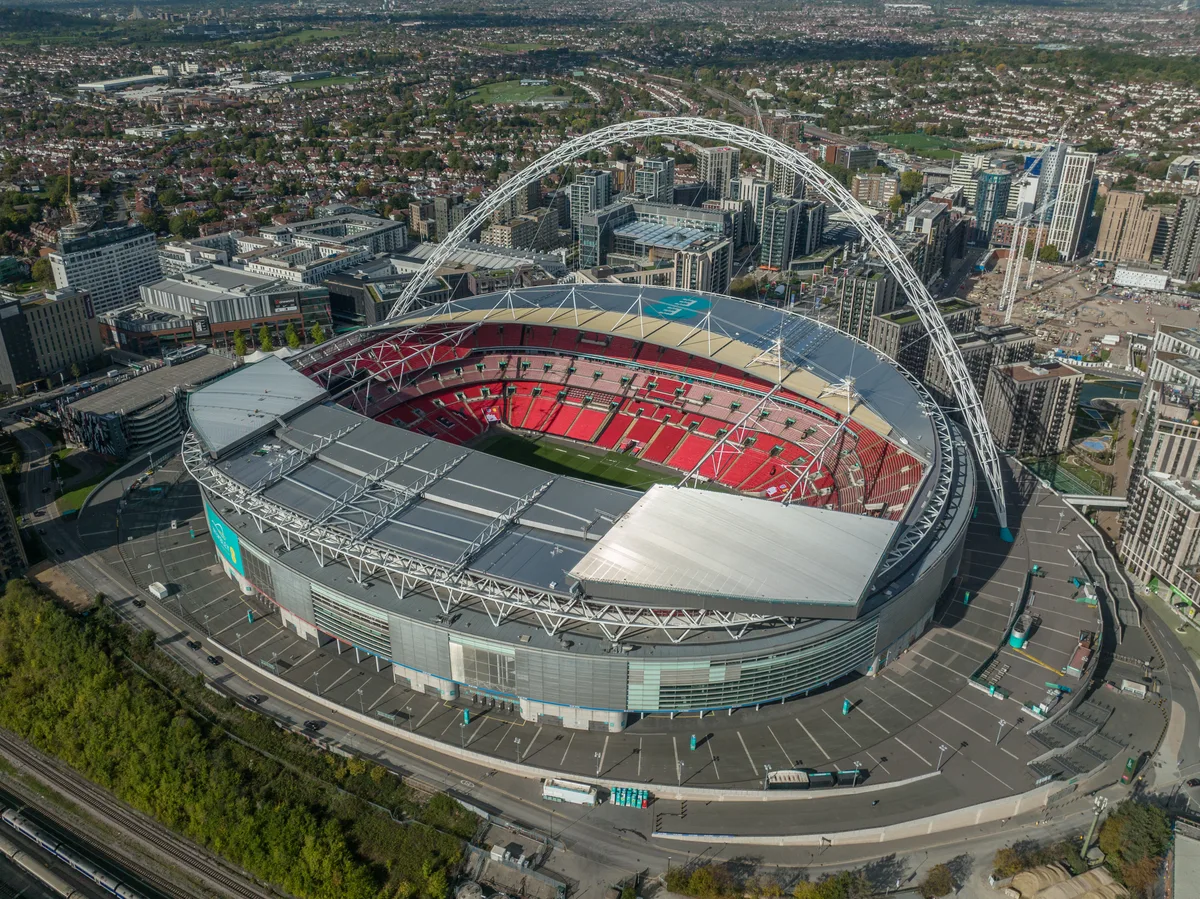
Tottenham Hotspur Stadium
Tottenham Hotspur Stadium — stadium in London, England.
 📷 5
📷 5 📷 5
📷 5Stadiums · East of England
Fossetts Farm Stadium
Fossetts Farm Stadium — proposed football stadium in Essex, England.
More places run by Welsh Rugby Union
 📷 3
📷 3Other places from this era
.jpg?width=1200) 📷 5
📷 5Stadiums · London
Bobby Moore statue
Bobby Moore statue — Public artwork (statue).
 📷 5
📷 5Stadiums · London
Brentford Community Stadium
Brentford Community Stadium — stadium in London, England.
 📷 5
📷 5Stadiums · London
Hackney Wick Stadium
Hackney Wick Stadium — former stadium in thr Londom Borough of Hackney.
.jpg?width=1200) 📷 5
📷 5More places in this region
 Flagship📷 4
Stadiums · South Wales
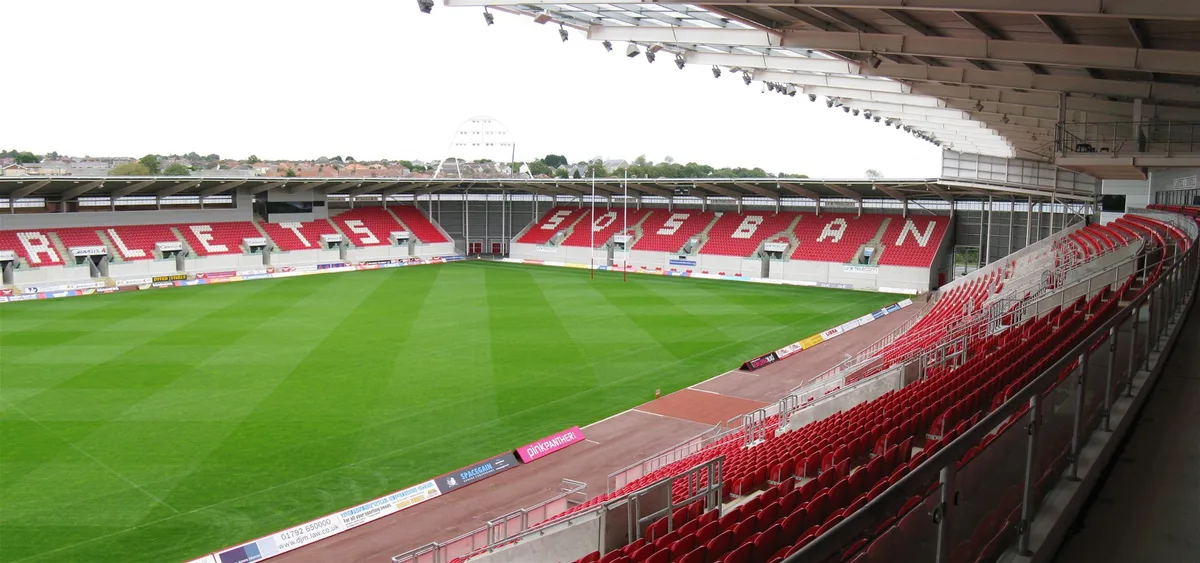
Parc y Scarlets
Parc y Scarlets is a stadium in the United Kingdom.
 📷 3
📷 3 📷 3
📷 3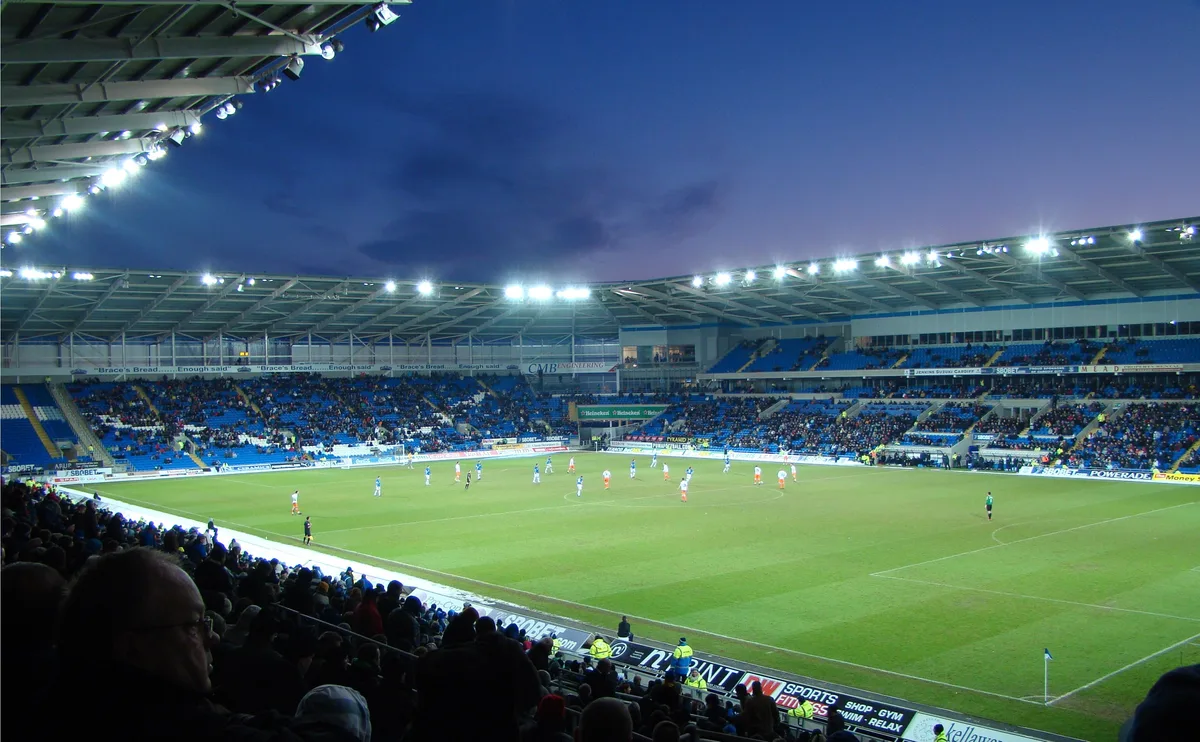 📷 5
📷 5Stadiums · South Wales
Cardiff City Stadium
Cardiff City Stadium is a stadium in the United Kingdom.
Frequently asked questions
- Where is Millennium Stadium?
- Millennium Stadium is in South Wales, United Kingdom (postcode CF10 1NS), in the parish of Castle.
- What is Millennium Stadium?
- Millennium Stadium — national stadium of Wales.
- How do I get to Millennium Stadium?
- The nearest railway station is Cardiff Central, about 0.3 km away. The nearest town is Cardiff. Drivers can use postcode CF10 1NS.
- When was Millennium Stadium built?
- Built or established in 1997. Designed by Populous.
- Who runs Millennium Stadium?
- Millennium Stadium is operated by Welsh Rugby Union.
- How do I get to Millennium Stadium?
- The nearest railway station is Cardiff Central, about 0.3 km away. Drivers can navigate to postcode CF10 1NS.