
Historic bridges · South East England
London Road Viaduct
In or near Brighton and Hove.
London Road Viaduct is a historic bridge in the United Kingdom.

Wikimedia Commons contributors — see linked file page for photographer and licence licence

Plan your visit
- Typical visit
- 15 min–30 min
- Nearest railway station
- London Road (Brighton) · 0.4 km
- Free entry
- Dog-friendly
Getting there & planning your visit
To visit the London Road Viaduct in Brighton and Hove, the nearest railway station is London Road (Brighton), located 0.4 km away. Entry to the viaduct is free.
About
London Road Viaduct is a named historic bridge in the United Kingdom. Coordinates: 50.8354°, -0.1409°. This entry is part of The Great Britain Guide, a free, ad-free, open-data tourist directory.
Photo gallery
From the Wikipedia article
The London Road Viaduct is a brick railway viaduct in Brighton, part of the city of Brighton and Hove in East Sussex, England. It carries the East Coastway Line between Brighton and London Road railway stations. Built in the 1840s for the Brighton, Lewes and Hastings Railway by the locomotive engineer and railway architect John Urpeth Rastrick, the sharply curving structure has 27 arches and about 10 million bricks. It is still in constant use, and is listed at Grade II* for its historical and architectural significance.
Excerpt from Wikipedia under CC BY-SA 4.0. See the source article linked in Sources below.
Background
History
The London and Brighton Railway Act, passed on 15 July 1837, granted the London & Brighton Railway Company the right to build a railway line from Norwood to Brighton, a branch line from Brighton to Shoreham-by-Sea and another from Brighton to Newhaven via Lewes. The line to Shoreham-by-Sea was completed first, in 1840, and the Brighton Main Line opened in its entirety in September 1841; A new company, the Brighton, Lewes & Hastings Railway Company, was formed to build this line; John Urpeth Rastrick was employed as the surveyor and architect. In the 1840s, the land northeast of Brighton station was undeveloped, consisting of fields. Rastrick had to decide whether to cross this with an…
Architecture
s]] The structure is 1200 ft long, and reaches a maximum height of 67 ft above the floor of the valley. It consists of 26 semi-circular arches each of 30 ft with piers of 7 ft thick at the base and 5 ft thick at the top, together with one elliptical arch of 50 ft over a section of the A23 London Road called Preston Road. The piers are thicker on the outside than on the inside because the viaduct is constructed on a sharp curve: trains reach the viaduct almost immediately after leaving the Brighton Main Line, and the line continues to curve away for several hundred metres. Of the 27 arches, 16 have a radius of curvature of 0.75 mi, and 11 have a radius of 0.125 mi. Approximately 10 million…
Description
London Road Viaduct was listed at Grade II* by English Heritage on 19 April 1974. This status is given to "particularly important buildings of more than special interest". As of February 2001, it was one of 70 Grade II*-listed buildings and structures, and 1,218 listed buildings of all grades, in the city of Brighton and Hove. As of 2009, 174 scheduled passenger trains (87 eastbound and 87 westbound), all operated by Southern, cross the viaduct each weekday. There are fewer train movements at weekends.
Sourced from Wikipedia under CC BY-SA 4.0.
- Coordinates
- 50.8354, -0.1409
- District
- Brighton and Hove
- Parish
- Brighton and Hove, unparished area
- Postcode
- BN1 4QL
- Parliamentary constituency
- Brighton Pavilion
- Nearest railway station
- London Road (Brighton) — 0.4 km
- Opening
- |heritage = Grade II*-listed
Sources
- osm: w1083622053 (ODbL)
- wikipedia: London Road Viaduct (CC BY-SA 4.0)
- commons: London road viaduct2.jpg (CC BY-SA 4.0)
Other places nearby

The can-can
Public art & sculpture · 0.2 km
Duke of York's Cinema
Theatres · 0.2 km

Spring and Summer
Public art & sculpture · 0.3 km

Steve Ovett's Foot
Public art & sculpture · 0.3 km
_(November_2010).jpg?width=1200)
Montpelier Bridge
Historic bridges · 0.3 km
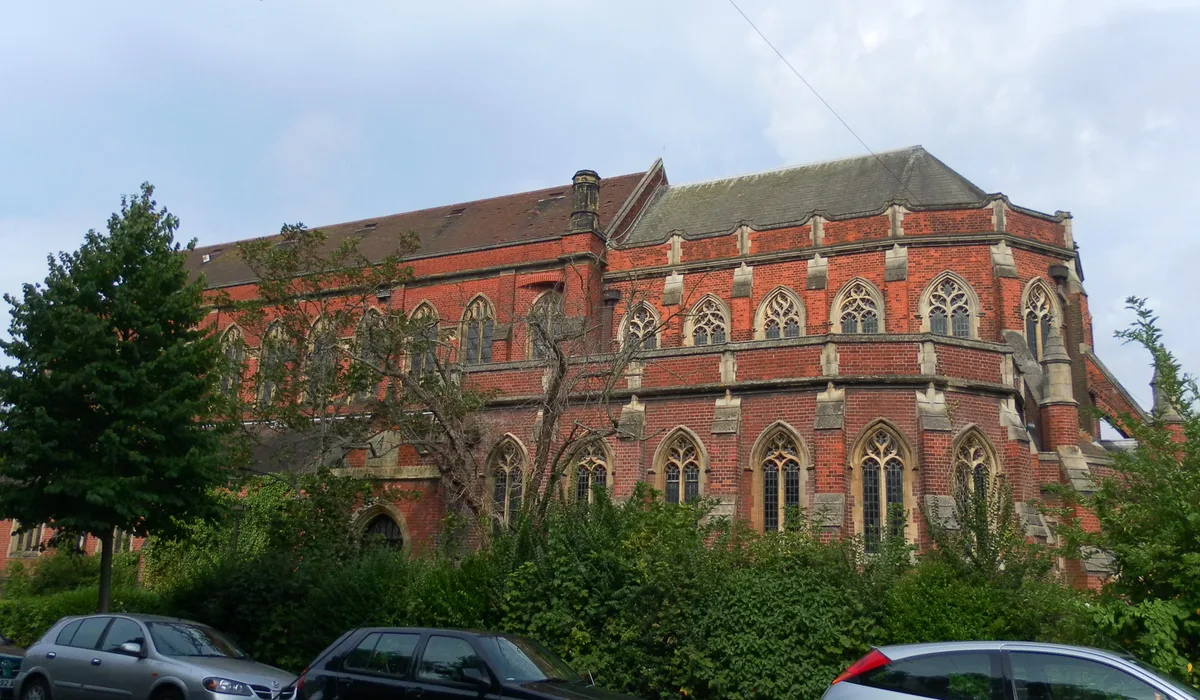
St Augustine's Church, Brighton
Historic churches · 0.3 km

Florence Road Market
Farmers’ markets · 0.5 km

Brighton Forum
Historic houses · 0.5 km

Gem Electric Theatre
Theatres · 0.5 km
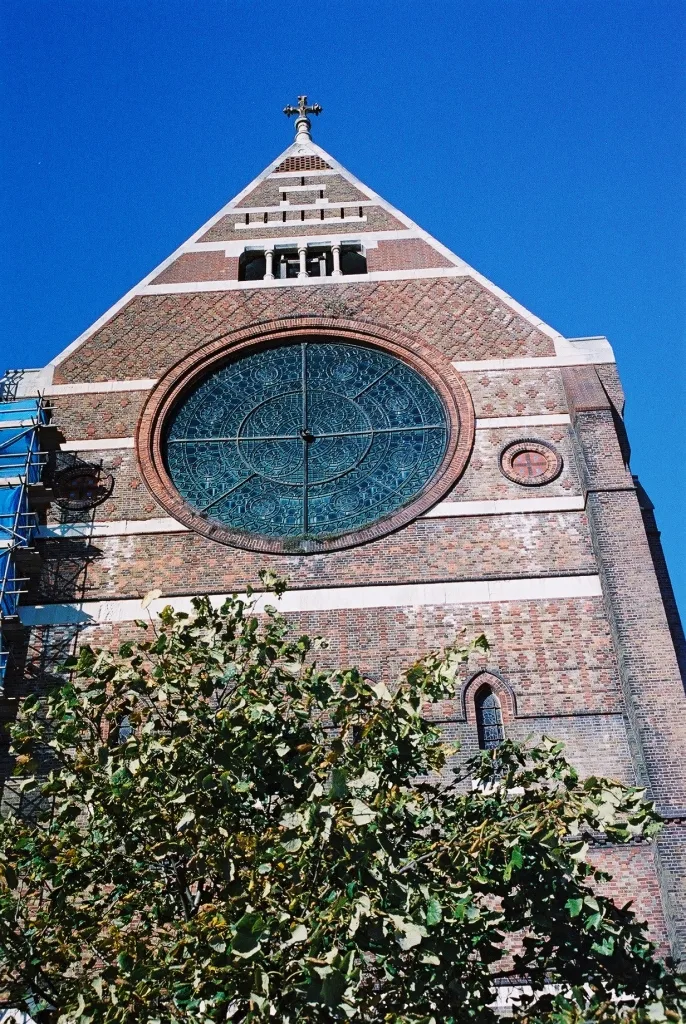
Saint Bartholomew's Church
Historic churches · 0.6 km

The Open Market
Other places · 0.6 km

Lt. Jacqueline Nearne
Memorials & monuments · 0.6 km
Nearby
📷 5Public art & sculpture · South East England
The can-can
The can-can — a public art in england-south-east, United Kingdom.
📷 5Theatres · South East England
Duke of York's Cinema
Duke of York's Cinema in England South East, United Kingdom.
📷 5Public art & sculpture · South East England
Spring and Summer
Spring and Summer in England South East, United Kingdom.
📷 5Public art & sculpture · South East England
Steve Ovett's Foot
Steve Ovett's Foot — a public art in england-south-east, United Kingdom.
📷 5Historic bridges · South East England
Montpelier Bridge
Montpelier Bridge is a historic bridge in the United Kingdom.
📷 5Historic churches · South East England
St Augustine's Church, Brighton
St Augustine's Church, Brighton — grade II listed church in Brighton and Hove, East Sussex, England, UK.
Where to eat & stay near London Road Viaduct
Places to stay
 📷 5
📷 5Hostels · South East England
Kipp's Hostel
Kipp's Hostel — a hostel in england south east.
 📷 5
📷 5 📷 5
📷 5 📷 5
📷 5Hostels · South East England
Seadragons Backpackers
Seadragons Backpackers — a hostel in england south east.
 📷 5
📷 5Hotels · South East England
The Grand Hotel
The Grand Hotel — a hotel in england south east.
 📷 5
📷 5Hotels · South East England
DoubleTree by Hilton Brighton Metropole
DoubleTree by Hilton Brighton Metropole — a hotel in england south east. 4-star. Brand: DoubleTree.
Places to eat & drink
 📷 5
📷 5Cafés · South East England
Cowley Club Café
Cowley Club Café — a café in england south east.
 📷 5
📷 5Historic pubs · South East England
Kissing Coppers
Kissing Coppers — Public artwork (graffiti) by Banksy.
 📷 5
📷 5Historic pubs · South East England
King and Queen, Brighton
King and Queen, Brighton in England South East, United Kingdom.
 📷 5
📷 5Historic pubs · South East England
The Post and Telegraph
The Post and Telegraph in England South East, United Kingdom.
 📷 5
📷 5 📷 5
📷 5Historic pubs · South East England
Marlborough Pub and Theatre
Marlborough Pub and Theatre in England South East, United Kingdom.
More bridges in this region
 📷 5
📷 5Historic bridges · South East England
Briary Hill Bridge east
Briary Hill Bridge east is a historic bridge in the United Kingdom.
 📷 5
📷 5Historic bridges · South East England
Briary Hill Bridge west
Briary Hill Bridge west is a historic bridge in the United Kingdom.
 📷 5
📷 5Historic bridges · South East England
Bridge 157 VIR (Bath Hard Road)
Bridge 157 VIR (Bath Hard Road) is a historic bridge in the United Kingdom.
 📷 5
📷 5Historic bridges · South East England
Dorking Arch Bridge
Dorking Arch Bridge is a historic bridge in the United Kingdom.
Frequently asked questions
- Where is London Road Viaduct?
- London Road Viaduct is in South-East England, United Kingdom (postcode BN1 4QL), in the parish of Brighton and Hove, unparished area.
- What is London Road Viaduct?
- London Road Viaduct is a historic bridge in the United Kingdom.
- How do I get to London Road Viaduct?
- The nearest railway station is London Road (Brighton), about 0.4 km away. The nearest town is Brighton and Hove. Drivers can use postcode BN1 4QL.
- Is London Road Viaduct free to visit?
- Yes, London Road Viaduct is free to enter.
- How do I get to London Road Viaduct?
- The nearest railway station is London Road (Brighton), about 0.4 km away. Drivers can navigate to postcode BN1 4QL.