
Natural landmarks · Central Scotland
Loch Leven
In or near Milnathort.
Loch Leven — lake at Kinross, Perth and Kinross, Scotland, UK, outflows to River Leven.

Wikimedia Commons contributors — see linked file page for photographer and licence licence

Plan your visit
- Typical visit
- 1 h–2 h
- Nearest railway station
- Lochgelly · 7.6 km
- Free entry
- Dog-friendly
Getting there & planning your visit
To visit Loch Leven, the nearest railway station is Lochgelly, which is 7.6 km away. Entry to the site is free. There are no specific accessibility details provided.
About
Loch Leven is a named natural landmark in the United Kingdom. It covers approximately 1,371 km². Heritage designation: Site of Special Scientific Interest. Wikidata describes it as: "lake at Kinross, Perth and Kinross, Scotland, UK, outflows to River Leven". Coordinates: 56.1944°, -3.3750°.
Photo gallery
Summary from the official site
Loch Leven National Nature Reserve is a vast area known for its rich wildlife, particularly as a habitat for various bird species, including freshwater breeding ducks and ospreys. Visitors can explore 21 kilometers of trails around the loch and enjoy the natural beauty and historical significance of the area, including its connection to Mary Queen of Scots.
Read more on the official property page.
From the Wikipedia article
Loch Leven (Scottish Gaelic: Loch Lìobhann) is a fresh water loch located immediately to the east of the burgh of Kinross in Perth and Kinross council area, central Scotland. Roughly triangular, the loch is about six kilometres (3+1⁄2 miles) across at its longest. Prior to the canalisation of the River Leven, and the partial draining of the loch in 1826–36, Loch Leven was considerably larger. The drop in water level by 1.4 m (4 ft 7 in) reduced the loch to 75% of its former size, and exposed several small islands, as well as greatly increasing the size of the existing ones. There are seven islands on the loch, the largest being St Serf's Inch. Lochleven Castle, where Mary, Queen of Scots was imprisoned in 1567, lies on one of these islands, and it can be reached by a ferry operated from Kinross by Historic Environment Scotland during the summer months. NatureScot describe Loch Leven as "one of Scotland's top natural assets", due to its rich ecosystem that supports many different species of plants, insects, fish and birds. It is of particular significance to migrating birds, who use it as a stopover when flying between their breeding and wintering grounds, due to its lowland location, shallow nutrient rich waters, large water surface, and islands (which provide safe nesting sites). Loch Leven holds numerous national and international conservation designations, including being a national nature reserve (NNR).
Excerpt from Wikipedia under CC BY-SA 4.0. See the source article linked in Sources below.
Background
History
The area around Loch Leven has been inhabited for millennia, and the remains of a crannog (a dwelling constructed on an artificial island, probably during the Iron Age) have been found off Kirkgate Park. St Serf's Inch was the home of a Culdee and then an Augustinian monastic community, St Serf's Inch Priory. There was a monastic community on the island which was old in the 12th century. The monastery produced a series of Gaelic language charters from the 11th and 12th centuries which were translated into Latin in the late 12th century. It was here that Prior Andrew of Wyntoun wrote the Orygynale Cronykil of Scotland. Lochleven Castle is strongly associated with Mary, Queen of Scots, who…
Sourced from Wikipedia under CC BY-SA 4.0.
- Coordinates
- 56.1944, -3.3750
- Address
- | group =
- Nearest railway station
- Lochgelly — 7.6 km
- Official site
- www.nature.scot
Sources
- wikidata: Q2266807 (CC0)
- wikipedia: Loch Leven (Kinross) (CC BY-SA 4.0)
- commons: Loch Leven Kinross.jpg (CC BY-SA 4.0)
Featured in this guide
Other places nearby

Loch Leven
Lakes · 0.8 km

Loch Leven National Nature Reserve
Wildlife reserves · 0.8 km
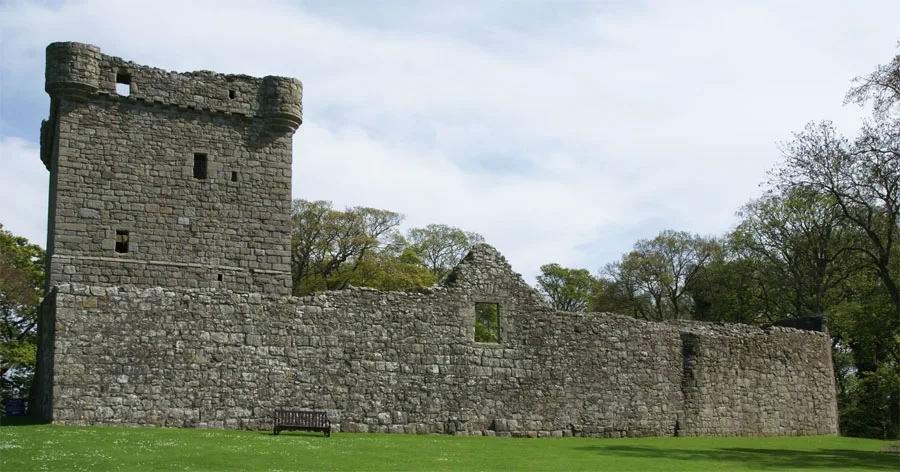
Loch Leven Castle
Castles · 1.3 km

St Serf's Inch
Islands · 1.3 km
St Serf's Inch Priory
Historic churches · 1.6 km

Scart Island
Beaches · 2.0 km

Bruce Mortuary Chapel, Kinross
Historic churches · 2.1 km

Kinross House
Historic houses · 2.3 km

East Brackley Viewpoint
Viewpoints · 2.5 km

Portmoak Chapel
Historic houses · 2.6 km

Portmoak Caravan Site
Caravan parks · 2.6 km

Vane Hill
Mountains & hills · 2.7 km
Nearby
📷 5📷 5Wildlife reserves · Central Scotland
Loch Leven National Nature Reserve
Loch Leven National Nature Reserve in Scotland Central, United Kingdom.
📷 5Castles · Central Scotland
Loch Leven Castle
Loch Leven Castle — medieval castle, now ruined, in Loch Leven, Perth and Kinross, Scotland, UK.
📷 5Islands · Central Scotland
St Serf's Inch
St Serf's Inch — island in Loch Leven, Kinross, Perth and Kinross, Scotland, UK.
📷 3Historic churches · Central Scotland
St Serf's Inch Priory
St Serf's Inch Priory — priory in Perth and Kinross, Scotland, UK.
📷 5Where to eat & stay near Loch Leven
Places to stay
📷 5Caravan parks · Central Scotland
Portmoak Caravan Site
Portmoak Caravan Site — a caravan park in scotland central.
 📷 5
📷 5Campsites · Central Scotland
Gallowhill Campsite
Gallowhill Campsite — a campsite in scotland central.
 📷 5
📷 5Caravan parks · Central Scotland
Lochore Meadows Motorhome Parking
Lochore Meadows Motorhome Parking — a caravan park in scotland central.
 📷 5
📷 5Campsites · Central Scotland
Pillars of Hercules
Pillars of Hercules — a campsite in scotland central.
 📷 5
📷 5Caravan parks · Central Scotland
Kingdom Caravan Park
Kingdom Caravan Park — a caravan park in scotland central.
 📷 5
📷 5Places to eat & drink
 📷 5
📷 5Historic pubs · Central Scotland
Coaltown of Balgonie
Coaltown of Balgonie in Scotland Islands, United Kingdom.
 📷 5
📷 5Historic pubs · Central Scotland
The Robert Nairn
The Robert Nairn in Scotland Central, United Kingdom.
 📷 7
📷 7Historic pubs · Central Scotland
The Royal Scot, 395-399 High Street, Kirkcaldy
The Royal Scot, 395-399 High Street, Kirkcaldy in Scotland Central, United Kingdom.
 📷 7
📷 7Historic pubs · Central Scotland
461 and 463 High Street, Kirkcaldy
461 and 463 High Street, Kirkcaldy in Scotland Central, United Kingdom.
 📷 5
📷 5Historic pubs · Central Scotland
Feuars Arms, 66-68 Commercial Street, Kirkcaldy
Feuars Arms, 66-68 Commercial Street, Kirkcaldy in Scotland Central, United Kingdom.
 📷 5
📷 5Historic pubs · Central Scotland
The Star Tavern, 71-73 High Street, Burntisland
The Star Tavern, 71-73 High Street, Burntisland in Scotland Central, United Kingdom.
More natural landmarks in this region
 📷 4
📷 4Natural landmarks · Central Scotland
Blackadder Water
Blackadder Water in England North East, United Kingdom.
 📷 3
📷 3Natural landmarks · Central Scotland
A6105 road
A6105 road in England North East, United Kingdom.
 📷 3
📷 3 📷 3
📷 3Frequently asked questions
- Where is Loch Leven?
- Loch Leven is in central Scotland, United Kingdom.
- What is Loch Leven?
- Loch Leven — lake at Kinross, Perth and Kinross, Scotland, UK, outflows to River Leven.
- How do I get to Loch Leven?
- The nearest railway station is Lochgelly, about 7.6 km away. The nearest town is Milnathort. Its coordinates are 56.1944°, -3.3750°.
- Is Loch Leven a listed building?
- Loch Leven is officially recognised as Site of Special Scientific Interest listed.
- Is Loch Leven free to visit?
- Yes, Loch Leven is free to enter.
- How do I get to Loch Leven?
- The nearest railway station is Lochgelly, about 7.6 km away.