
Cathedrals · West Midlands
Lichfield Cathedral
Also known as: Ardeaglais Lichfield, Penneglos Lichfield
In or near Lichfield.
Lichfield Cathedral, formally the Cathedral Church of Saint Mary and Saint Chad in Lichfield, is a Church of England cathedral in the city of Lichfield, England. It is the seat of the bishop of Lichfi

Chris Gorringe — CC BY-SA 2.0 via Wikimedia Commons licence

Plan your visit
- Typical visit
- 1 h–2 h
- Best time of year
- Year-round
- Nearest railway station
- Lichfield City · 0.7 km
- Free entry
- Family-friendly
- Wheelchair accessible
Getting there & planning your visit
Lichfield Cathedral is located at postcode WS13 6AE, and the nearest railway station is Lichfield City, which is 0.7 km away. Entry is free, and the cathedral is wheelchair accessible.
About
Lichfield Cathedral, formally the Cathedral Church of Saint Mary and Saint Chad in Lichfield, is a Church of England cathedral in the city of Lichfield, England. It is the seat of the bishop of Lichfield and the principal church of the diocese of Lichfield and holds daily services. The cathedral has been designated a Grade I listed building. The diocese of Mercia was created in 656, and a cathedral was consecrated on the present site in 700. The relics of the fifth bishop, Chad of Mercia, were housed at the cathedral until being removed in 1538 during the English Reformation. In 1075 the seat of the diocese was moved to St John the Baptist's Church, Chester and then from there to St Mary's Priory in Coventry. Lichfield gained co-cathedral status in 1148, and became the sole cathedral in the diocese after St Mary's Priory was dissolved in 1539 and the new diocese of Chester created in 1541. During the English Civil War the Cathedral Close, Lichfield was besieged three times; the church was severely damaged, losing all of its medieval glass and many monuments. The cathedral was built between early 13th century and c. 1320 in the Decorated Gothic style. The work probably began with the choir at the east end and progressed west through the transepts, chapter house, nave, and south-west tower. The lady chapel, central tower, south-east tower, and three spires followed. The building was restored after the Civil War under bishop John Hacket and several times in the 18th and 19th…
Photo gallery
Official information
Lichfield Cathedral is an ancient cathedral known for its stunning architecture and rich heritage. Visitors can explore its historical artefacts and enjoy a variety of events and art projects that engage all ages.
Protected designations
- Site of Special Scientific Interest: Stowe Pool and Walk Mill Clay Pit SSSI
Designations sourced from Natural England open data under OGL v3.
From the Wikipedia article
Lichfield Cathedral, formally the Cathedral Church of Saint Mary and Saint Chad in Lichfield, is a Church of England cathedral in the city of Lichfield, England. It is the seat of the bishop of Lichfield and the principal church of the diocese of Lichfield and holds daily services. The cathedral has been designated a Grade I listed building. The diocese of Mercia was created in 656, and a cathedral was consecrated on the present site in 700. The relics of the fifth bishop, Chad of Mercia, were housed at the cathedral until being removed in 1538 during the English Reformation. In 1075 the seat of the diocese was moved to St John the Baptist's Church, Chester and then from there to St Mary's Priory in Coventry. Lichfield gained co-cathedral status in 1148, and became the sole cathedral in the diocese after St Mary's Priory was dissolved in 1539 and the new diocese of Chester created in 1541. During the English Civil War the Cathedral Close, Lichfield was besieged three times; the church was severely damaged, losing all of its medieval glass and many monuments. The cathedral was built between early 13th century and c. 1320 in the Decorated Gothic style. The work probably began with the choir at the east end and progressed west through the transepts, chapter house, nave, and south-west tower. The lady chapel, central tower, south-east tower, and three spires followed. The building was restored after the Civil War under bishop John Hacket and several times in the 18th and 19th centuries. Many of the details of the building date from the restorations undertaken by George Gilbert Scott, owing to the soft sandstone of which it is constructed as well as war damage.
Excerpt from Wikipedia under CC BY-SA 4.0. See the source article linked in Sources below.
Background
History
, built around 1200]] Bede stated that Chad established his see at Lichfield; and the first cathedral would presumably have been on this site in 669. When he died in 672, his grave site, near the church of St Mary, became a sacred shrine for many pilgrims. In 2003, excavations under the east end of the nave revealed a grave cut into the sandstone bedrock which has been attributed to Chad. It was within the foundation of a tower-like building seven metres square. . The bold lines show the presumed boundaries between the three ecclesiastical provinces of Canterbury, Lichfield and York.]] At the Council of Chelsea in 787, the Bishop of Lichfield, Hygeberht (or Higbert) was raised to the rank…
Description
The cathedral is dedicated to St Chad and St Mary. Its internal length is , and the breadth of the nave is . The central spire is high and the western spires are about with the southern spire a little taller than the northern one. The stone is Mercian red sandstone and came from quarries close to Lichfield. The walls of the nave lean outwards slightly, due to the weight of stone used in the ceiling vaulting; some 200–300 tons of which was removed during renovation work in 1788 to prevent the walls leaning further. There are also some fine windows by Betton and Evans (1819), and many fine late 19th-century windows, particularly those by Charles Eamer Kempe. The manuscript is on display in…
Sourced from Wikipedia under CC BY-SA 4.0.
- Coordinates
- 52.6855, -1.8305
- County
- Staffordshire
- District
- Lichfield
- Parish
- Lichfield
- Postcode
- WS13 6AE
- Parliamentary constituency
- Lichfield
- Phone
- 01543 306 100
- Nearest railway station
- Lichfield City — 0.7 km
- Official site
- lichfield-cathedral.org
Sources
- wikipedia: Lichfield Cathedral (CC BY-SA 4.0)
Other places nearby

Chapter House Library
Historic houses · 0.0 km

The Sleeping Children
Public art & sculpture · 0.1 km
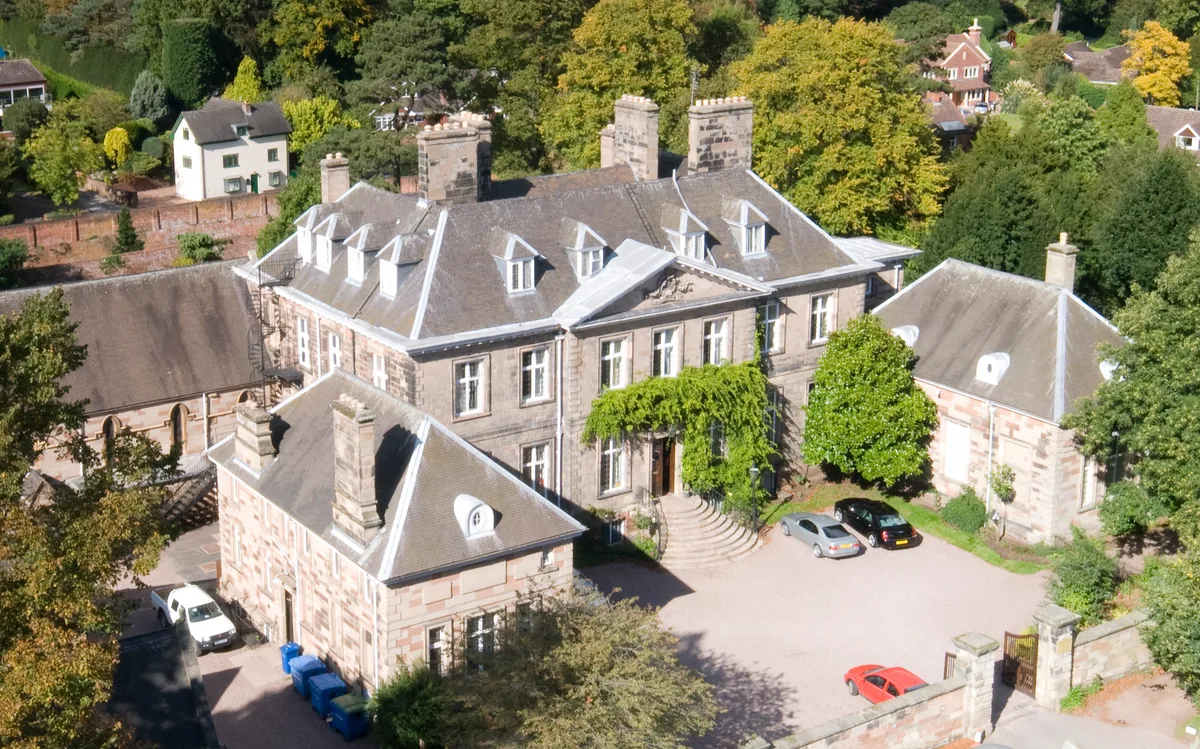
Bishop's Palace, Lichfield
Palaces · 0.1 km

10, The Close
Historic houses · 0.1 km

Lichfield Cathedral School
Cathedrals · 0.1 km
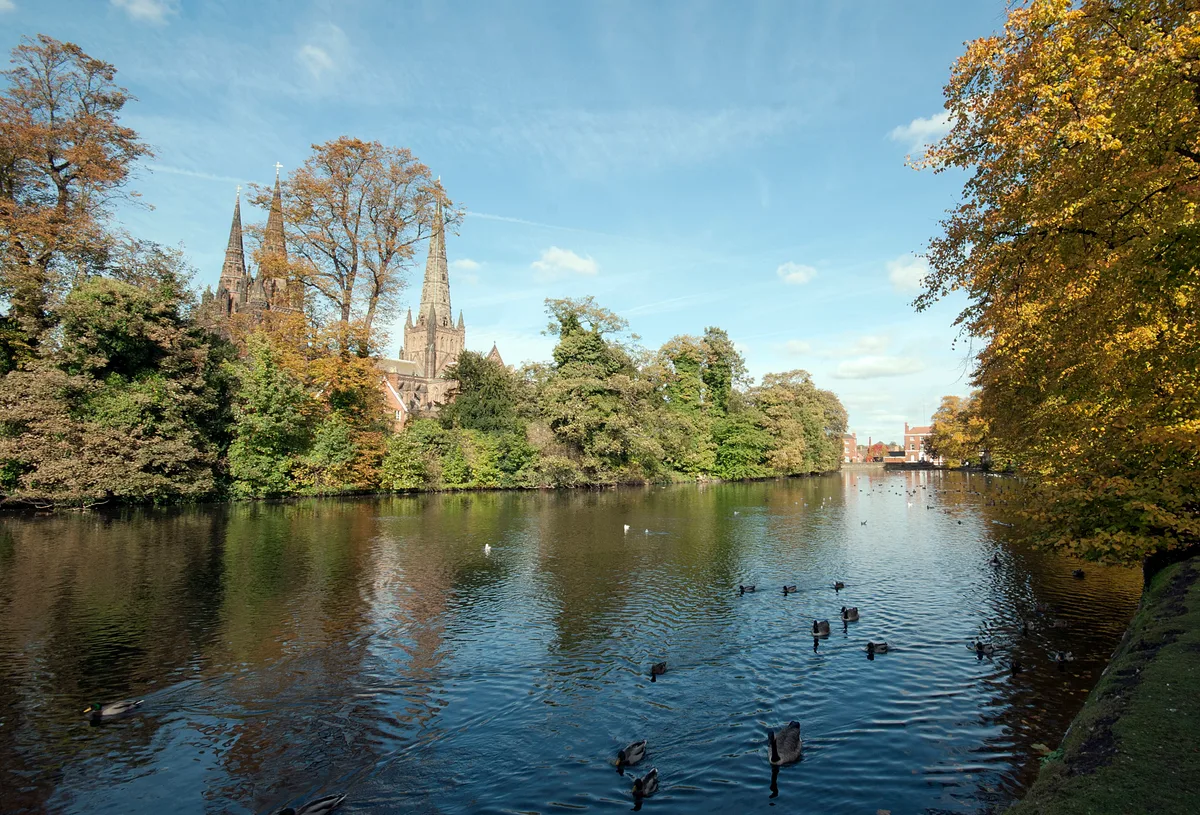
Minster Pool
Natural landmarks · 0.1 km
.jpg?width=1200)
War Memorial
Memorials & monuments · 0.1 km

Speakers' Corner
Natural landmarks · 0.1 km

Nartila
Public art & sculpture · 0.1 km
Erasmus Darwin House
Historic houses · 0.2 km

Causeway Bridge To End Og Minster Pool
Historic bridges · 0.2 km

Statue of Erasmus Darwin
Memorials & monuments · 0.2 km
Nearby
📷 3Historic houses · West Midlands
Chapter House Library
Chapter House Library — a other in england-west-midlands, United Kingdom.
📷 4Public art & sculpture · West Midlands
The Sleeping Children
The Sleeping Children in England West Midlands, United Kingdom.
📷 3Palaces · West Midlands
Bishop's Palace, Lichfield
Bishop's Palace, Lichfield — Grade I listed architectural structure in Lichfield, United Kingdom.
📷 3Historic houses · West Midlands
10, The Close
10, The Close — house in Lichfield, Staffordshire, England, UK.
📷 5Cathedrals · West Midlands
Lichfield Cathedral School
Lichfield Cathedral School — a school heritage in england-west-midlands, United Kingdom.
📷 3Where to eat & stay near Lichfield Cathedral
Places to stay
 📷 5
📷 5Hotels · West Midlands
George Hotel
George Hotel — a hotel in england west midlands.
 📷 5
📷 5 📷 5
📷 5Caravan parks · West Midlands
Kingfisher Holiday Park
Kingfisher Holiday Park — a caravan park in england east midlands.
 📷 5
📷 5Caravan parks · West Midlands
Cannock Chase Camping and Caravanning Club
Cannock Chase Camping and Caravanning Club — a caravan park in england east midlands.
 📷 5
📷 5Campsites · West Midlands
The Paddock Certificated Site
The Paddock Certificated Site — a campsite in england west midlands.
 📷 5
📷 5Hotels · West Midlands
The Castle Hotel
The Castle Hotel — a hotel in england west midlands.
Places to eat & drink
 📷 5
📷 5 📷 5
📷 5Historic pubs · West Midlands
The Scales Public House
The Scales Public House in England West Midlands, United Kingdom.
 📷 5
📷 5Restaurants · West Midlands
Thai Rainbow
Thai Rainbow — a restaurant in england west midlands.
 📷 5
📷 5Historic pubs · West Midlands
Earl Of Lichfield Arms Public House
Earl Of Lichfield Arms Public House in England West Midlands, United Kingdom.
 📷 5
📷 5Restaurants · West Midlands
Lichfield House
Lichfield House — a restaurant in england west midlands.
 📷 5
📷 5Historic pubs · West Midlands
Prince Of Wales Public House
Prince Of Wales Public House in England West Midlands, United Kingdom.
More cathedrals in this region
 ★ Iconic📷 3
Cathedrals · West Midlands
Merevale Abbey, a Cistercian monastery, associated water control features and industrial remains
Merevale Abbey, a Cistercian monastery, associated water control features and industrial remains is a cathedral in the United Kingdom.
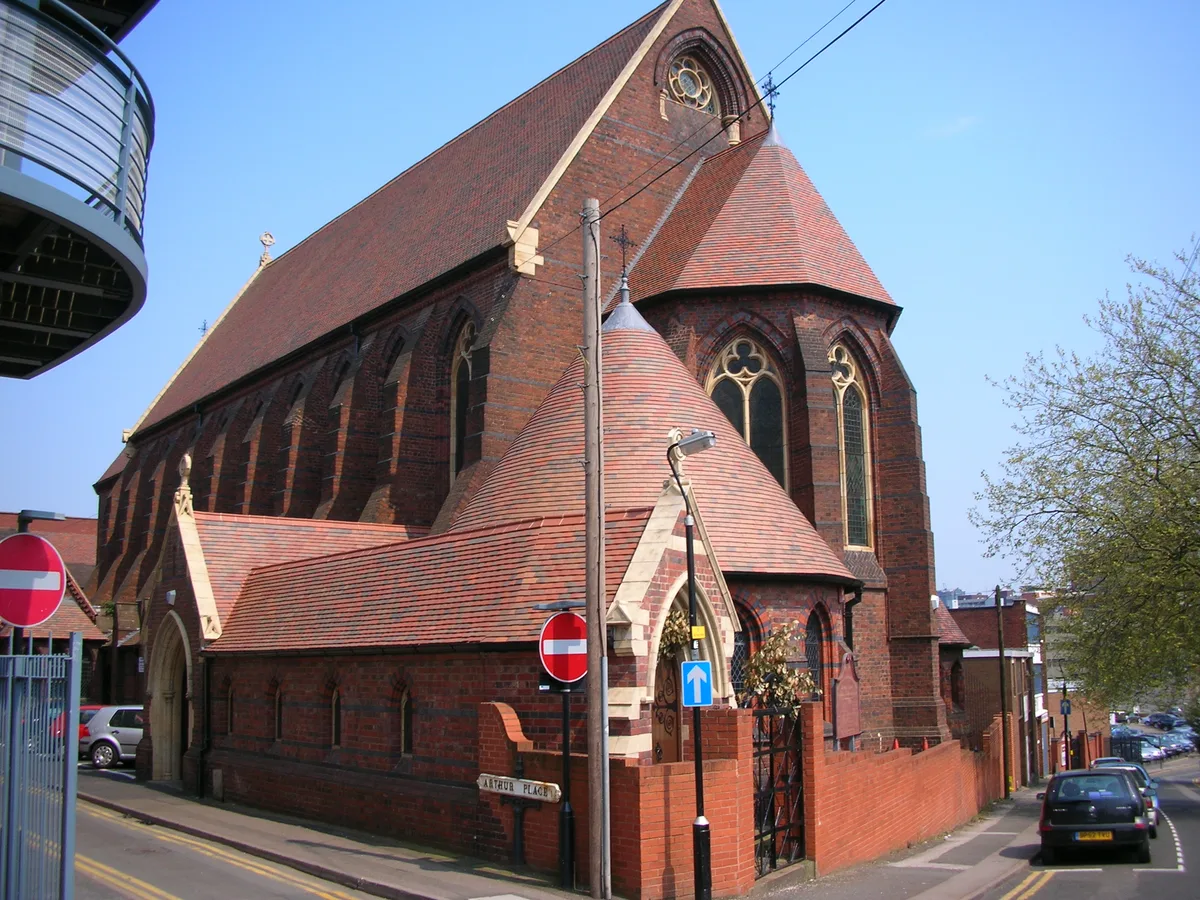 ★ Iconic📷 4
Cathedrals · West Midlands
Birmingham Orthodox Cathedral
Birmingham Orthodox Cathedral — Greek Orthodox cathedral in Birmingham, West Midlands, England, UK.
 📷 3
📷 3Cathedrals · West Midlands
Dragon Tree
Dragon Tree is a place of interest in the United Kingdom.
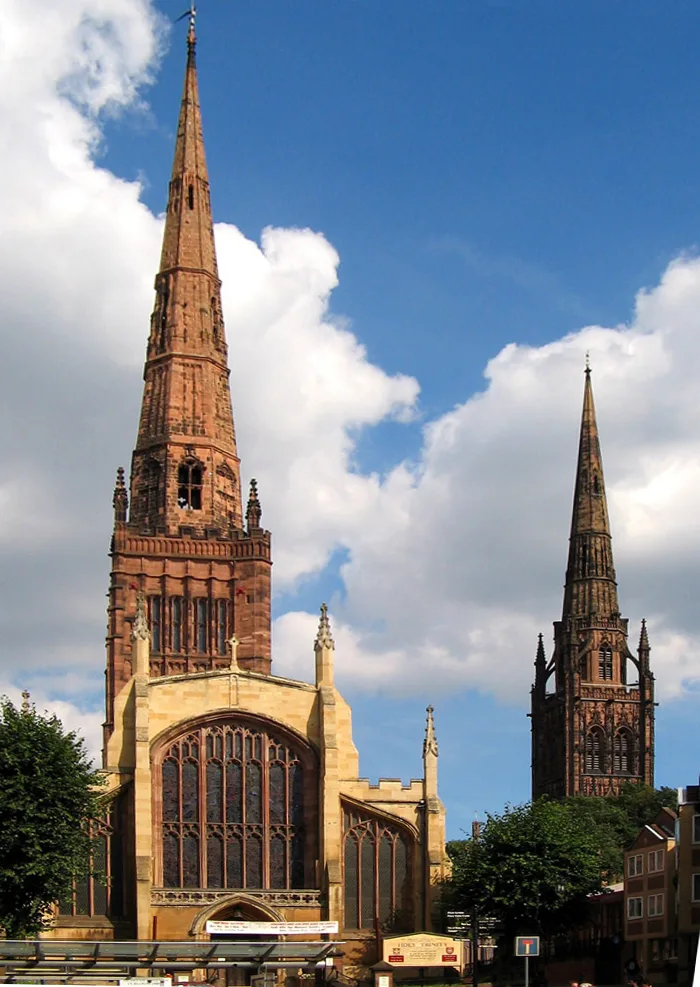 📷 5
📷 5Cathedrals · West Midlands
Holy Trinity Church, Coventry
Holy Trinity Church, Coventry — Grade I listed church in Coventry, West Midlands, England, UK.
Frequently asked questions
- Where is Lichfield Cathedral?
- Lichfield Cathedral is in Staffordshire, the West Midlands, United Kingdom (postcode WS13 6AE), in the parish of Lichfield.
- What is Lichfield Cathedral?
- Lichfield Cathedral, formally the Cathedral Church of Saint Mary and Saint Chad in Lichfield, is a Church of England cathedral in the city of Lichfield, England. It is the seat of the bishop of Lichfi
- How do I get to Lichfield Cathedral?
- The nearest railway station is Lichfield City, about 0.7 km away. The nearest town is Lichfield. Drivers can use postcode WS13 6AE.
- Is Lichfield Cathedral a protected site?
- Yes — Lichfield Cathedral is part of the Stowe Pool and Walk Mill Clay Pit SSSI Site of Special Scientific Interest.
- Is Lichfield Cathedral free to visit?
- Yes, Lichfield Cathedral is free to enter.
- How do I get to Lichfield Cathedral?
- The nearest railway station is Lichfield City, about 0.7 km away. Drivers can navigate to postcode WS13 6AE.