
Historic houses · South West England
Lansdown Crescent
In or near Bathford.
Lansdown Crescent — a Grade I-listed historic house in england-south-east, United Kingdom.

Philip Halling — CC BY-SA 2.0 via Wikimedia Commons licence

Plan your visit
- Typical visit
- 1 h–2 h
- Nearest railway station
- Bath Spa · 1.8 km
- Family-friendly
- Limited wheelchair access
Getting there & planning your visit
To visit Lansdown Crescent, the nearest railway station is Bath Spa, located 1.8 km away. The postcode is BA1 5EX. Accessibility is limited for wheelchair users.
About
Lansdown Crescent is a Grade I-listed building in england-south-east, United Kingdom. Grade I status is conferred by Historic England (or Cadw, Historic Environment Scotland or NIEA equivalents) on buildings of exceptional national interest. See the linked Wikipedia article for full historical and architectural details.
Photo gallery
Protected designations
- Area of Outstanding Natural Beauty: Cotswolds
Designations sourced from Natural England open data under OGL v3.
From the Wikipedia article
Lansdown Crescent is a well-known example of Georgian architecture in Bath, Somerset, England, designed by John Palmer and constructed by a variety of builders between 1789 and 1793. The buildings have a clear view over central Bath, being sited on Lansdown Hill near to, but higher than, other well-known Georgian buildings including the Royal Crescent, St James's Square, Bath and The Circus, Bath. It forms the central part of a string of curved terraces, including Lansdown Place East and West, and Somerset Place, which were the northernmost boundary of the development of Georgian Bath.
Excerpt from Wikipedia under CC BY-SA 4.0. See the source article linked in Sources below.
Background
History
The crescent was laid out by John Palmer who ensured that the three-storey fronts of the buildings were of uniform height and had matching doors and windows. The attic rooms are under a parapet and slate mansard roof. Other builders were then able to construct the houses behind the facade. The commission was from Charles Spackman, leading to the original name of the terrace being Spackman's Buildings. During World War I the crescent was frequently painted by the artist Walter Sickert. An unexploded bomb which had been dropped during the Bath Blitz of World War II was discovered in 2016, which required evacuation of the residents while it was made safe and then safely removed. In 2016…
Architecture
The crescent, which is a grade I listed building, comprises 20 houses, each originally having four floors together with a basement and sub-basement levels below ground. Servants did not sleep in the basements. It is arranged as a concave crescent, and is flanked by Lansdown Place West and Lansdown Place East, both convex crescents and grade II listed buildings in their own right. The two central houses, numbers 10 and 11, have a paired entrance with four Tuscan columns with a cornice and frieze above them. The central point between the windows of the first floor has a blind niche. There is also an archway connecting 20, Lansdown Crescent and 1, Lansdown Place West, which is a Grade I listed…
Sourced from Wikipedia under CC BY-SA 4.0.
- Coordinates
- 51.3925, -2.3658
- District
- Bath and North East Somerset
- Parish
- Bath and North East Somerset, unparished area
- Postcode
- BA1 5EX
- Parliamentary constituency
- Bath
- Established
- 1793
- Nearest railway station
- Bath Spa — 1.8 km
Sources
- wikidata: Q6487349 (CC0)
- wikipedia: Lansdown Crescent, Bath (CC BY-SA 4.0)
Other places nearby

Archway
Historic bridges · 0.1 km

Lansdown Temple
Follies · 0.1 km
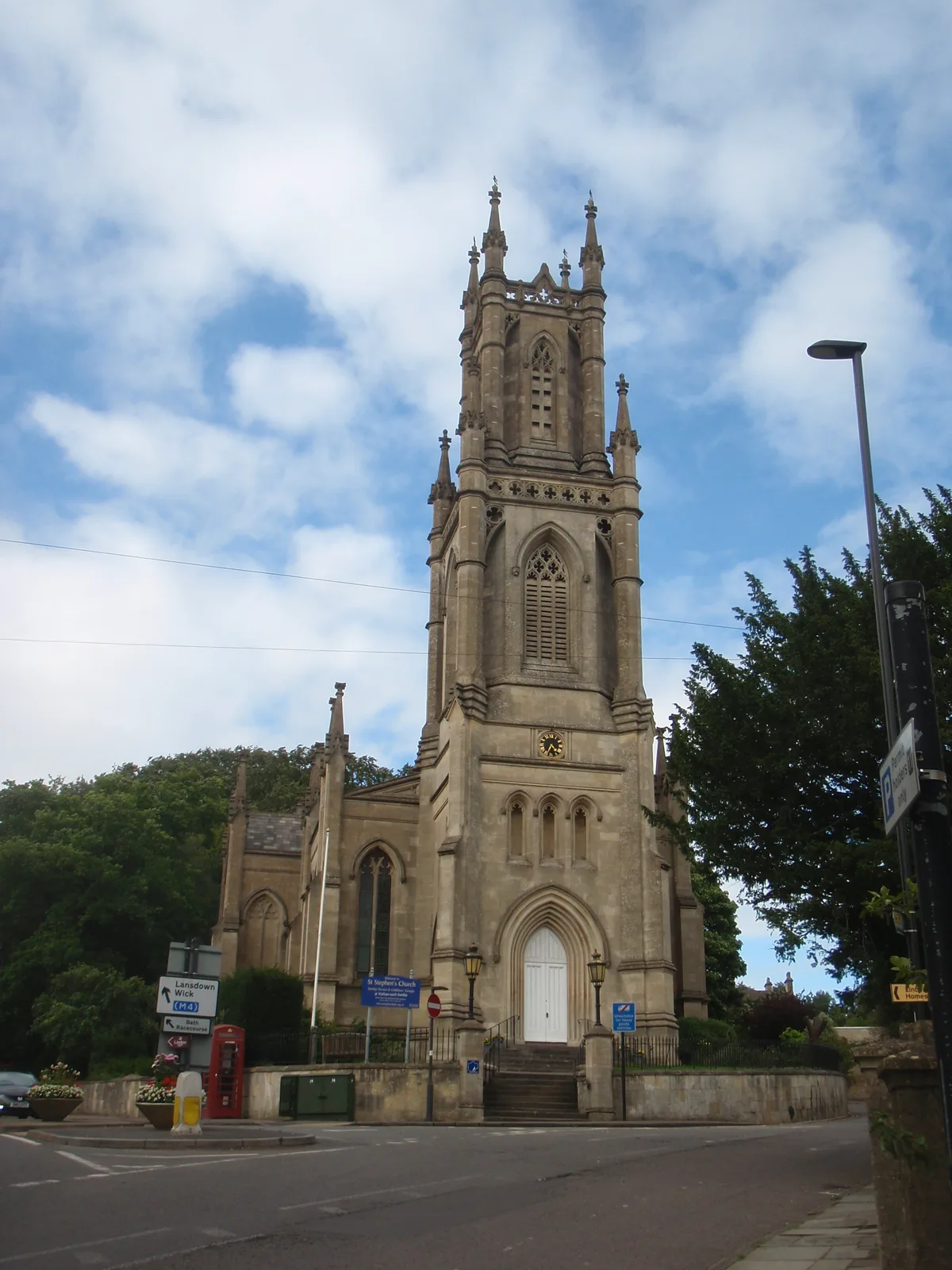
St Stephen's Church, Bath
Historic churches · 0.2 km

The Lansdown Grove Hotel
Hotels · 0.2 km
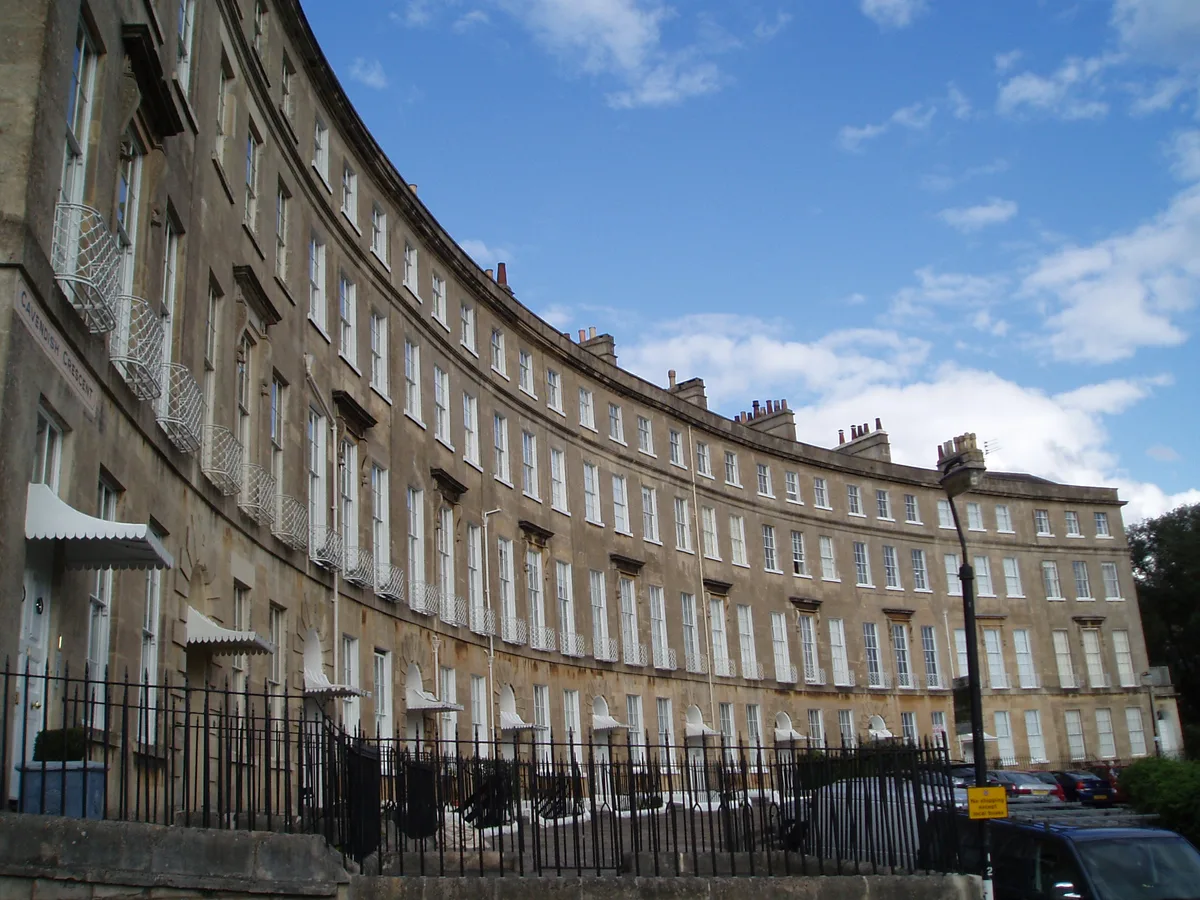
Cavendish Crescent
Museums · 0.3 km

1 Cavendish Place
Historic houses · 0.3 km
2 Cavendish Place
Historic houses · 0.3 km
16-22 St James's Square
Historic houses · 0.4 km
23-37 St James's Square
Historic houses · 0.4 km

1-9, Sion Hill Place
Historic houses · 0.5 km

Royal School
Natural landmarks · 0.5 km

Museum of Bath at Work
Museums · 0.5 km
Nearby
Flagship📷 5Historic bridges · South West England
Archway
Archway — a Grade I-listed bridge in england-south-east, United Kingdom.
📷 5📷 5Historic churches · South West England
St Stephen's Church, Bath
St Stephen's Church, Bath — church in Bath and North East Somerset, England, UK.
📷 5Hotels · South West England
The Lansdown Grove Hotel
The Lansdown Grove Hotel — a hotel in england south east.
📷 5Museums · South West England
Cavendish Crescent
Cavendish Crescent — Georgian crescent in Bath, Somerset, England, UK.
📷 5Historic houses · South West England
1 Cavendish Place
1 Cavendish Place — a Grade I-listed historic house in england-south-east, United Kingdom.
Where to eat & stay near Lansdown Crescent
Places to stay
📷 5Hotels · South West England
The Lansdown Grove Hotel
The Lansdown Grove Hotel — a hotel in england south east.
 📷 5
📷 5Hotels · South West England
The Royal Crescent Hotel
The Royal Crescent Hotel — a hotel in england south east.
 📷 5
📷 5Hostels · South West England
Bath YMCA
Bath YMCA — a hostel in england south east.
 📷 7
📷 7B&Bs · South West England
Chestnuts House
Chestnuts House — a bed-and-breakfast in england south east.
 📷 5
📷 5B&Bs · South West England
Brooks Guest House
Brooks Guest House — a bed-and-breakfast in england south east.
 📷 7
📷 7Hotels · South West England
DoubleTree by Hilton Bath
DoubleTree by Hilton Bath — a hotel in england south east. 4-star. Brand: DoubleTree.
Places to eat & drink
 📷 5
📷 5Cafés · South West England
The Green Bird Café
The Green Bird Café — a café in england south east.
 📷 5
📷 5Restaurants · South West England
Olive Tree Restaurant
Olive Tree Restaurant — a restaurant in england south east.
📷 5 📷 5
📷 5 📷 7
📷 7Restaurants · South West England
Clayton’s Kitchen
Clayton’s Kitchen — a restaurant in england south east.
 📷 5
📷 5Restaurants · South West England
The Beefy Boys
The Beefy Boys — a restaurant in england south east.
Other works by John Palmer
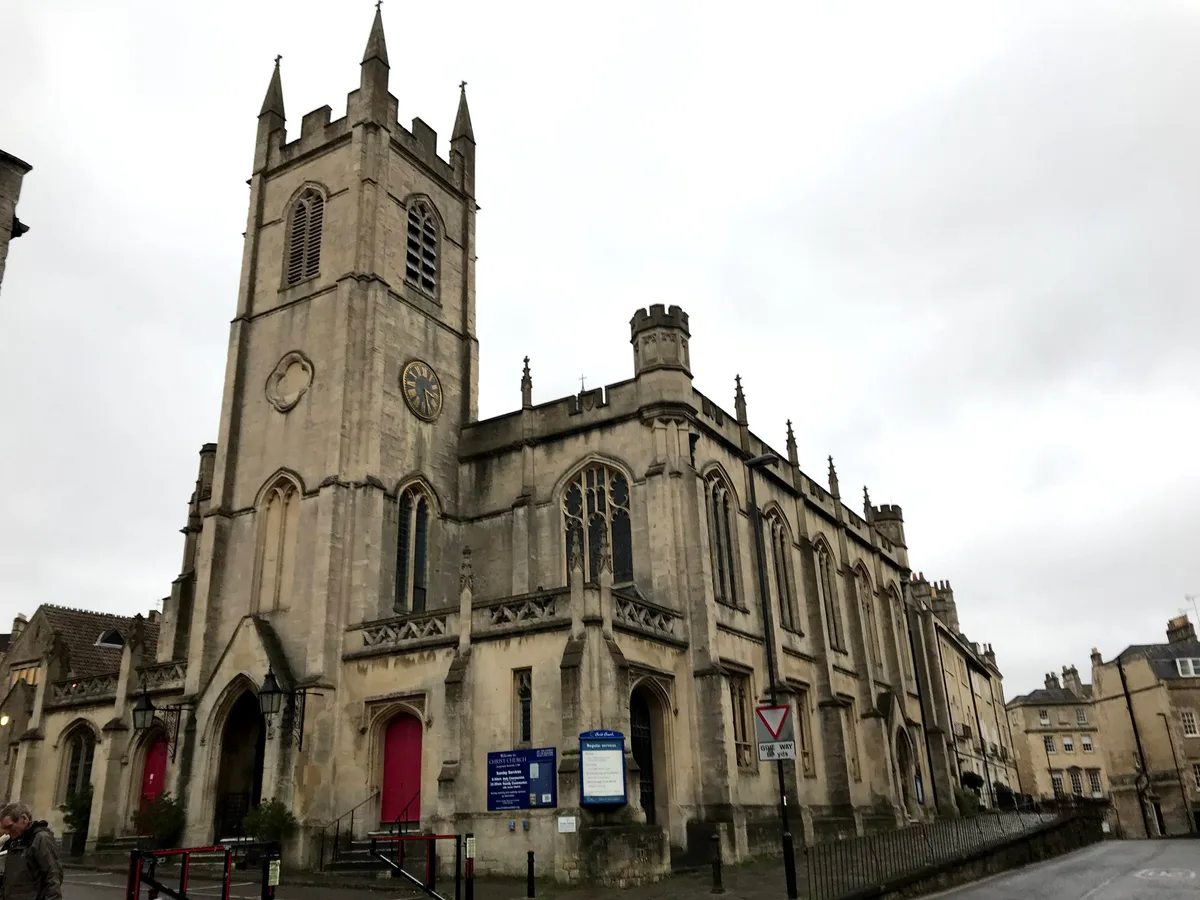 📷 5
📷 5Historic churches · South West England
Christ Church, Bath
Christ Church, Bath — church in Bath, Bath and North East Somerset, Somerset, England, UK.
 📷 5
📷 5Open-air theatres · South West England
Theatre Royal, Bath
Theatre Royal, Bath — a open-air theatre in england south east.
 📷 4
📷 4Abbeys & priories · North West England
Pleasington Priory
Pleasington Priory — a Grade I-listed abbey in england-north-west, United Kingdom.
More historic houses in this region
 📷 5
📷 5Historic houses · South West England
1 South Parade
1 South Parade — Grade I listed house in Bath, Somerset, England, UK.
_(geograph_6440799).jpg?width=1200) 📷 5
📷 5Historic houses · South West England
1-4 Lansdowne Grove, Morris Lane
1-4 Lansdowne Grove, Morris Lane — houses in Devizes, Wiltshire, England, UK.
 📷 5
📷 5Historic houses · South West England
2 North Parade
2 North Parade — building in Bath, UK; part of Abbey Hotel.
 📷 5
📷 5Historic houses · South West England
2, South Place, Lacock Road
2, South Place, Lacock Road — house in Corsham, Wiltshire, England, UK.
Frequently asked questions
- Where is Lansdown Crescent?
- Lansdown Crescent is in South-West England, United Kingdom (postcode BA1 5EX), in the parish of Bath and North East Somerset, unparished area.
- What is Lansdown Crescent?
- Lansdown Crescent — a Grade I-listed historic house in england-south-east, United Kingdom.
- How do I get to Lansdown Crescent?
- The nearest railway station is Bath Spa, about 1.8 km away. The nearest town is Bathford. Drivers can use postcode BA1 5EX.
- When was Lansdown Crescent built?
- Built or established in 1793. Designed by John Palmer.
- Is Lansdown Crescent a listed building?
- Lansdown Crescent is officially recognised as Grade I listed.
- Is Lansdown Crescent a protected site?
- Yes — Lansdown Crescent is part of the Cotswolds National Landscape (AONB).
- How do I get to Lansdown Crescent?
- The nearest railway station is Bath Spa, about 1.8 km away. Drivers can navigate to postcode BA1 5EX.