
Memorials & monuments · Yorkshire & the Humber
King Billy (William of Orange / William III)
Also known as: King Billy
In or near Kingston upon Hull.
King Billy (William of Orange / William III) is a memorial in the United Kingdom.

Wikimedia Commons contributors — see linked file page for photographer and licence licence

Plan your visit
- Typical visit
- 15 min–45 min
- Nearest railway station
- Hull Paragon Interchange · 1.0 km
- Free entry
- Dog-friendly
- Wheelchair accessible
About
King Billy (William of Orange / William III) is a public memorial or monument in the United Kingdom. Also known as: King Billy. Coordinates: 53.7411°, -0.3336°.
Photo gallery
Protected designations
- Site of Special Scientific Interest: Humber Estuary - 2000480 SSSI
- Ramsar wetland: Humber Estuary
Designations sourced from Natural England open data under OGL v3.
From the Wikipedia article
The equestrian statue of William III stands in the Market Place, Kingston upon Hull, East Riding of Yorkshire, England. Dating from 1734, it was created by Peter Scheemakers. The statue is a Grade I listed structure.
Excerpt from Wikipedia under CC BY-SA 4.0. See the source article linked in Sources below.
Background
History
William III, Prince of Orange, ascended the English throne in 1688 following the overthrow of James II in the Glorious Revolution. William ruled jointly with his wife, Mary, James's daughter, until her death in 1694, and then solely until his own death in 1702. In the 18th century, it became common for members of the Whig Ascendancy to assert their support for the Protestant Succession, and by implication their opposition to the Jacobite challenge, by commemorating William. This approach was adopted in Hull; the statue being erected in 1734 with a dedication to "The memory of King William III our great deliverer". The four lamps which stand at the corners of the statue are late-19th century…
Architecture
The sculpture is in gilded lead and depicts William in the style of a Roman senator. It stands on a stone plinth. The front of the plinth carries an inscription. The statue is a Grade I listed structure, the highest grading given to buildings and structures of "exceptional interest". David Neave, in his Yorkshire: York and the East Riding volume in the Pevsner Buildings of England series, revised and reissued in 2005, describes it as a "fine gilded equestrian statue". Neave is equally appreciative of the public lavatory, "a rare survival of a little-altered Art Nouveau" design with tiling by Burmantofts of Leeds. It is a Grade II listed building.
Sourced from Wikipedia under CC BY-SA 4.0.
- Coordinates
- 53.7411, -0.3336
- District
- Kingston upon Hull, City of
- Parish
- Kingston upon Hull, City of, unparished area
- Postcode
- HU1 1RD
- Parliamentary constituency
- Kingston upon Hull West and Haltemprice
- Phone
- +44 1482 300 300
- Established
- 1734
- Nearest railway station
- Hull Paragon Interchange — 1 km
Sources
- osm: n282500074 (ODbL)
- wikipedia: Equestrian statue of William III, Kingston upon Hull (CC BY-SA 4.0)
- commons: King William's Statue - geograph.org.uk - 808050.jpg (CC BY-SA 4.0)
Other places nearby

Playgoers Theatre
Theatres · 0.1 km

Mackerel
Public art & sculpture · 0.1 km
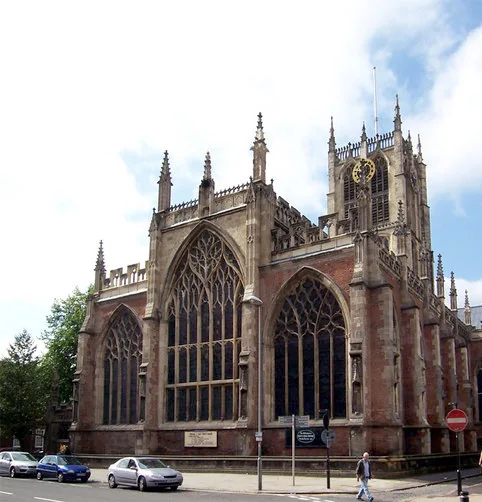
Hull Minster
Historic churches · 0.1 km

Hands on History Museum
Museums · 0.1 km

The Poet Andrew Marvell
Heritage railway stations · 0.1 km

The Kingston Public House
Historic pubs · 0.2 km

Dinostar
Museums · 0.2 km

Plaice
Public art & sculpture · 0.2 km

Icefish
Heritage railway stations · 0.2 km

TRUELOVE
Public art & sculpture · 0.2 km

Monkfish
Public art & sculpture · 0.2 km

Hake
Public art & sculpture · 0.2 km
Nearby
📷 3Theatres · Yorkshire & the Humber
Playgoers Theatre
Playgoers Theatre in England Yorkshire, United Kingdom.
📷 4Public art & sculpture · Yorkshire & the Humber
Mackerel
Mackerel — a public art in england-yorkshire, United Kingdom.
📷 5Historic churches · Yorkshire & the Humber
Hull Minster
Hull Minster — church building in Hull, Yorkshire and the Humber, England, UK.
📷 3Museums · Yorkshire & the Humber
Hands on History Museum
Hands on History Museum — a museum in england-yorkshire, United Kingdom.
📷 3Heritage railway stations · Yorkshire & the Humber
The Poet Andrew Marvell
The Poet Andrew Marvell — Public artwork (statue).
📷 5Historic pubs · Yorkshire & the Humber
The Kingston Public House
The Kingston Public House in England Yorkshire, United Kingdom.
Where to eat & stay near King Billy (William of Orange / William III)
Places to stay
 📷 7
📷 7Hotels · Yorkshire & the Humber
DoubleTree by Hilton Hull
DoubleTree by Hilton Hull — a hotel in england yorkshire. 4-star. Brand: DoubleTree.
 📷 5
📷 5Campsites · Yorkshire & the Humber
Marshlands Alpacas
Marshlands Alpacas — a campsite in england yorkshire.
 📷 5
📷 5Caravan parks · Yorkshire & the Humber
Roxton, Caravan & Motorhome Club
Roxton, Caravan & Motorhome Club — a caravan park in england yorkshire.
 📷 5
📷 5Caravan parks · Yorkshire & the Humber
Silver Birch Holiday Home Park
Silver Birch Holiday Home Park — a caravan park in england yorkshire.
 📷 5
📷 5Caravan parks · Yorkshire & the Humber
Spring Valley Campsite
Spring Valley Campsite — a caravan park in england yorkshire.
 📷 5
📷 5Places to eat & drink
📷 5Historic pubs · Yorkshire & the Humber
The Kingston Public House
The Kingston Public House in England Yorkshire, United Kingdom.
 📷 7
📷 7Historic pubs · Yorkshire & the Humber
The Old White Hart Inn
The Old White Hart Inn in England Yorkshire, United Kingdom.
 📷 5
📷 5Historic pubs · Yorkshire & the Humber
Prince's Dock Chambers And The Quayside Public House
Prince's Dock Chambers And The Quayside Public House in England Yorkshire, United Kingdom.
 📷 5
📷 5Historic pubs · Yorkshire & the Humber
Burlington Tavern
Burlington Tavern in England Yorkshire, United Kingdom.
 📷 5
📷 5Historic pubs · Yorkshire & the Humber
The Empress Public House
The Empress Public House in England Yorkshire, United Kingdom.
 📷 5
📷 5Historic pubs · Yorkshire & the Humber
Earl De Grey Public House
Earl De Grey Public House in England Yorkshire, United Kingdom.
More memorials in this region
 📷 3
📷 3Memorials & monuments · Yorkshire & the Humber
Disley War Memorial
Disley War Memorial — War memorial, dating to 1920.
 📷 3
📷 3Memorials & monuments · Yorkshire & the Humber
Hyde war memorial
Hyde war memorial is a memorial in the United Kingdom.
 📷 3
📷 3Memorials & monuments · Yorkshire & the Humber
Audenshaw War Memorial
Audenshaw War Memorial — Grade II listed building-listed memorial in england-west-midlands, United Kingdom.
 📷 3
📷 3Memorials & monuments · Yorkshire & the Humber
War memorial to front of Church of St Paul
War memorial to front of Church of St Paul — Grade II listed building-listed memorial in england-west-midlands, United Kingdom.
Frequently asked questions
- Where is King Billy (William of Orange / William III)?
- King Billy (William of Orange / William III) is in Yorkshire, United Kingdom (postcode HU1 1RD), in the parish of Kingston upon Hull, City of, unparished area.
- What is King Billy (William of Orange / William III)?
- King Billy (William of Orange / William III) is a memorial in the United Kingdom.
- How do I get to King Billy (William of Orange / William III)?
- The nearest railway station is Hull Paragon Interchange, about 1.0 km away. The nearest town is Kingston upon Hull. Drivers can use postcode HU1 1RD.
- When was King Billy (William of Orange / William III) built?
- Built or established in 1734.
- Is King Billy (William of Orange / William III) a protected site?
- Yes — King Billy (William of Orange / William III) is part of the Humber Estuary - 2000480 SSSI Site of Special Scientific Interest and the Humber Estuary Ramsar wetland.
- Is King Billy (William of Orange / William III) free to visit?
- Yes, King Billy (William of Orange / William III) is free to enter.
- How do I get to King Billy (William of Orange / William III)?
- The nearest railway station is Hull Paragon Interchange, about 1.0 km away. Drivers can navigate to postcode HU1 1RD.