
Memorials & monuments · London
John Ruskin
In or near City of Westminster.
John Ruskin — a memorial in england-london, United Kingdom.

N Chadwick — CC BY-SA 2.0 via Wikimedia Commons licence

Plan your visit
- Typical visit
- 15 min–45 min
- Nearest railway station
- Herne Hill · 0.6 km
- Free entry
- Dog-friendly
Getting there & planning your visit
To visit the John Ruskin memorial in Lambeth, London, you can take a train to Herne Hill station, which is 0.6 km away. Entry to the memorial is free. The postcode for sat-nav is SE24 9QS.
About
John Ruskin is a memorial located in england-london, United Kingdom. Sourced from OpenStreetMap (ODbL licence); see local listings for visitor information, opening hours and admission details.
Photo gallery
See it from the streetimagery from 2022
Imagery © Mapillary contributors, CC BY-SA 4.0
From the Wikipedia article
John Ruskin (8 February 1819 – 20 January 1900) was an English polymath – a writer, lecturer, art historian, art critic, draughtsman and philanthropist of the Victorian era. He wrote on subjects as varied as art, architecture, political economy, education, museology, geology, botany, ornithology, literature, history, and myth. Ruskin's writing styles and literary forms were equally varied. He wrote essays and treatises, poetry and lectures, travel guides and manuals, letters and even a fairy tale, The King of the Golden River. He also made detailed sketches and paintings of rocks, plants, birds, landscapes, architectural structures and ornamentation. The elaborate style that characterised his earliest writing on art gave way in time to plainer language designed to communicate his ideas more effectively. In all of his writing, he emphasised the connections between nature, art and society. Ruskin was hugely influential in the latter half of the 19th century and up to the First World War. After a period of relative decline, his reputation has steadily improved since the 1960s with the publication of numerous academic studies of his work. Today, his ideas and concerns are widely recognised as having anticipated interest in environmentalism, sustainability, ethical consumerism, and craft. Ruskin first came to widespread attention with the first volume of Modern Painters (1843), an extended essay in defence of the work of J. M. W. Turner in which he argued that the principal duty of the artist is "truth to nature". This meant rooting art in experience and close observation. From the 1850s, he championed the Pre-Raphaelites, who were influenced by his ideas. His work increasingly focused on social and political issues. Unto This Last (1860, 1862) marked the shift in emphasis. In 1869, Ruskin became the first Slade Professor of Fine Art at the University of Oxford, where he established the Ruskin School of Drawing. In 1871, he began his monthly "letters to the workmen and labourers of Great Britain", published under the title Fors Clavigera (1871–1884). In the course of this complex and deeply personal work, he developed the principles underlying his ideal society. Its practical outcome was the founding of the Guild of St George, an organisation that endures today.
Excerpt from Wikipedia under CC BY-SA 4.0. See the source article linked in Sources below.
Background
History
Ruskin's belief in preservation of ancient buildings had a significant influence on later thinking about the distinction between conservation and restoration. His position at the beginning of his career was very radical and he believed that if no conservation had been done on a building it should be left to die. In The Seven Lamps of Architecture, (1849) Ruskin wrote: For Ruskin, the "age" of a building was crucially significant as an aspect in its preservation: "For, indeed, the greatest glory of a building is not in its stones, not in its gold. Its glory is in its Age, and in that deep sense of voicefulness, of stern watching, of mysterious sympathy, nay, even of approval or condemnation,…
Architecture
Ruskin's developing interest in architecture, and particularly in the Gothic, led to the first work to bear his name, The Seven Lamps of Architecture (1849). It contained 14 plates etched by the author. The title refers to seven moral categories that Ruskin considered vital to and inseparable from all architecture: sacrifice, truth, power, beauty, life, memory, and obedience. All would provide recurring themes in his future work. Seven Lamps promoted the virtues of a secular and Protestant form of Gothic. It was a challenge to the Catholic influence of architect A. W. N. Pugin. In November 1849, John and Effie Ruskin visited Venice, staying at the Hotel Danieli. Their different…
Description
, 1894 print]] Ruskin wrote over 250 works, initially art criticism and history, but expanding to cover topics ranging over science, geology, ornithology, literary criticism, the environmental effects of pollution, mythology, travel, political economy and social reform. After his death Ruskin's works were collected in the 39-volume "Library Edition", completed in 1912 by his friends Edward Tyas Cook and Alexander Wedderburn. The range and quantity of Ruskin's writing, and its complex, allusive and associative method of expression, cause certain difficulties. In 1898, John A. Hobson observed that in attempting to summarise Ruskin's thought, and by extracting passages from across his work,…
Sourced from Wikipedia under CC BY-SA 4.0.
- Coordinates
- 51.4575, -0.0960
- District
- Lambeth
- Parish
- Lambeth, unparished area
- Postcode
- SE24 9QS
- Parliamentary constituency
- Dulwich and West Norwood
- Nearest railway station
- Herne Hill — 0.6 km
Sources
- osm: node/6635620854 (ODbL)
- wikipedia: John Ruskin (CC BY-SA 4.0)
Other places nearby
Sax Rohmer
Memorials & monuments · 0.0 km

Herne Hill
Chapels · 0.4 km

The Charter School
Natural landmarks · 0.5 km

Half Moon
Historic pubs · 0.6 km

North Dulwich railway station
Heritage railway stations · 0.6 km
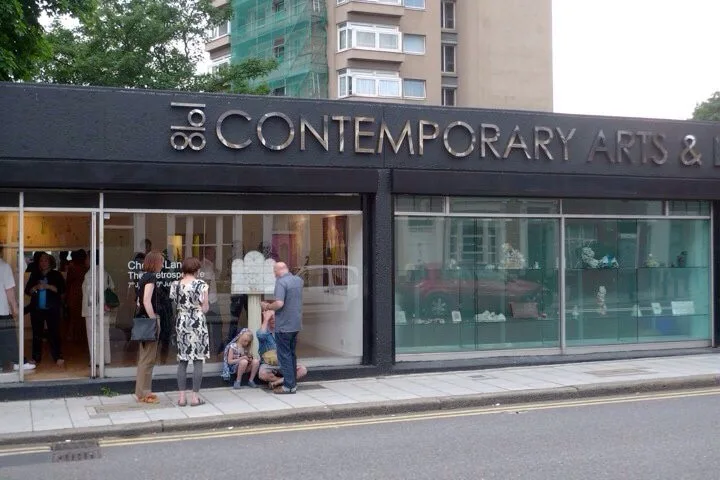
198 Contemporary Arts and Learning
Galleries · 0.7 km

The Radical histories of Railton Road
Public art & sculpture · 0.7 km

C. L. R. James
Memorials & monuments · 0.7 km

Bond of Union
Public art & sculpture · 0.7 km

Striding Man
Public art & sculpture · 0.8 km

Brockwell Park Miniature Railway
Miniature railways · 0.8 km
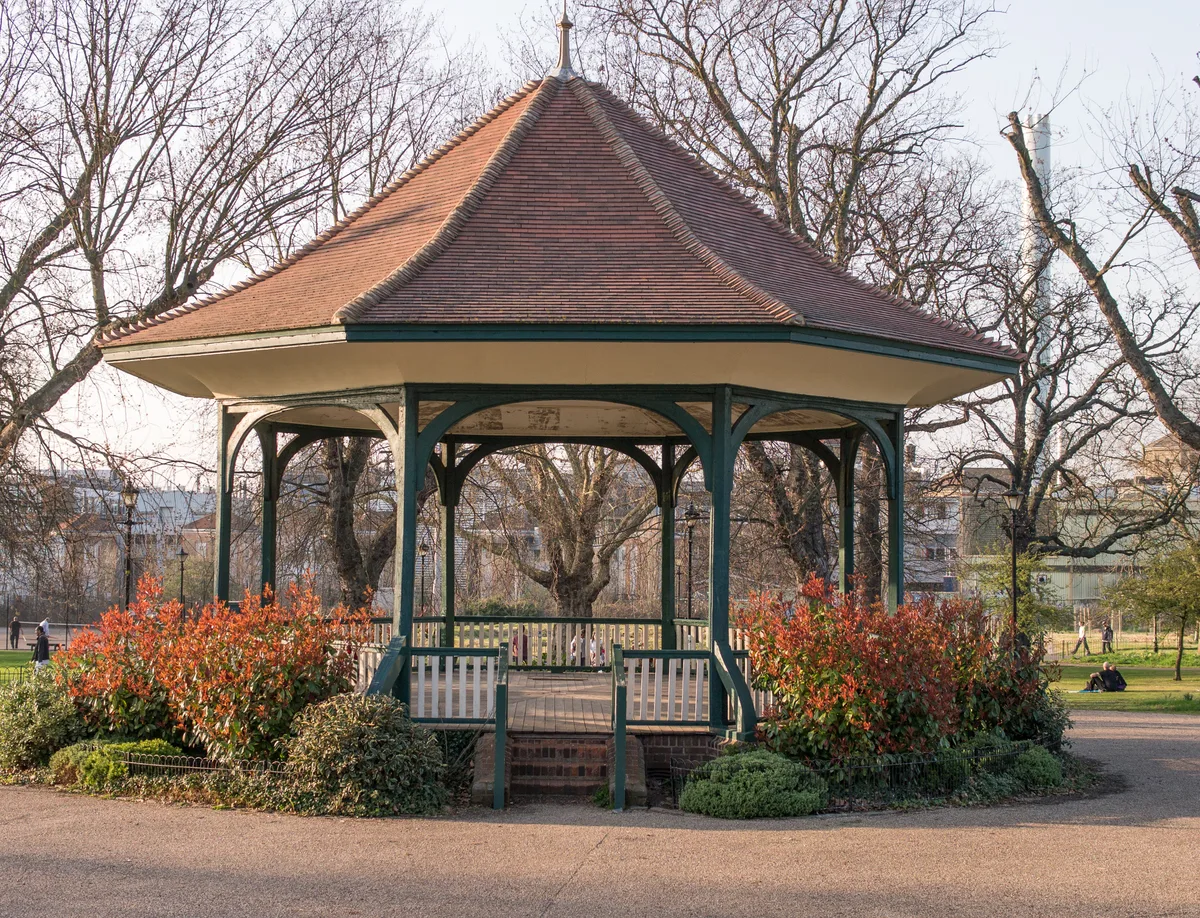
Ruskin Park
Country parks · 0.8 km
Nearby
📷 5Memorials & monuments · London
Sax Rohmer
Sax Rohmer — a memorial in england-london, United Kingdom.
📷 5📷 5Natural landmarks · London
The Charter School
The Charter School — a school heritage in england-london, United Kingdom.
📷 7📷 5Heritage railway stations · London
North Dulwich railway station
North Dulwich railway station — a Grade II-listed railway station in england-london, United Kingdom.
📷 5Galleries · London
198 Contemporary Arts and Learning
198 Contemporary Arts and Learning — arts gallery/organisation in London.
Where to eat & stay near John Ruskin
Places to stay
 📷 5
📷 5Hostels · London
Hootananny Brixton
Hootananny Brixton — a hostel in england london.
 📷 7
📷 7 📷 7
📷 7Hotels · London
Best Western London Peckham Hotel
Best Western London Peckham Hotel — a hotel in england london. 3-star. Brand: Best Western.
 📷 5
📷 5Hostels · London
Ostello dei Padri Scalabriniani
Ostello dei Padri Scalabriniani — a hostel in england london.
 📷 5
📷 5Campsites · London
South London Scout Centre
South London Scout Centre — a campsite in england london.
 📷 7
📷 7Hotels · London
Peckham Rooms Hotel
Peckham Rooms Hotel — a hotel in england london.
Places to eat & drink
📷 7 📷 5
📷 5Historic pubs · London
The Crown and Greyhound
The Crown and Greyhound in England London, United Kingdom.
 📷 5
📷 5 📷 5
📷 5 📷 5
📷 5 📷 7
📷 7More memorials in this region
.jpg?width=1200) 📷 5
📷 5Memorials & monuments · London
1st Surrey Rifles War Memorial
1st Surrey Rifles War Memorial is a memorial in the United Kingdom.
 📷 5
📷 5Memorials & monuments · London
24th East Surrey Division War Memorial
24th East Surrey Division War Memorial is a memorial in the United Kingdom.
 📷 5
📷 5Memorials & monuments · London
Abney Park Cemetery CWGC Cross
Abney Park Cemetery CWGC Cross is a memorial in the United Kingdom.
 📷 5
📷 5Memorials & monuments · London
Admiral Sir John Franklin
Admiral Sir John Franklin is a memorial in the United Kingdom.
Frequently asked questions
- Where is John Ruskin?
- John Ruskin is in London, United Kingdom (postcode SE24 9QS), in the parish of Lambeth, unparished area.
- What is John Ruskin?
- John Ruskin — a memorial in england-london, United Kingdom.
- How do I get to John Ruskin?
- The nearest railway station is Herne Hill, about 0.6 km away. The nearest town is City of Westminster. Drivers can use postcode SE24 9QS.
- Is John Ruskin free to visit?
- Yes, John Ruskin is free to enter.
- How do I get to John Ruskin?
- The nearest railway station is Herne Hill, about 0.6 km away. Drivers can navigate to postcode SE24 9QS.