
Historic houses · London
Inverforth House
In or near Tyburn.
Inverforth House — house in Hampstead, London Borough of Camden, England, UK.

Wikimedia Commons contributors — see linked file page for photographer and licence licence

Plan your visit
- Typical visit
- 1 h–2 h
- Nearest railway station
- Hampstead · 0.9 km
- Family-friendly
- Limited wheelchair access
Getting there & planning your visit
To visit Inverforth House, the nearest railway station is Hampstead, located 0.9 km away. The postcode is NW3 7EU, which can be used for sat-nav coordinates. Accessibility is limited for wheelchair users.
About
Inverforth House is a historic house in the United Kingdom — typically a country seat, manor, or town house with notable architecture or history. Records date its origin to 1807. Built in the Queen Anne Revival architecture style. Heritage designation: Grade II listed building. Wikidata describes it as: "house in Hampstead, London Borough of Camden, England, UK". Coordinates: 51.5648°, -0.1810°.
Photo gallery
See it from the streetimagery from 2024
Imagery © Mapillary contributors, CC BY-SA 4.0
From the Wikipedia article
Inverforth House (formerly known as The Hill) is a large detached house on North End Way at North End on the outskirts of Hampstead in the London Borough of Camden, NW3. Owned by William Lever, 1st Viscount Leverhulme from 1904 to 1925, The Hill was bought by Andrew Weir, 1st Baron Inverforth after Leverhulme's death in 1925, and following was given to Manor House Hospital after Inverforth's death in 1956. It became the women's section of Manor House Hospital, with about 100 beds and a Nurses' Home for 60-70 staff. Never part of the NHS, the Hospital was funded by the Industrial Orthopaedic Society, a trade union. According to the developer, mistakenly, Inverforth House was home to the Orthopaedic Society Hospital from the 1950s to the 1980s, and was converted into two houses and seven apartments in the late 1990s. Rebuilt in the British Queen Anne Revival style in 1895 by the architectural firm Grayson and Ould, it is a Grade II listed building. Built from red brick, Inverforth House has a steeply pitched roof. The architectural style of Inverforth House has been described as "Neo-Georgian" with "Queen Anne style wings". In 2002 English Heritage commemorated Viscount Leverhulme and geneticist and statistician Ronald Fisher, who lived there as a child from 1896 to 1904, with blue plaques.
Excerpt from Wikipedia under CC BY-SA 4.0. See the source article linked in Sources below.
Background
History
From 1896 to 1904, the house was lived in by the auctioneer and fine arts dealer George Fisher, a partner in Robinson & Fisher and his family of five children, including a young Ronald, the future geneticist and statistician Sir Ronald Fisher. Following his wife's death in 1904, George Fisher lost his fortune within 18 months, and the family moved south of the river to Streatham. The original house on the site was built in 1807, and was rebuilt by the Liverpool architectural firm Grayson and Ould, who greatly altered the house from 1905, their significant alterations included the rebuilding of the central block and the addition of northern and southern wings to the garden front. Grayson and…
Sourced from Wikipedia under CC BY-SA 4.0.
- Coordinates
- 51.5648, -0.1810
- District
- Camden
- Parish
- Camden, unparished area
- Postcode
- NW3 7EU
- Parliamentary constituency
- Hampstead and Highgate
- Established
- 1807
- Nearest railway station
- Hampstead — 0.9 km
Sources
- wikidata: Q15979023 (CC0)
- wikipedia: Inverforth House (CC BY-SA 4.0)
- commons: Inverforth House - geograph.org.uk - 486329.jpg (CC BY-SA 4.0)
Other places nearby

Ronald Fisher
Memorials & monuments · 0.0 km
William Lever
Memorials & monuments · 0.0 km

The Hill Garden and Pergola
Gardens · 0.1 km

Pitt house gateway
Historic houses · 0.2 km
.jpg?width=1200)
Hampstead Pergola
Gardens · 0.2 km

Hampstead War Memorial
Memorials & monuments · 0.2 km

Jack Straw's Castle
Historic pubs · 0.2 km

The Old Bull and Bush
Historic pubs · 0.3 km

D. H. Lawrence
Memorials & monuments · 0.4 km

Hampstead Heath
Mountains & hills · 0.4 km

Michael Ventris
Memorials & monuments · 0.4 km

Diogenist by Mark Batten
Public art & sculpture · 0.4 km
Nearby
📷 5Memorials & monuments · London
Ronald Fisher
Ronald Fisher — a memorial in england-london, United Kingdom.
📷 5Memorials & monuments · London
William Lever
William Lever — a memorial in england-london, United Kingdom.
📷 5Gardens · London
The Hill Garden and Pergola
The Hill Garden and Pergola — garden in Camden, London, England.
📷 5Historic houses · London
Pitt house gateway
Pitt house gateway — a historic house in england-london, United Kingdom.
📷 5📷 5Memorials & monuments · London
Hampstead War Memorial
Hampstead War Memorial — Grade II listed building-listed memorial in england-london, United Kingdom.
Where to eat & stay near Inverforth House
Places to stay
 📷 5
📷 5Hotels · London
Anchor House Hotel
Anchor House Hotel — a hotel in england london.
 📷 5
📷 5 📷 5
📷 5 📷 5
📷 5 📷 5
📷 5 📷 5
📷 5Places to eat & drink
📷 7Historic pubs · London
Jack Straw's Castle
Jack Straw's Castle in England London, United Kingdom.
📷 7Historic pubs · London
The Old Bull and Bush
The Old Bull and Bush in England London, United Kingdom.
 📷 5
📷 5 📷 5
📷 5Historic pubs · London
The Duke of Hamilton
The Duke of Hamilton in England London, United Kingdom.
 📷 7
📷 7Historic pubs · London
Spaniards Inn
Spaniards Inn — Historic pub — listed building or notable heritage status.
 📷 5
📷 5Historic pubs · London
Holly Bush
Holly Bush in England London, United Kingdom.
Other historic houses from this era
 Flagship📷 10
Historic houses · London
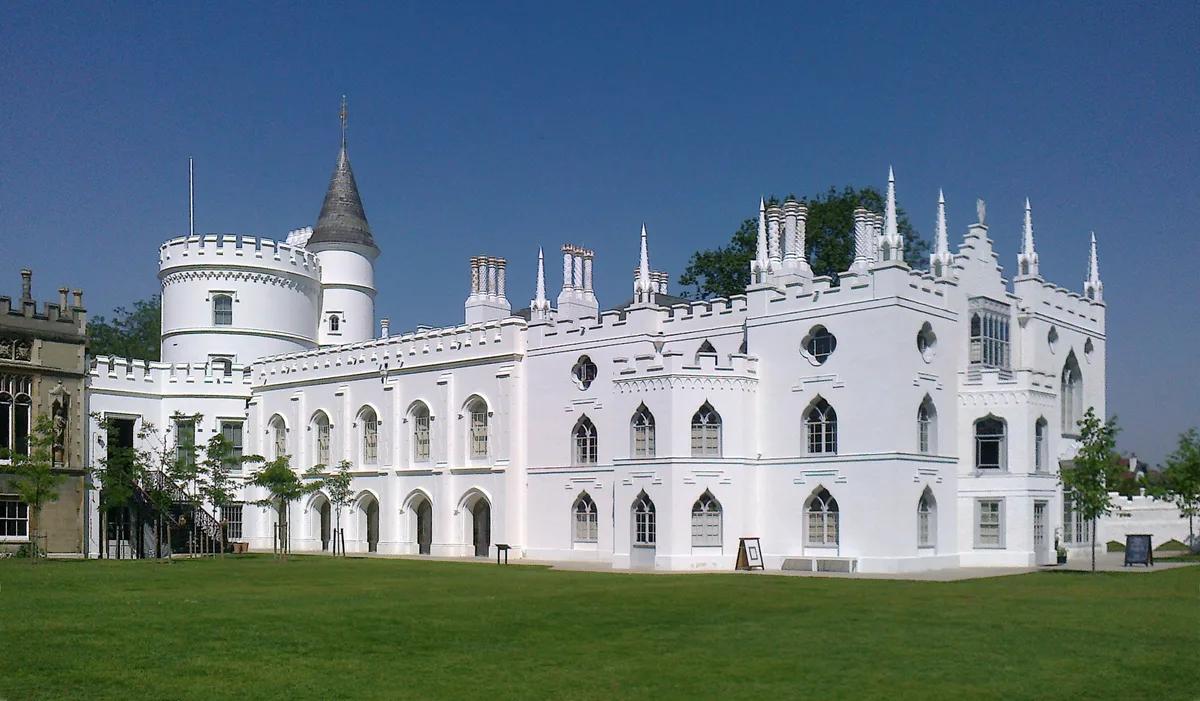
Strawberry Hill House
Strawberry Hill House — villa and house museum in Twickenham, London, United Kingdom.
 📷 5
📷 5Historic houses · London
12, Upper Grosvenor Street W1
12, Upper Grosvenor Street W1 — House in Mayfair, London W1.
 📷 5
📷 5Historic houses · London
123 Mortlake High Street
123 Mortlake High Street — house and former town hall in Mortlake, London.
 📷 5
📷 5Historic houses · London
15, Upper Grosvenor Street W1
15, Upper Grosvenor Street W1 — building in Westminster, London, England, UK.
More historic houses in this region
 📷 5
📷 5Historic houses · London
1 Old Palace Terrace
1 Old Palace Terrace — house in Richmond upon Thames, London, United Kingdom.
 📷 5
📷 5Historic houses · London
1 Palace Green
1 Palace Green — house on Palace Green, Kensington, London.
 📷 5
📷 5Historic houses · London
1–2 Orme Square
1–2 Orme Square — pair of houses in Orme Square, Bayswater, London.
 📷 5
📷 5Historic houses · London
10 Richmond Green
10 Richmond Green — house in Richmond upon Thames, London, United Kingdom.
Frequently asked questions
- Where is Inverforth House?
- Inverforth House is in London, United Kingdom (postcode NW3 7EU), in the parish of Camden, unparished area.
- What is Inverforth House?
- Inverforth House — house in Hampstead, London Borough of Camden, England, UK.
- How do I get to Inverforth House?
- The nearest railway station is Hampstead, about 0.9 km away. The nearest town is Tyburn. Drivers can use postcode NW3 7EU.
- When was Inverforth House built?
- Built or established in 1807.
- Who owns Inverforth House?
- Inverforth House is owned by Privately owned.
- Is Inverforth House a listed building?
- Inverforth House is officially recognised as Grade II listed building listed.
- How do I get to Inverforth House?
- The nearest railway station is Hampstead, about 0.9 km away. Drivers can navigate to postcode NW3 7EU.