
Abbeys & priories · Central Scotland
Inchcolm Abbey
In or near North Queensferry.
Inchcolm Abbey — historic site in Scotland.

Wikimedia Commons contributors — see linked file page for photographer and licence licence

Plan your visit
- Typical visit
- 45 min–1.5 h
- Nearest railway station
- Aberdour · 2.8 km
- Family-friendly
- Limited wheelchair access
Getting there & planning your visit
To visit Inchcolm Abbey, the nearest railway station is Aberdour, located 2.8 km away. The postcode for sat-nav is KY3 0XR. Accessibility is limited for wheelchair users.
About
Inchcolm Abbey is an abbey, priory, or monastic site in the United Kingdom. Heritage designation: scheduled monument. Affiliated with Catholicism. Part of Inchcolm, Abbey, hermit's cell, First World War and Second World War defences. Wikidata describes it as: "historic site in Scotland". Coordinates: 56.0300°, -3.3017°.
Photo gallery
See it from the streetimagery from 2019
Imagery © Mapillary contributors, CC BY-SA 4.0
Heritage listing
Inchcolm Abbey is a medieval abbey located on the island of Inchcolm in the Firth of Forth in Scotland. The Abbey, which is located at the centre of the island, was founded in the 12th century during the episcopate of Gregoir, Bishop of Dunkeld. Later tradition placed it even earlier, in the reign of King Alexander I of Scotland (1107–24), who had taken shelter on Inchcolm when his ship was forced ashore during a storm in 1123. It is said he resided there for three days with the Hermit of Inchcolm. The Abbey was first used as a priory by Augustinian canons regular, becoming a full abbey in 1235. The island was attacked by the English from 1296 onwards, and the Abbey was abandoned as a result of the Scottish Reformation in 1560.
From Historic Environment Scotland under OGL v3.
From Historic Environment Scotland
Learn a little of the history of Inchcolm Abbey, originally a priory founded by David I, and find out what to see when you visit Inchcolm Island. Contact us today for more information.
Read more on the official property page.
From the Wikipedia article
Inchcolm Abbey is a medieval abbey located on the island of Inchcolm in the Firth of Forth in Scotland. The Abbey, which is located at the centre of the island, was founded in the 12th century during the episcopate of Gregoir, Bishop of Dunkeld. Later tradition placed it even earlier, in the reign of King Alexander I of Scotland (1107–24), who had taken shelter on Inchcolm when his ship was forced ashore during a storm in 1123. It is said he resided there for three days with the Hermit of Inchcolm. The Abbey was first used as a priory by Augustinian canons regular, becoming a full abbey in 1235. The island was attacked by the English from 1296 onwards, and the Abbey was abandoned as a result of the Scottish Reformation in 1560. It has since been used for defensive purposes, as it is situated in a strategically important position in the middle of the Firth of Forth. A Latin inscription carved above the Abbey's entrance reads: Stet domus haec donec fluctus formica marinos ebibat, et totum testudo perambulet orbem Translated, it has been rendered thus: "Still may these turrets lift their heads on high, Nor e’er as crumbling ruins strew the ground, Until an ant shall drink the ocean dry, And a slow tortoise travel the world round." Inchcolm Abbey has the most complete surviving remains of any Scottish monastic house. The cloisters, chapter house, warming house, and refectory are all complete, and most of the remaining claustral buildings survive in a largely complete state. The least well-preserved part of the complex is the monastic church. The ruins are cared for by Historic Environment Scotland, which also maintains a visitor centre near the landing pier (entrance charge; ferry from South Queensferry). In July 1581 stones from the abbey were taken to Edinburgh to repair the Tolbooth. Among the Abbots of Inchcolm was the 15th-century chronicler Walter Bower.
Excerpt from Wikipedia under CC BY-SA 4.0. See the source article linked in Sources below.
- Coordinates
- 56.0300, -3.3017
- District
- Fife
- Postcode
- KY3 0XR
- Parliamentary constituency
- Cowdenbeath and Kirkcaldy
- Established
- 1147
- Nearest railway station
- Aberdour — 2.8 km
Sources
- wikidata: Q2610252 (CC0)
- wikipedia: Inchcolm Abbey (CC BY-SA 4.0)
- commons: Inchcolm Abbey Panorama.jpg (CC BY-SA 4.0)
Other places nearby

Inchcolm Abbey
Cathedrals · 0.0 km

Inchcolm Museum
Museums · 0.1 km
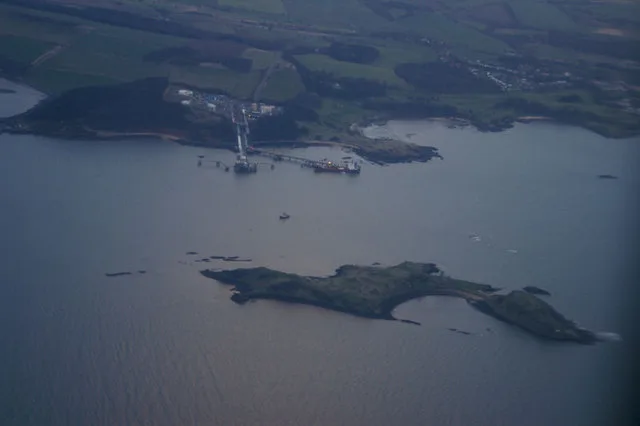
Inchcolm
Islands · 0.1 km

Hound Point
Historic bridges · 0.9 km

Carcraig
Islands · 1.0 km

Braefoot Bay
Natural landmarks · 1.1 km
Monks' Cave
Caves · 1.1 km

Braefoot Battery
Natural landmarks · 1.3 km

Braefoot Terminal
Harbours & ports · 1.4 km

Barnhill Bay
Natural landmarks · 1.5 km
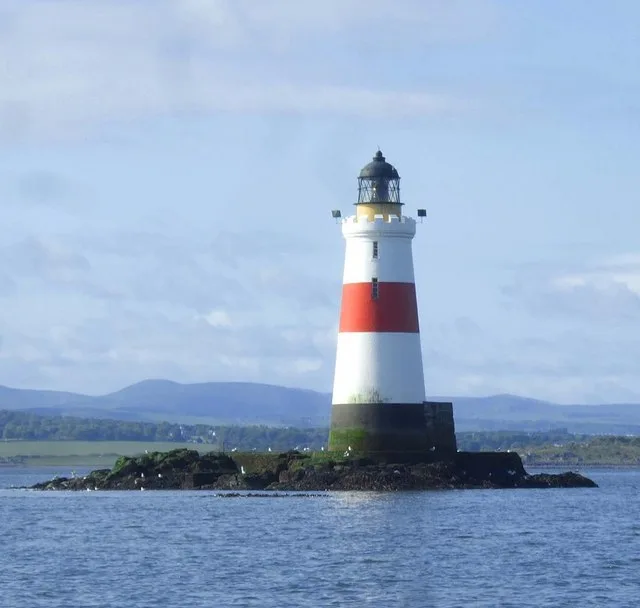
Oxcars Lighthouse
Lighthouses · 1.6 km
Cauldback Hill
Mountains & hills · 2.1 km
Nearby
📷 5📷 3Museums · Central Scotland
Inchcolm Museum
Inchcolm Museum — a museum in scotland-central, United Kingdom.
Flagship📷 3Islands · Central Scotland
Inchcolm
Inchcolm — island in the Firth of Forth in Scotland.
📷 4📷 3📷 5Natural landmarks · Central Scotland
Braefoot Bay
Braefoot Bay — a natural feature in scotland central.
Where to eat & stay near Inchcolm Abbey
Places to stay
 📷 5
📷 5 📷 5
📷 5B&Bs · Central Scotland
Links Guest House
Links Guest House — a bed-and-breakfast in scotland central.
 📷 5
📷 5Campsites · Central Scotland
Green Oak Nature Retreat
Green Oak Nature Retreat — a campsite in scotland central.
 📷 5
📷 5Campsites · Central Scotland
Edinburgh Caravan Club
Edinburgh Caravan Club — a campsite in scotland central.
 📷 5
📷 5Hotels · Central Scotland
DoubleTree by Hilton Edinburgh - Queensferry Crossing
DoubleTree by Hilton Edinburgh - Queensferry Crossing — a hotel in scotland central. 3-star. Brand: DoubleTree.
 📷 5
📷 5Caravan parks · Central Scotland
Pettycur Bay Holiday Park
Pettycur Bay Holiday Park — a caravan park in scotland central.
Places to eat & drink
 📷 5
📷 5Historic pubs · Central Scotland
The Star Tavern, 71-73 High Street, Burntisland
The Star Tavern, 71-73 High Street, Burntisland in Scotland Central, United Kingdom.
 📷 6
📷 6Historic pubs · Central Scotland
The Burgh Arms
The Burgh Arms in Scotland Islands, United Kingdom.
 📷 7
📷 7Historic pubs · Central Scotland
Granton Tavern, 160 Lower Granton Road, Edinburgh
Granton Tavern, 160 Lower Granton Road, Edinburgh in Scotland Central, United Kingdom.
 📷 6
📷 6Historic pubs · Central Scotland
Starbank Arms, 62-64 Laverockbank Road, Edinburgh
Starbank Arms, 62-64 Laverockbank Road, Edinburgh in Scotland Central, United Kingdom.
 📷 7
📷 7Historic pubs · Central Scotland
Hamilton's Bar & Kitchen
Hamilton's Bar & Kitchen in Scotland Central, United Kingdom.
 📷 5
📷 5Historic pubs · Central Scotland
Public House and Restaurant, 3 The Shore, Leith, Edinburgh
Public House and Restaurant, 3 The Shore, Leith, Edinburgh in Scotland Central, United Kingdom.
More abbeys in this region
 📷 4
📷 4 📷 4
📷 4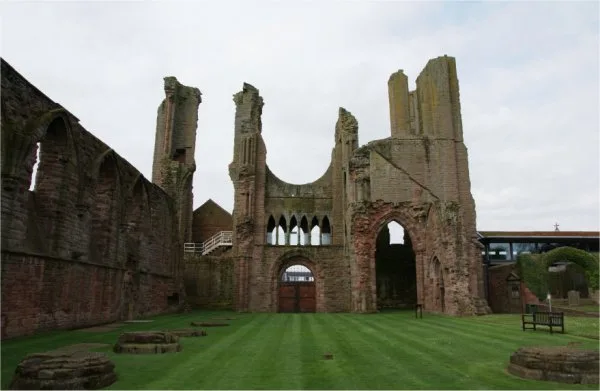 ★ Iconic📷 3
Abbeys & priories · Central Scotland
Arbroath Abbey
Arbroath Abbey — abbey in Arbroath, Scotland, United Kingdom.
 📷 4
📷 4Abbeys & priories · Central Scotland
Gartocharn
Gartocharn in Scotland Islands, United Kingdom.
Frequently asked questions
- Where is Inchcolm Abbey?
- Inchcolm Abbey is in central Scotland, United Kingdom (postcode KY3 0XR).
- What is Inchcolm Abbey?
- Inchcolm Abbey — historic site in Scotland.
- How do I get to Inchcolm Abbey?
- The nearest railway station is Aberdour, about 2.8 km away. The nearest town is North Queensferry. Drivers can use postcode KY3 0XR.
- When was Inchcolm Abbey built?
- Built or established in 1147.
- Is Inchcolm Abbey a listed building?
- Inchcolm Abbey is officially recognised as scheduled monument listed.
- How do I get to Inchcolm Abbey?
- The nearest railway station is Aberdour, about 2.8 km away. Drivers can navigate to postcode KY3 0XR.