
Historic houses · London
Imperial Chemical House
In or near City of Westminster.
Imperial Chemical House — a Grade II-listed historic house in england-london, United Kingdom.

Robert Lamb — CC BY-SA 2.0 via Wikimedia Commons licence

Plan your visit
- Typical visit
- 1 h–2 h
- Nearest railway station
- Westminster · 0.7 km
- Family-friendly
- Wheelchair accessible
Getting there & planning your visit
To visit Imperial Chemical House, the nearest railway station is Westminster, located 0.7 km away. The postcode for sat-nav is SW1P 3HA, and the site is wheelchair accessible.
About
Imperial Chemical House is a Grade II-listed building in england-london, United Kingdom. Grade II status is conferred by Historic England (or Cadw, Historic Environment Scotland or NIEA equivalents) on buildings of exceptional national interest. See the linked Wikipedia article for full historical and architectural details.
Photo gallery
Summary from the official site
Imperial Chemical House, also known as Smith Square Hall, is a historic venue located in Westminster. It hosts a variety of musical performances and events, showcasing both classical and contemporary music, and serves as a cultural hub for the community.
Read more on the official property page.
From the Wikipedia article
Imperial Chemical House is a Grade II listed building situated on Millbank, London, England, near the west end of Lambeth Bridge. It was designed by Sir Frank Baines in the neoclassical style of the inter-war years, and constructed between 1927 and 1929 as the headquarters for the newly created Imperial Chemical Industries (ICI). Thames House, the next building south along Millbank, across Horseferry Road, was also designed by Baines and constructed at the same time. Both buildings were built to house offices for the newly formed ICI, created in 1926 after the mergers of Nobel Industries, United Alkali, British Dyestuffs and Brunner Mond. The buildings were completed in the aftermath of the 1928 Thames flood, and Lambeth Bridge was also replaced. Imperial Chemical House was divided in 1987 to create Norwest House at 9 Millbank, and Nobel House at 17 Smith Square. ICI moved out in the 1990s.
Excerpt from Wikipedia under CC BY-SA 4.0. See the source article linked in Sources below.
Background
History
The building was occupied by ICI from the 1920s to the 1990s. It originally contained some 700 rooms, covering 2.8 ha, with a floor area of 34000 sqm, arranged around three large light wells. It was reconfigured internally in 1965 to accommodate staff moved from Thames House North, and divided in 1987–88 to create Norwest House, the southerly portion on 9 Millbank, and Nobel House facing Smith Square to the north. ICI moved out in 1999. Imperial Chemical House became a grade II listed building in 1981. In 1987, the listing was amended to refer to Norwest House. By 2018 Office of Gas and Electricity Markets moved out of the building. Nobel House at 17 Smith Square has been leased to the…
Description
Imperial Chemical House has five main storeys, with a four-storey attic and pitched leaded roof. It was constructed on a steel frame, with the ground floor façades faced in grey granite. The higher floors are faced in Portland stone, rusticated on the second to fifth stories. There are 27 bays including three doors along the Millbank façade, seven bays including one door in the corner splay at the junction of Millbank and Horseferry Road, and five bays along Horseferry Road. To the rear, part of the building faces onto Smith Square. The main entrance at the centre of the Millbank façade rises two storeys, with a decorative carved stone door surround encasing a pair of large panelled doors…
Sourced from Wikipedia under CC BY-SA 4.0.
- Coordinates
- 51.4950, -0.1256
- District
- Westminster
- Parish
- Westminster, unparished area
- Postcode
- SW1P 3HA
- Parliamentary constituency
- Cities of London and Westminster
- Established
- 1929
- Nearest railway station
- Westminster — 0.7 km
Sources
- wikidata: Q6006431 (CC0)
- wikipedia: Imperial Chemical House (CC BY-SA 4.0)
Other places nearby

Buxton Memorial Fountain
Memorials & monuments · 0.1 km

Smith Square Hall
Historic houses · 0.1 km
St John's, Smith Square
Historic houses · 0.2 km

Christopher Cass tomb
Memorials & monuments · 0.2 km

Lambeth Bridge
Historic bridges · 0.2 km

Hotel Riu Plaza London The Westminster
Hotels · 0.2 km

Sir Michael Balcon
Memorials & monuments · 0.2 km

Peterborough House
Historic houses · 0.2 km

55 Tufton Street
Gardens · 0.2 km

Siegfried Sassoon MC
Memorials & monuments · 0.2 km
Eleanor Rathbone
Memorials & monuments · 0.2 km

John Gielgud
Memorials & monuments · 0.3 km
Nearby
📷 5Memorials & monuments · London
Buxton Memorial Fountain
Buxton Memorial Fountain — a memorial in england-london, United Kingdom.
📷 5Historic houses · London
Smith Square Hall
Smith Square Hall — a other in england-london, United Kingdom.
Flagship📷 5Historic houses · London
St John's, Smith Square
St John's, Smith Square — a Grade I-listed historic house in england-london, United Kingdom.
📷 5Memorials & monuments · London
Christopher Cass tomb
Christopher Cass tomb — a memorial in england-london, United Kingdom.
📷 5Historic bridges · London
Lambeth Bridge
Lambeth Bridge is a historic bridge in the United Kingdom.
📷 5Hotels · London
Hotel Riu Plaza London The Westminster
Hotel Riu Plaza London The Westminster — a hotel in england london. 4-star. Brand: RIU.
Where to eat & stay near Imperial Chemical House
Places to stay
📷 5Hotels · London
Hotel Riu Plaza London The Westminster
Hotel Riu Plaza London The Westminster — a hotel in england london. 4-star. Brand: RIU.
 📷 5
📷 5Hotels · London
Hyatt Regency London Albert Embankment
Hyatt Regency London Albert Embankment — a hotel in england london. 5-star. Brand: Hyatt Regency.
 📷 5
📷 5Hotels · London
Novotel London Waterloo
Novotel London Waterloo — a hotel in england london.
 📷 5
📷 5Hotels · London
Conrad London St. James
Conrad London St. James — a hotel in england london.
 📷 5
📷 5Hostels · London
Onefam Waterloo Hostel London
Onefam Waterloo Hostel London — a hostel in england london.
 📷 5
📷 5Hotels · London
London Marriott Hotel County Hall
London Marriott Hotel County Hall — a hotel in england london.
Places to eat & drink
 📷 5
📷 5Cafés · London
Regency Cafe
Regency Cafe — a café in england london. Cuisine: fish and chips;tea;breakfast;local.
.jpg?width=1200) 📷 7
📷 7Historic pubs · London
Morpeth Arms
Morpeth Arms — Historic pub — listed building or notable heritage status.
 📷 5
📷 5 📷 5
📷 5Historic pubs · London
Lord High Admiral, Pimlico
Lord High Admiral, Pimlico in England London, United Kingdom.
 📷 5
📷 5Historic pubs · London
Stourhead House And Pride Of Pimlico Public House Stourhead House, With Garden Walls And Pride Of Pimlico Public House
Stourhead House And Pride Of Pimlico Public House Stourhead House, With Garden Walls And Pride Of Pimlico Public House in England London, United Kingdom.
 📷 7
📷 7More historic houses in this region
 Flagship📷 10
Historic houses · London
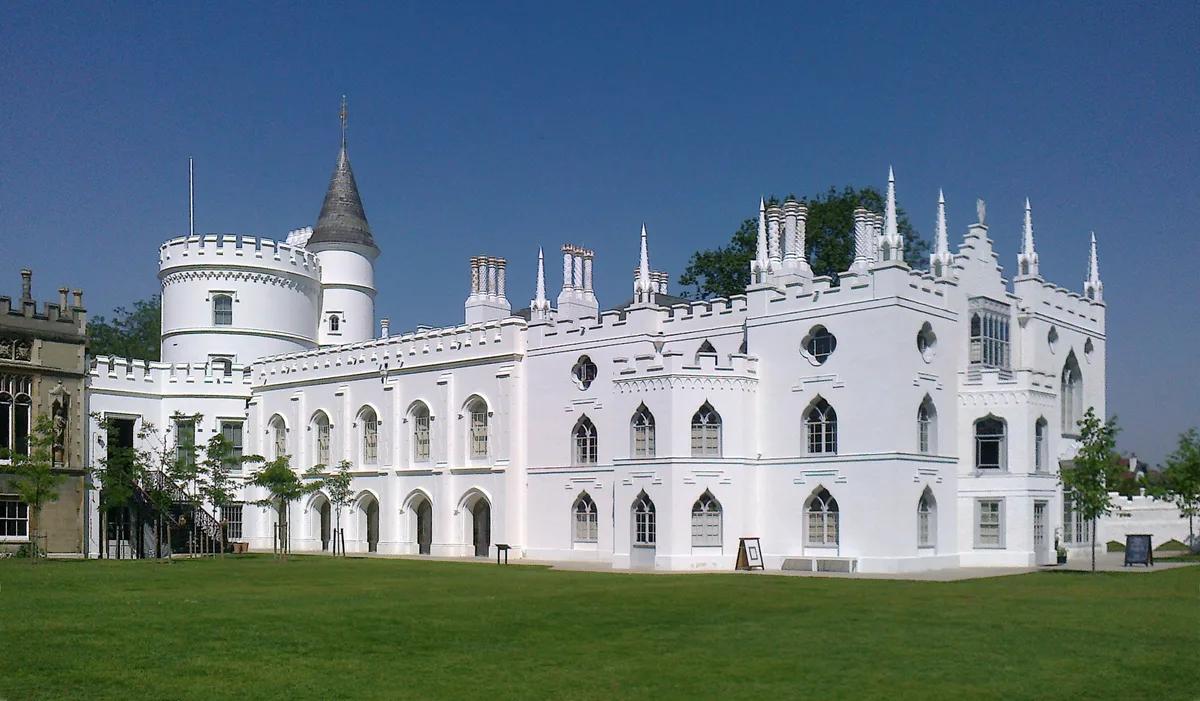
Strawberry Hill House
Strawberry Hill House — villa and house museum in Twickenham, London, United Kingdom.
 📷 5
📷 5Historic houses · London
1 Old Palace Terrace
1 Old Palace Terrace — house in Richmond upon Thames, London, United Kingdom.
 📷 5
📷 5Historic houses · London
1 Palace Green
1 Palace Green — house on Palace Green, Kensington, London.
 📷 5
📷 5Historic houses · London
1–2 Orme Square
1–2 Orme Square — pair of houses in Orme Square, Bayswater, London.
Frequently asked questions
- Where is Imperial Chemical House?
- Imperial Chemical House is in London, United Kingdom (postcode SW1P 3HA), in the parish of Westminster, unparished area.
- What is Imperial Chemical House?
- Imperial Chemical House — a Grade II-listed historic house in england-london, United Kingdom.
- How do I get to Imperial Chemical House?
- The nearest railway station is Westminster, about 0.7 km away. The nearest town is City of Westminster. Drivers can use postcode SW1P 3HA.
- When was Imperial Chemical House built?
- Built or established in 1929. Designed by Frank Baines.
- Who owns Imperial Chemical House?
- Imperial Chemical House is owned by Imperial Chemical Industries.
- Is Imperial Chemical House a listed building?
- Imperial Chemical House is officially recognised as Grade II listed.
- How do I get to Imperial Chemical House?
- The nearest railway station is Westminster, about 0.7 km away. Drivers can navigate to postcode SW1P 3HA.