
Historic houses · South East England
Hyde House (Buckinghamshire)
In or near Chesham Bois.
Hyde House (Buckinghamshire) — grade II listed house in Chartridge, Buckinghamshire, England, UK.

Shaun Ferguson — CC BY-SA 2.0 via Wikimedia Commons licence

Plan your visit
- Typical visit
- 1 h–2 h
- Nearest railway station
- Great Missenden · 3.3 km
- Family-friendly
- Limited wheelchair access
Getting there & planning your visit
Hyde House is located in Buckinghamshire, with the nearest railway station being Great Missenden, approximately 3.3 km away. The postcode for sat-nav is HP16 0RJ. Accessibility is limited for wheelchair users.
About
Hyde House (Buckinghamshire) is a historic house in the United Kingdom — typically a country seat, manor, or town house with notable architecture or history. Heritage designation: Grade II listed building. Wikidata describes it as: "grade II listed house in Chartridge, Buckinghamshire, England, UK". Coordinates: 51.7003°, -0.6620°.
Photo gallery
Protected designations
- Area of Outstanding Natural Beauty: Chilterns
Designations sourced from Natural England open data under OGL v3.
From the Wikipedia article
Hyde House is a Grade II listed early 18th-century country house near Hyde Heath in Buckinghamshire, England. It had previously belonged to Woburn Abbey and was known as Chesham Woburn Manor. Hyde House was owned by the politician and barrister Robert Plumer Ward in the early 19th century. In 1811, Ward anticipated the dismissal of the government in the wake of the passing of the Regency Act, and looked forward to "...being at Hyde House in a fortnight. My garden, farm, plantations and library are the prevailing ideas, and every purchase I have lately made, whether books or pruning-knives are all with a view to my long wished retreat." Ward retired to Hyde House in 1823 to write his novel Tremaine, or The Man of Refinement. The writer and scholar Isaac D'Israeli rented the house during the autumn of 1825, and his son, Benjamin Disraeli, the future Prime Minister of the United Kingdom, later claimed that he wrote his novel Vivian Grey at the house before his 21st birthday in December 1825. However, that has been considered unbelievable considering the short time and the large size of the novel. Tremaine has subsequently been claimed as a model for Vivian Gray. Architectural historian Nikolaus Pevsner, in the Buckinghamshire edition of his Buildings of England describes Hyde House as having the "proportions of a late c17 or c18 house hidden behind the stucco and sashes of the early c19." Pevsner also believed that some "antiquarian flourishes" such "heraldic glass, lattice glazing and shields of arms" might have dated from Plumer Ward's occupancy of the house. Pevsner noted that a long wing had been built on the house in 1929, and an early 18th-century staircase was also highlighted. During the Second World War, the patients of the pioneering plastic surgeon Archibald McIndoe recuperated at Hyde House. After the war, Hyde House was a school before being converted into apartments in 1965. It was subsequently bought in 2000 and converted back from apartments into a…
Excerpt from Wikipedia under CC BY-SA 4.0. See the source article linked in Sources below.
- Coordinates
- 51.7003, -0.6620
- District
- Buckinghamshire
- Parish
- Chartridge
- Postcode
- HP16 0RJ
- Parliamentary constituency
- Mid Buckinghamshire
- Nearest railway station
- Great Missenden — 3.3 km
Sources
- wikidata: Q15979021 (CC0)
- wikipedia: Hyde House, Buckinghamshire (CC BY-SA 4.0)
Other places nearby

Great Hundridge Manor
Manor houses · 0.9 km

Castle Tower
Literary houses · 1.3 km

Pednor House
Manor houses · 1.7 km

Great Missenden
Literary houses · 1.8 km

Little Missenden
Castles · 2.1 km

Great Pednor Manor
Manor houses · 2.2 km

The Nag's Head Public House
Historic pubs · 2.6 km

2 Flint Bridges In Grounds Of Missenden Abbey To South East And North East Of Abbey
Historic bridges · 2.7 km

Missenden Abbey Adult Education College
Abbeys & priories · 2.8 km
Missenden Abbey
Cathedrals · 2.8 km
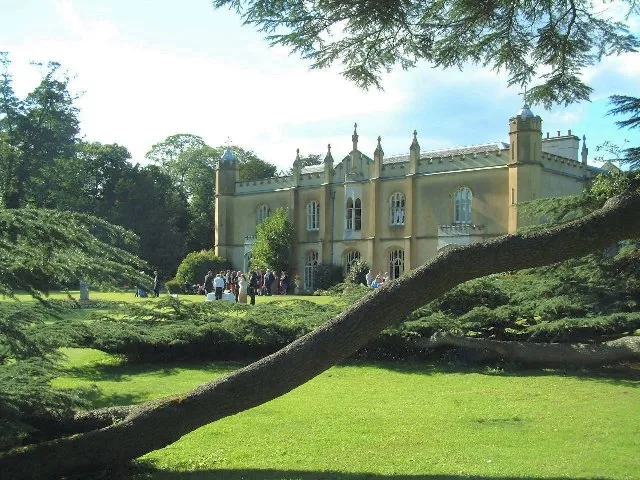
Missenden Abbey
Abbeys & priories · 2.8 km

The George Public House
Historic pubs · 3.0 km
Nearby
📷 3Manor houses · South East England
Great Hundridge Manor
Great Hundridge Manor — Grade II* listed building-listed manor in england-west-midlands, United Kingdom.
📷 5Literary houses · South East England
Castle Tower
Castle Tower — a literary house museum in england west midlands.
📷 3Manor houses · South East England
Pednor House
Pednor House — a manor in england-west-midlands, United Kingdom.
📷 3Literary houses · South East England
Great Missenden
Great Missenden — a literary house museum in england west midlands.
📷 5Castles · South East England
Little Missenden
Little Missenden — a castle in england-west-midlands, United Kingdom.
📷 3Manor houses · South East England
Great Pednor Manor
Great Pednor Manor — Grade II listed building-listed manor in england-west-midlands, United Kingdom.
Where to eat & stay near Hyde House (Buckinghamshire)
Places to stay
 📷 5
📷 5Campsites · South East England
Braid Wood Scout & Guide Activity Centre
Braid Wood Scout & Guide Activity Centre — a campsite in england west midlands.
 📷 7
📷 7Hotels · South East England
Kings Arms Hotel
Kings Arms Hotel — a hotel in england west midlands.
 📷 7
📷 7 📷 3
📷 3 📷 5
📷 5Hotels · South East England
Bel & The Dragon at the Red Lion
Bel & The Dragon at the Red Lion — a hotel in england west midlands. Brand: Fuller's.
 📷 5
📷 5Campsites · South East England
Hill Farm Campsite
Hill Farm Campsite — a campsite in england west midlands.
Places to eat & drink
📷 7Historic pubs · South East England
The Nag's Head Public House
The Nag's Head Public House in England East, United Kingdom.
📷 7Historic pubs · South East England
The George Public House
The George Public House in England South East, United Kingdom.
 📷 7
📷 7 📷 7
📷 7Restaurants · South East England
The Griffin
The Griffin — a restaurant in england west midlands.
 📷 5
📷 5Historic pubs · South East England
The Gate Public House
The Gate Public House in England South East, United Kingdom.
 📷 5
📷 5Historic pubs · South East England
Full Moon Public House
Full Moon Public House in England East, United Kingdom.
More historic houses in this region
 📷 5
📷 5Historic houses · South East England
12 and 14 High Street, Rochester
12 and 14 High Street, Rochester — building in Rochester, Kent, England, UK.
 📷 5
📷 5Historic houses · South East England
Berkeley House
Berkeley House — house in Rochester, Kent, England, UK.
.jpg?width=1200) 📷 5
📷 5Historic houses · South East England
Betchworth House
Betchworth House — house in Betchworth, Mole Valley, England, UK.
 📷 5
📷 5Historic houses · South East England
Bookham Grove
Bookham Grove — building in Mole Valley, Surrey, England, UK.
Frequently asked questions
- Where is Hyde House (Buckinghamshire)?
- Hyde House (Buckinghamshire) is in South-East England, United Kingdom (postcode HP16 0RJ), in the parish of Chartridge.
- What is Hyde House (Buckinghamshire)?
- Hyde House (Buckinghamshire) — grade II listed house in Chartridge, Buckinghamshire, England, UK.
- How do I get to Hyde House (Buckinghamshire)?
- The nearest railway station is Great Missenden, about 3.3 km away. The nearest town is Chesham Bois. Drivers can use postcode HP16 0RJ.
- Is Hyde House (Buckinghamshire) a listed building?
- Hyde House (Buckinghamshire) is officially recognised as Grade II listed building listed.
- Is Hyde House (Buckinghamshire) a protected site?
- Yes — Hyde House (Buckinghamshire) is part of the Chilterns National Landscape (AONB).
- How do I get to Hyde House (Buckinghamshire)?
- The nearest railway station is Great Missenden, about 3.3 km away. Drivers can navigate to postcode HP16 0RJ.