
Hill forts · Scottish Highlands
Hilton of Cadboll Stone
In or near Balintore.
Hilton of Cadboll Stone — Class II Pictish stone discovered at Hilton of Cadboll.

Wikimedia Commons contributors — see linked file page for photographer and licence licence

Plan your visit
- Typical visit
- 1 h–2 h
- Nearest railway station
- Fearn · 5.9 km
- Free entry
- Dog-friendly
Getting there & planning your visit
To visit the Hilton of Cadboll Stone, the nearest railway station is Fearn, located approximately 5.9 km away. The postcode for the site is IV20 1XF, and entry is free.
About
Hilton of Cadboll Stone is a hill fort in the United Kingdom. Wikidata describes it as: "Class II Pictish stone discovered at Hilton of Cadboll". Coordinates: 57.7672°, -3.8960°.
Photo gallery
From the Wikipedia article
The Hilton of Cadboll Stone is one of the most magnificent of all Pictish cross-slabs. It was erected on the East coast of the Tarbat Peninsula in Easter Ross, Scotland about AD 800. It seems likely that, at the time, the entire peninsula from the mouth of the Cromarty Firth to Tarbatness was the estate of the monastery at Portmahomack and that the stone was carved at its instigation. As with other cross-slabs, the front was a decorated cross and the back had scenes and symbols with religious significance. It was erected in a natural amphitheatre about 100m from the shore. In the thirteenth century the Hilton of Cadboll Chapel was erected 6m to its east. More recently, the modern settlement Hilton of Cadboll has developed along the coast to its south-west. Chips found buried at the site show that the cross-face started to be defaced in the late sixteenth century during the Scottish Reformation. In 1674 the stone was felled in a storm, with the top three-quarters breaking off. The cross on the front face was now removed completely and a memorial inscribed to Alexander Duff and his three wives. The stone appears never to have been used as a memorial and was left at Hilton, where it was shown to visiting antiquarians including Rev. Charles Cordiner. He brought it to public attention in his book Antiquities and Scenery of the North of Scotland, London, 1780. In the late 1860s the Macleods of Cadboll moved the top three-quarters of the stone to be a feature in the garden of Invergordon Castle. When the estate was sold in 1921, the stone was gifted to the British Museum. A rearguard action by the Scottish antiquarian establishment succeeded in deferring the Trustees' acceptance and their releasing Macleod of Cadboll from his gift so that he could redonate it to the National Museum of Antiquities of Scotland, which he did. The stone is now in the National Museum of Scotland. The bottom quarter of the stone, below the break, remained in situ at Hilton of Cadboll. During…
Excerpt from Wikipedia under CC BY-SA 4.0. See the source article linked in Sources below.
Background
Description
On the quarter which survives of the front of the stone, there is the stepped base of a cross with bosses (similar to those on the stones at Shandwick and Nigg but with bipartite spirals). From this it is inferred that the face showed a Calvary cross. From partial reconstruction of the upper face from fragments, it is inferred that the cross was surrounded with figures concerned with Death, Judgement, Heaven and Hell. On the back there is a vine-scroll border (representing the Eucharist) to the left, right and bottom and the Pictish symbols of double disc and Z-rod at the top. Within are three square panels: Martin Goldberg has suggested that the Hilton of Cadboll cross-slab had a…
Sourced from Wikipedia under CC BY-SA 4.0.
- Coordinates
- 57.7672, -3.8960
- District
- Highland
- Postcode
- IV20 1XF
- Parliamentary constituency
- Caithness, Sutherland and Easter Ross
- Nearest railway station
- Fearn — 5.9 km
Sources
- wikidata: Q965485 (CC0)
- wikipedia: Hilton of Cadboll Stone (CC BY-SA 4.0)
- commons: Hilton of Cadboll stone - geograph.org.uk - 6192873.jpg (CC BY-SA 4.0)
Other places nearby

Hilton of Cadboll Chapel
Chapels · 0.0 km

Hilton of Cadboll Standing Stone (historical)
Memorials & monuments · 0.0 km

Jane Durham Memorial
Memorials & monuments · 0.1 km

Hilton of Cadboll
Villages · 0.6 km

Cadboll Castle
Literary houses · 1.0 km

Ship's Compass Maritime Memorial
Memorials & monuments · 1.2 km
Mermaid of the North
Public art & sculpture · 1.2 km
John Ross Memorial
Memorials & monuments · 1.3 km

Balintore
Towns & cities · 1.5 km

Shandwick
Villages · 2.4 km

Fearn Airfield Memorial
Memorials & monuments · 2.6 km

Cadboll Mount
Follies · 2.7 km
Nearby
📷 3Chapels · Scottish Highlands
Hilton of Cadboll Chapel
Hilton of Cadboll Chapel — chapel, now demolished, in Highland, Scotland, UK.
📷 5Memorials & monuments · Scottish Highlands
Hilton of Cadboll Standing Stone (historical)
Hilton of Cadboll Standing Stone (historical) — a monument in scotland highlands.
📷 3Memorials & monuments · Scottish Highlands
Jane Durham Memorial
Jane Durham Memorial — a memorial in scotland-highlands, United Kingdom.
📷 5📷 5Literary houses · Scottish Highlands
Cadboll Castle
Cadboll Castle — a literary house museum in scotland highlands.
📷 3Memorials & monuments · Scottish Highlands
Ship's Compass Maritime Memorial
Ship's Compass Maritime Memorial — a memorial in scotland-highlands, United Kingdom.
Where to eat & stay near Hilton of Cadboll Stone
Places to stay
 📷 5
📷 5Campsites · Scottish Highlands
Portmahomack Caravan Site
Portmahomack Caravan Site — a campsite in scotland highlands.
 📷 5
📷 5Caravan parks · Scottish Highlands
Nigg Ferry Hotel Motorhome Parking
Nigg Ferry Hotel Motorhome Parking — a caravan park in scotland highlands.
 📷 5
📷 5Campsites · Scottish Highlands
Dornoch camping and caravaning site
Dornoch camping and caravaning site — a campsite in scotland highlands.
 📷 5
📷 5Campsites · Scottish Highlands
Dornoch Firth Caravan Park
Dornoch Firth Caravan Park — a campsite in scotland highlands.
 📷 5
📷 5Campsites · Scottish Highlands
Delny Glamping
Delny Glamping — a campsite in scotland highlands.
 📷 5
📷 5Hotels · Scottish Highlands
Dornoch Station
Dornoch Station — a hotel in scotland highlands. 5-star. Brand: Marine & Lawn Hotels & Resorts.
Places to eat & drink
 📷 7
📷 7Historic pubs · Scottish Highlands
Commercial Bar, 84 High Street, Invergordon
Commercial Bar, 84 High Street, Invergordon in Scotland Highlands, United Kingdom.
More places in this region
 📷 3
📷 3Hill forts · Scottish Highlands
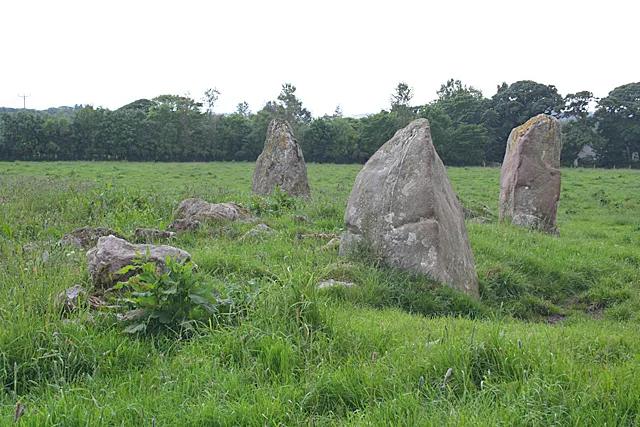
Aquhorthies stone circle
Aquhorthies stone circle — architectural structure in Aberdeenshire, Scotland, UK.
 📷 3
📷 3Hill forts · Scottish Highlands
Auchinhove
Auchinhove — archaeological site in Moray, Scotland, UK.
 📷 3
📷 3Hill forts · Scottish Highlands
Balbridie
Balbridie — Neolithic timber hall remains in Aberdeenshire, Scotland, UK.
 📷 3
📷 3Hill forts · Scottish Highlands
Balnageith Farmhouse
Balnageith Farmhouse — archaeological site in Moray, Scotland, UK.
Frequently asked questions
- Where is Hilton of Cadboll Stone?
- Hilton of Cadboll Stone is in the Scottish Highlands, United Kingdom (postcode IV20 1XF).
- What is Hilton of Cadboll Stone?
- Hilton of Cadboll Stone — Class II Pictish stone discovered at Hilton of Cadboll.
- How do I get to Hilton of Cadboll Stone?
- The nearest railway station is Fearn, about 5.9 km away. The nearest town is Balintore. Drivers can use postcode IV20 1XF.
- Is Hilton of Cadboll Stone free to visit?
- Yes, Hilton of Cadboll Stone is free to enter.
- How do I get to Hilton of Cadboll Stone?
- The nearest railway station is Fearn, about 5.9 km away. Drivers can navigate to postcode IV20 1XF.