
Memorials & monuments · London
HAAKON VII
In or near Tyburn.
HAAKON VII — a memorial in england-london, United Kingdom.

Txllxt TxllxT — CC BY-SA 4.0 via Wikimedia Commons licence

Plan your visit
- Typical visit
- 15 min–45 min
- Nearest railway station
- Notting Hill Gate · 0.5 km
- Free entry
- Dog-friendly
Getting there & planning your visit
To visit the HAAKON VII memorial in Kensington and Chelsea, you can take the train to Notting Hill Gate station, which is 0.5 km away. Entry to the memorial is free. The postcode for sat-nav is W8 4AQ.
About
HAAKON VII is a memorial located in england-london, United Kingdom. Sourced from OpenStreetMap (ODbL licence); see local listings for visitor information, opening hours and admission details.
Photo gallery
Official information
HJ Art Gallery is an art gallery located in London that showcases a variety of contemporary artworks. Visitors can explore exhibitions featuring works from various artists and participate in events related to the art community.
From the Wikipedia article
Haakon VII (Norwegian pronunciation: [ˈhôːkʊn]; born Prince Carl of Denmark; 3 August 1872 – 21 September 1957) was King of Norway from 1905 until his death in 1957, having reigned for nearly 52 years. He was born in Copenhagen during the reign of his grandfather, King Christian IX of Denmark; he was named Carl at birth and was the second son of the Crown Prince and Crown Princess of Denmark (later King Frederick VIII and Queen Louise). Carl was educated at the Royal Danish Naval Academy and served in the Royal Danish Navy. After the 1905 dissolution of the union between Sweden and Norway, he was offered the Norwegian crown. Following a referendum on the monarchy, he accepted the offer and was formally elected King of Norway by the Storting and took the Old Norse name Haakon, thus ascended the throne as Haakon VII, becoming the first independent Norwegian monarch since Olav IV in 1387. As king, Haakon gained much sympathy from the Norwegian people. Although the Constitution of Norway vests the King with considerable executive powers, in practice Haakon confined himself to a representative and ceremonial role while rarely interfering in politics, a practice continued by his son and grandson. Norway was invaded by Nazi Germany in April 1940. Haakon rejected German demands to legitimise the Quisling regime's puppet government, vowing to abdicate rather than do so. He refused to abdicate after going into exile in Great Britain. As such, he played a pivotal role in uniting the Norwegian nation in its resistance to the invasion and the subsequent five-year-long occupation during the Second World War. He returned to Norway in June 1945 after the defeat of Germany. Haakon became King of Norway when his grandfather Christian IX was still reigning in Denmark, and before his father and elder brother became kings of Denmark. During his reign he saw his father Frederick VIII, his elder brother Christian X, and his nephew Frederik IX ascend the throne of Denmark in 1906, 1912, and 1947 respectively. Haakon died at the age of 85 in September 1957. He was succeeded by his only child and son, who ascended to the throne as Olav V.
Excerpt from Wikipedia under CC BY-SA 4.0. See the source article linked in Sources below.
Background
History
, who was King of Norway until October 1905.]] Following several years of disagreements on various topics, the Union between Sweden and Norway which had existed since 1814 was dissolved in 1905. The union was unilaterally dissolved by the Storting (Norwegian parliament) on 7 June, and the dissolution was later confirmed by the Norwegian people in the 1905 Norwegian union dissolution referendum held on 13 August. After weeks of negotiations, the dissolution of the union was then recognized by Sweden on 23 September in the Treaty of Karlstad, mediated by the great powers of Europe. Its provisions included the full recognition of Norway's sovereignty and the abdication of the Swedish King…
Description
Norway was invaded by the naval and air forces of Nazi Germany during the early hours of 9 April 1940. The German naval detachment sent to capture Oslo was opposed by Oscarsborg Fortress. The fortress fired at the invaders, sinking the heavy cruiser Blücher and damaging the heavy cruiser Lützow, with heavy German losses that included many soldiers, Gestapo agents, and administrative personnel who were to have occupied the Norwegian capital. This led to the withdrawal of the rest of the German flotilla, preventing the invaders' planned dawn occupation of Oslo. The Germans' delay in occupying Oslo, along with swift action by the president of the Storting, C. J. Hambro, created the opportunity…
Visiting
Haakon was portrayed by Jakob Cedergren in the 2009 NRK drama series Harry & Charles, a series that focused on the events leading up to the election of King Haakon in 1905. Jesper Christensen portrayed the King in the 2016 film The King's Choice (Kongens nei) which was based on the events surrounding the German invasion of Norway and the King's decision to resist. The film won widespread critical acclaim, and was Norway's submission for the Academy Award for Best Foreign Language Film at the 89th Academy Awards. The film made the shortlist of nine finalists in December 2016. Haakon was portrayed by Søren Pilmark in the 2020 NRK drama series Atlantic Crossing, a series regarding Crown…
Sourced from Wikipedia under CC BY-SA 4.0.
- Coordinates
- 51.5055, -0.1907
- District
- Kensington and Chelsea
- Parish
- Kensington and Chelsea, unparished area
- Postcode
- W8 4AQ
- Parliamentary constituency
- Kensington and Bayswater
- Phone
- +44 (0) 207 937 7711
- Nearest railway station
- Notting Hill Gate — 0.5 km
- Opening
- Monday 3–7 pm; Tuesday to Saturday 11 am–7 pm; Sunday 11 am–5 pm; open on Bank Holidays
Sources
- osm: node/7556584645 (ODbL)
- wikipedia: Haakon VII (CC BY-SA 4.0)
Other places nearby

10, Palace Green W8
Historic houses · 0.0 km

James Clerk Maxwell
Memorials & monuments · 0.1 km

15, Kensington Palace Gardens
Historic houses · 0.1 km
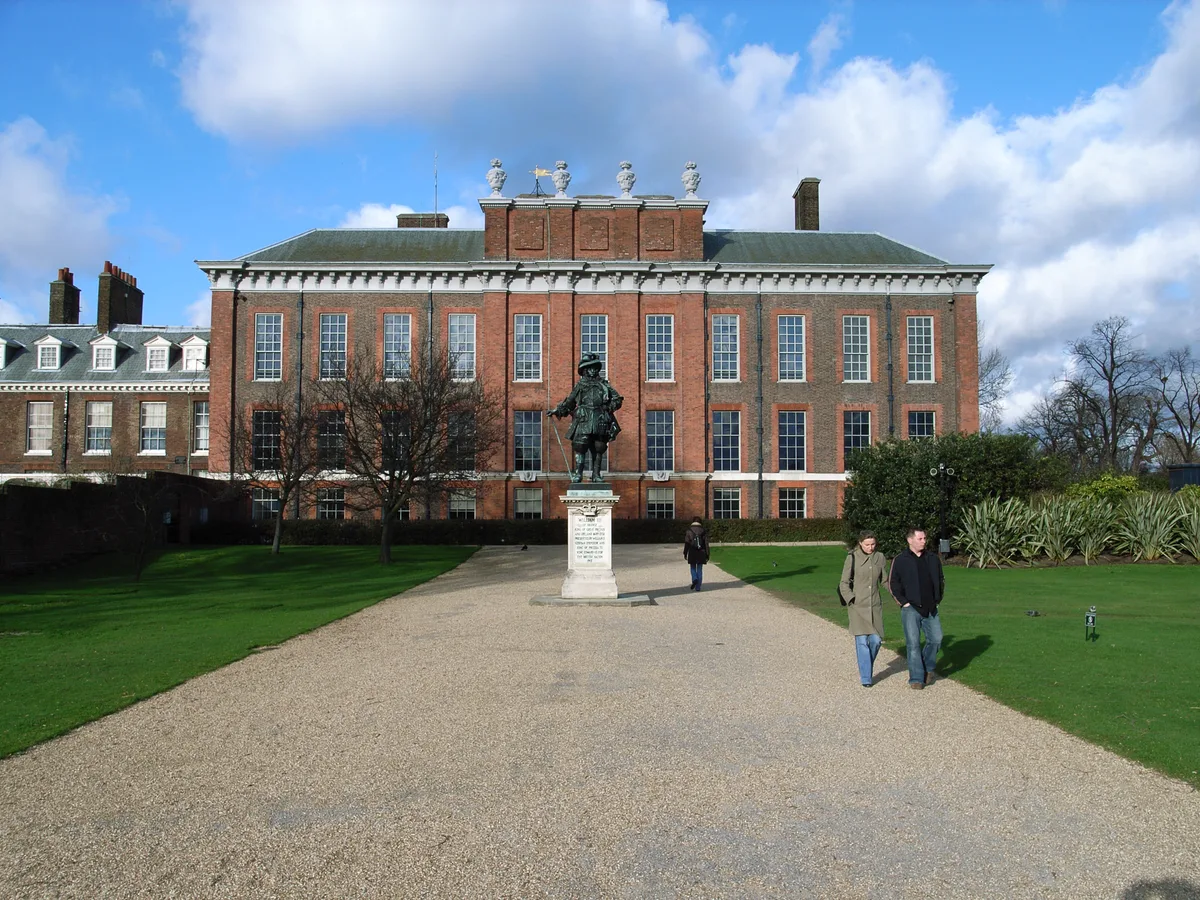
Kensington Palace
Palaces · 0.2 km

13 Kensington Palace Gardens
Palaces · 0.2 km
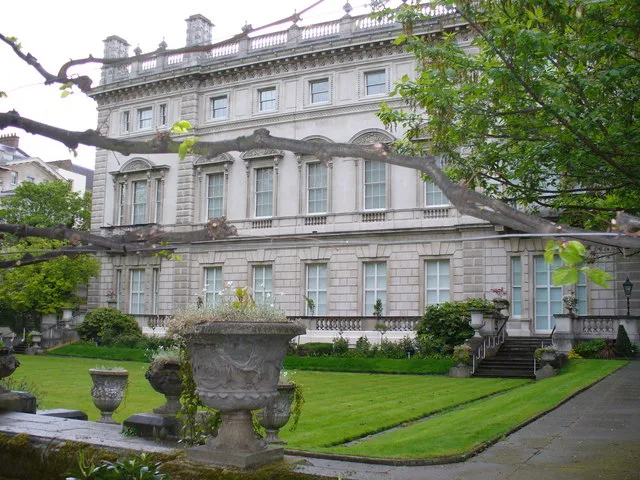
London Museum
Museums · 0.2 km

HJ Art Gallery
Galleries · 0.2 km

The Orangery
Cafés · 0.2 km

King William III
Palaces · 0.2 km

Richard Young Gallery
Galleries · 0.3 km

2 Palace Green
Historic houses · 0.3 km
8 Holland Street
Galleries · 0.3 km
Nearby
📷 5Historic houses · London
10, Palace Green W8
10, Palace Green W8 — building in Kensington and Chelsea, London, England, UK.
📷 5Memorials & monuments · London
James Clerk Maxwell
James Clerk Maxwell — a memorial in england-london, United Kingdom.
📷 5Historic houses · London
15, Kensington Palace Gardens
15, Kensington Palace Gardens — house in Royal Borough of Kensington and Chelsea, Greater London, England, UK.
★ Iconic📷 5Palaces · London
Kensington Palace
Kensington Palace — royal residence set in Kensington Gardens, London, England, UK.
📷 5Palaces · London
13 Kensington Palace Gardens
13 Kensington Palace Gardens — a Grade II-listed palace in england-london, United Kingdom.
📷 5Where to eat & stay near HAAKON VII
Places to stay
 📷 5
📷 5 📷 5
📷 5 📷 5
📷 5Hotels · London
DoubleTree by Hilton Hotel London - Hyde Park
DoubleTree by Hilton Hotel London - Hyde Park — a hotel in england london. 4-star. Brand: DoubleTree.
 📷 5
📷 5Hotels · London
Kensington House Hotel
Kensington House Hotel — a hotel in england london.
 📷 7
📷 7Hotels · London
Hilton London Hyde Park
Hilton London Hyde Park — a hotel in england london.
 📷 7
📷 7Hotels · London
Baglioni Hotel London
Baglioni Hotel London — a hotel in england london.
Places to eat & drink
📷 5 📷 7
📷 7 📷 7
📷 7Historic pubs · London
Windsor Castle in Kensington
Windsor Castle in Kensington in England London, United Kingdom.
 📷 5
📷 5Historic pubs · London
Scarsdale Tavern
Scarsdale Tavern in England London, United Kingdom.
 📷 5
📷 5 📷 6
📷 6Restaurants · London
Core by Clare Smyth
Core by Clare Smyth — a restaurant in england london.
More memorials in this region
.jpg?width=1200) 📷 5
📷 5Memorials & monuments · London
1st Surrey Rifles War Memorial
1st Surrey Rifles War Memorial is a memorial in the United Kingdom.
 📷 5
📷 5Memorials & monuments · London
24th East Surrey Division War Memorial
24th East Surrey Division War Memorial is a memorial in the United Kingdom.
 📷 5
📷 5Memorials & monuments · London
Abney Park Cemetery CWGC Cross
Abney Park Cemetery CWGC Cross is a memorial in the United Kingdom.
 📷 5
📷 5Memorials & monuments · London
Admiral Sir John Franklin
Admiral Sir John Franklin is a memorial in the United Kingdom.
Frequently asked questions
- Where is HAAKON VII?
- HAAKON VII is in London, United Kingdom (postcode W8 4AQ), in the parish of Kensington and Chelsea, unparished area.
- What is HAAKON VII?
- HAAKON VII — a memorial in england-london, United Kingdom.
- How do I get to HAAKON VII?
- The nearest railway station is Notting Hill Gate, about 0.5 km away. The nearest town is Tyburn. Drivers can use postcode W8 4AQ.
- Is HAAKON VII free to visit?
- Yes, HAAKON VII is free to enter.
- How do I get to HAAKON VII?
- The nearest railway station is Notting Hill Gate, about 0.5 km away. Drivers can navigate to postcode W8 4AQ.