
Historic churches · Central Scotland
Greyfriars Kirk
Also known as: Eaglais nam Manach Liath
In or near Edinburgh.
Greyfriars Kirk — church in Edinburgh, Scotland, UK.

Wikimedia Commons contributors — see linked file page for photographer and licence licence

Plan your visit
- Typical visit
- 30 min–1 h
- Nearest railway station
- Edinburgh Waverley · 0.6 km
- Free entry
- Family-friendly
- Wheelchair accessible
Getting there & planning your visit
To visit Greyfriars Kirk, you can take a train to Edinburgh Waverley, which is 0.6 km away. Entry is free, and the site is wheelchair accessible. The postcode for sat-nav is EH1 2QQ.
About
Greyfriars Kirk is a historic church in the United Kingdom. Heritage designation: category A listed building. Affiliated with Church of Scotland. Part of Presbytery of Edinburgh. Wikidata describes it as: "church in Edinburgh, Scotland, UK". Coordinates: 55.9466°, -3.1922°.
Photo gallery
See it from the streetimagery from 2020
Imagery © Mapillary contributors, CC BY-SA 4.0
Heritage listing
Greyfriars Kirk (Scottish Gaelic: Eaglais nam Manach Liath) is a parish church of the Church of Scotland, located in the Old Town of Edinburgh, Scotland. It is surrounded by Greyfriars Kirkyard. Greyfriars traces its origin to the south-west parish of Edinburgh, founded in 1598. Initially, this congregation met in the western portion of St Giles'. The church is named for the Observantine Franciscans or "Grey Friars," who arrived in Edinburgh from the Netherlands in the mid-15th century and were granted land for a Catholic friary at the south-western edge of the burgh. In the wake of the Scottish Reformation, the grounds of the abandoned friary were repurposed as a cemetery, in which the current church was constructed between 1602 and 1620.
From Historic Environment Scotland under OGL v3.
Official information
Greyfriars Kirk is a historic church that offers a space for quiet reflection and prayer. Visitors can participate in various worship services and events throughout the week.
From the Wikipedia article
Greyfriars Kirk (Scottish Gaelic: Eaglais nam Manach Liath) is a parish church of the Church of Scotland, located in the Old Town of Edinburgh, Scotland. It is surrounded by Greyfriars Kirkyard. Greyfriars traces its origin to the south-west parish of Edinburgh, founded in 1598. Initially, this congregation met in the western portion of St Giles'. The church is named for the Observantine Franciscans or "Grey Friars," who arrived in Edinburgh from the Netherlands in the mid-15th century and were granted land for a Catholic friary at the south-western edge of the burgh. In the wake of the Scottish Reformation, the grounds of the abandoned friary were repurposed as a cemetery, in which the current church was constructed between 1602 and 1620. In 1638, National Covenant was signed in the Kirk. The church was damaged during the Protectorate, when it was used as barracks by troops under Oliver Cromwell. In 1718, an explosion destroyed the church tower. During the reconstruction, the church was partitioned to hold two congregations: Old Greyfriars and New Greyfriars. In 1845, fire ravaged Old Greyfriars. After its reconstruction, the minister, Robert Lee, introduced the first organ and stained glass windows in a Scottish parish church since the Reformation. In 1929, Old and New Greyfriars united and the church was restored as one sanctuary. In the following years, the depopulation of the Old Town saw Greyfriars unite with a number of neighbouring congregations. The church of Greyfriars is a simple aisled nave of eight bays; the style is Survival Gothic fused with Baroque elements. The church initially consisted of six bays and a west tower. After the explosion of 1718 destroyed the tower, Alexander McGill added two new bays and a Palladian north porch to create one building divided into two churches of four bays each. After it was gutted by fire in 1845, David Cousin rebuilt Old Greyfriars with an open, un-aisled interior. Between 1932 and 1938, the interior and arcades…
Excerpt from Wikipedia under CC BY-SA 4.0. See the source article linked in Sources below.
Background
Description
The current church is rectangular in plan, consisting of a single nave of eight bays with aisles along the whole length of the church on either side. The church's architectural style can be described as "Survival Gothic" – that is, Gothic architecture that continued after the Reformation – fused with Baroque. The exterior walls of the church consist of harled rubble with ashlar dressings. The church is 162 ft long by 72 ft wide. Externally, each bay is divided by buttresses, each of which is capped by a ball-topped obelisk finial. The buttresses at each corner of the church rest diagonally. The roof rises steeply above the aisles to a short course of wall, above which the roof over the nave…
Sourced from Wikipedia under CC BY-SA 4.0.
- Coordinates
- 55.9466, -3.1922
- District
- City of Edinburgh
- Postcode
- EH1 2QQ
- Parliamentary constituency
- Edinburgh East and Musselburgh
- Phone
- +44 131 225 1900
- Established
- 1620
- Nearest railway station
- Edinburgh Waverley — 0.6 km
- Opening
- Daily 9am to late
- Official site
- www.greyfriarskirk.com
Sources
- wikidata: Q2113456 (CC0)
- wikipedia: Greyfriars Kirk (CC BY-SA 4.0)
- commons: Greyfriars Kirk - 01.jpg (CC BY-SA 4.0)
Other places nearby

James Borthwick Monument
Memorials & monuments · 0.0 km

Skene & Aitkenhead Memorial
Memorials & monuments · 0.0 km

Greyfriars Bobby
Follies · 0.0 km

Anne and Robert Potter
Natural landmarks · 0.0 km
Tomb of John Miln
Follies · 0.0 km

Sir George Mackenzie
Follies · 0.0 km

Public House, 30, 32, 34 Candlemaker Row, Edinburgh
Historic pubs · 0.0 km

John Gray
Follies · 0.0 km

Little Ovir Liberton
Follies · 0.0 km

Miller of Dalswinton
Follies · 0.1 km

Alexander Henderson
Follies · 0.1 km
Alexander Munro & Son
Follies · 0.1 km
Nearby
📷 3Memorials & monuments · Central Scotland
James Borthwick Monument
James Borthwick Monument — a memorial in scotland-central, United Kingdom.
📷 3Memorials & monuments · Central Scotland
Skene & Aitkenhead Memorial
Skene & Aitkenhead Memorial — a memorial in scotland-central, United Kingdom.
📷 3📷 3Natural landmarks · Central Scotland
Anne and Robert Potter
Anne and Robert Potter — a other in scotland-central, United Kingdom.
📷 3Follies · Central Scotland
Tomb of John Miln
Tomb of John Miln is a folly in the United Kingdom.
📷 3Follies · Central Scotland
Sir George Mackenzie
Sir George Mackenzie is a folly in the United Kingdom.
Where to eat & stay near Greyfriars Kirk
Places to stay
 📷 5
📷 5 📷 5📷 5
 📷 5
📷 5 📷 5
📷 5Hotels · Central Scotland
Apex Edinburgh International
Apex Edinburgh International — a hotel in scotland central.
 📷 5
📷 5Hostels · Central Scotland
Castle Rock Hostel
Castle Rock Hostel — a hostel in scotland central.
Places to eat & drink
📷 5Historic pubs · Central Scotland
Public House, 30, 32, 34 Candlemaker Row, Edinburgh
Public House, 30, 32, 34 Candlemaker Row, Edinburgh in Scotland Central, United Kingdom.
 📷 7
📷 7Historic pubs · Central Scotland
Oddfellows Hall, 12, 14, 16 Forrest Road, Edinburgh
Oddfellows Hall, 12, 14, 16 Forrest Road, Edinburgh in Scotland Central, United Kingdom.
 📷 5
📷 5Cafés · Central Scotland
Hideout Cafe
Hideout Cafe — a café in scotland central.
 📷 5
📷 5Restaurants · Central Scotland
The Witchery
The Witchery — a restaurant in scotland central.
 📷 5
📷 5Historic pubs · Central Scotland
156-158 High Street, Edinburgh
156-158 High Street, Edinburgh in Scotland Central, United Kingdom.
 📷 7
📷 7Historic pubs · Central Scotland
3 Drummond Street, Edinburgh
3 Drummond Street, Edinburgh in Scotland Central, United Kingdom.
More places in this region
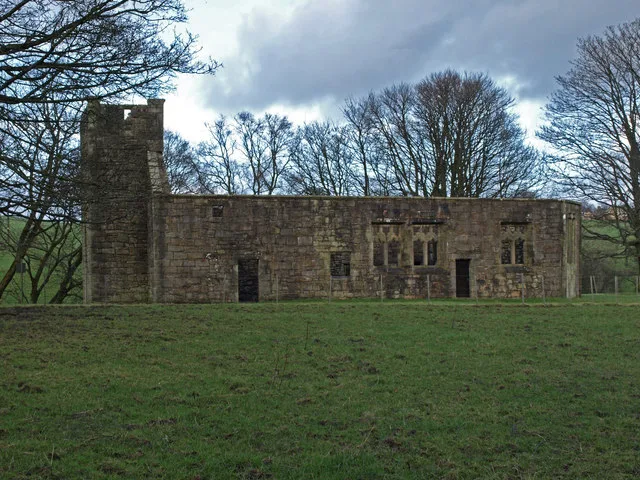 📷 5
📷 5Historic churches · Central Scotland
Castle Semple Collegiate Church
Castle Semple Collegiate Church — church building in Renfrewshire, Scotland, UK.
 📷 3
📷 3Historic churches · Central Scotland
Chapel of St Fyndoca, Inishail
Chapel of St Fyndoca, Inishail — architectural structure in Argyll and Bute, Scotland, UK.
 📷 3
📷 3Historic churches · Central Scotland
Chapel of St. Oran, Colonsay
Chapel of St. Oran, Colonsay — chapel on Colonsay, Argyll and Bute, Scotland, UK.
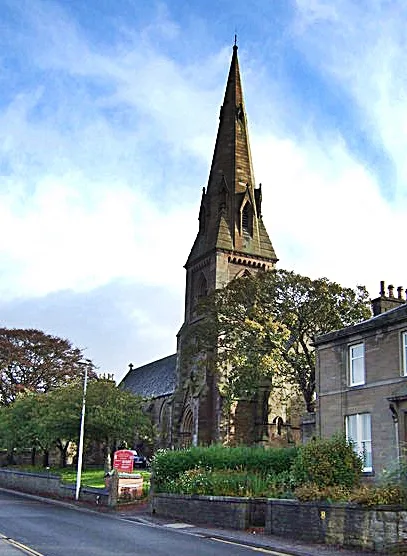 📷 3
📷 3Historic churches · Central Scotland
Church of St Mary the Virgin, Arbroath
Church of St Mary the Virgin, Arbroath — church in Arbroath, UK.
Frequently asked questions
- Where is Greyfriars Kirk?
- Greyfriars Kirk is in central Scotland, United Kingdom (postcode EH1 2QQ).
- What is Greyfriars Kirk?
- Greyfriars Kirk — church in Edinburgh, Scotland, UK.
- How do I get to Greyfriars Kirk?
- The nearest railway station is Edinburgh Waverley, about 0.6 km away. The nearest town is Edinburgh. Drivers can use postcode EH1 2QQ.
- When was Greyfriars Kirk built?
- Built or established in 1620.
- Is Greyfriars Kirk a listed building?
- Greyfriars Kirk is officially recognised as category A listed building listed.
- Is Greyfriars Kirk free to visit?
- Yes, Greyfriars Kirk is free to enter.
- How do I get to Greyfriars Kirk?
- The nearest railway station is Edinburgh Waverley, about 0.6 km away. Drivers can navigate to postcode EH1 2QQ.