
Heritage railway stations · London
Greek Runner
In or near Tyburn.
Greek Runner — Public artwork (statue).

Wikimedia Commons contributors — see linked file page for photographer and licence licence

Plan your visit
- Typical visit
- 1 h–2 h
- Nearest railway station
- Stamford Brook · 0.4 km
- Free entry
Getting there & planning your visit
To visit Greek Runner, you can take a train to Stamford Brook station, which is 0.4 km away. The postcode for navigation is W6 9AB, and entry is free.
About
Greek Runner is a place of interest in London. Built or established in 1879, it dates from the Victorian period. It sits within the Hammersmith and Chiswick parliamentary constituency. The nearest railway station is Stamford Brook, about 0.4 km away. Postcode area W6.
Photo gallery
From the Wikipedia article
In Greek mythology, the underworld or Hades (Ancient Greek: ᾍδης, romanized: Háidēs) is a distinct realm (one of the three realms that make up the cosmos) where an individual goes after death. The earliest idea of afterlife in Greek myth is that, at the moment of death, an individual's essence (psyche) is separated from the corpse and transported to the underworld. In early mythology (e.g., Homer's Iliad and Odyssey) the dead were indiscriminately grouped together and led a shadowy post-existence; however, in later mythology (e.g., Platonic philosophy) elements of post-mortem judgment began to emerge with good and bad people being separated (both spatially and with regard to treatment). The underworld itself—commonly referred to as Hades, after its patron god, but also known by various metonyms—is described as being located at the periphery of the earth, either associated with the outer limits of the ocean (i.e., Oceanus, again also a god) or beneath the earth. Darkness and a lack of sunlight are common features associated with the underworld and, in this way, provide a direct contrast to both the 'normality' of the land of the living (where the sun shines) and also with the brightness associated with Mount Olympus (the realm of the gods). The underworld is also considered to be an invisible realm, which is understood both in relation to the permanent state of darkness but also a potential etymological link with Hades as the 'unseen place'. The underworld is made solely for the dead and so mortals do not enter it – with only a few heroic exceptions (who undertook a mythical catabasis: Heracles, Theseus, Orpheus, possibly also Odysseus, and in later Roman depictions Aeneas).
Excerpt from Wikipedia under CC BY-SA 4.0. See the source article linked in Sources below.
Background
Description
at Delphi flanked by Athena and Pylades among the Erinyes and priestesses of the oracle, perhaps including Pythia behind the tripod – Paestan red-figured bell-krater, c. 330 BC]] The Erinyes (also known as the Furies) were the three goddesses associated with the souls of the dead and the avenged crimes against the natural order of the world. They consist of Alecto, Megaera, and Tisiphone. They were particularly concerned with crimes done by children against their parents such as matricide, patricide, and unfilial conduct. They would inflict madness upon the living murderer, or if a nation was harboring such a criminal, the Erinyes would cause starvation and disease to the nation. The…
Sourced from Wikipedia under CC BY-SA 4.0.
- Coordinates
- 51.4919, -0.2440
- District
- Hammersmith and Fulham
- Parish
- Hammersmith and Fulham, unparished area
- Postcode
- W6 9AB
- Parliamentary constituency
- Hammersmith and Chiswick
- Established
- 1879
- Nearest railway station
- Stamford Brook — 0.4 km
Sources
- osm: n11224971916 (ODbL)
- commons: Greek Runner Hammersmith 364.JPG (CC BY-SA 4.0)
- wikipedia: Greek underworld (CC BY-SA 4.0)
Other places nearby

22 St Peter's Square
Gardens · 0.1 km

The Cross Keys, Hammersmith
Historic pubs · 0.1 km

Draped Woman
Heritage railway stations · 0.1 km
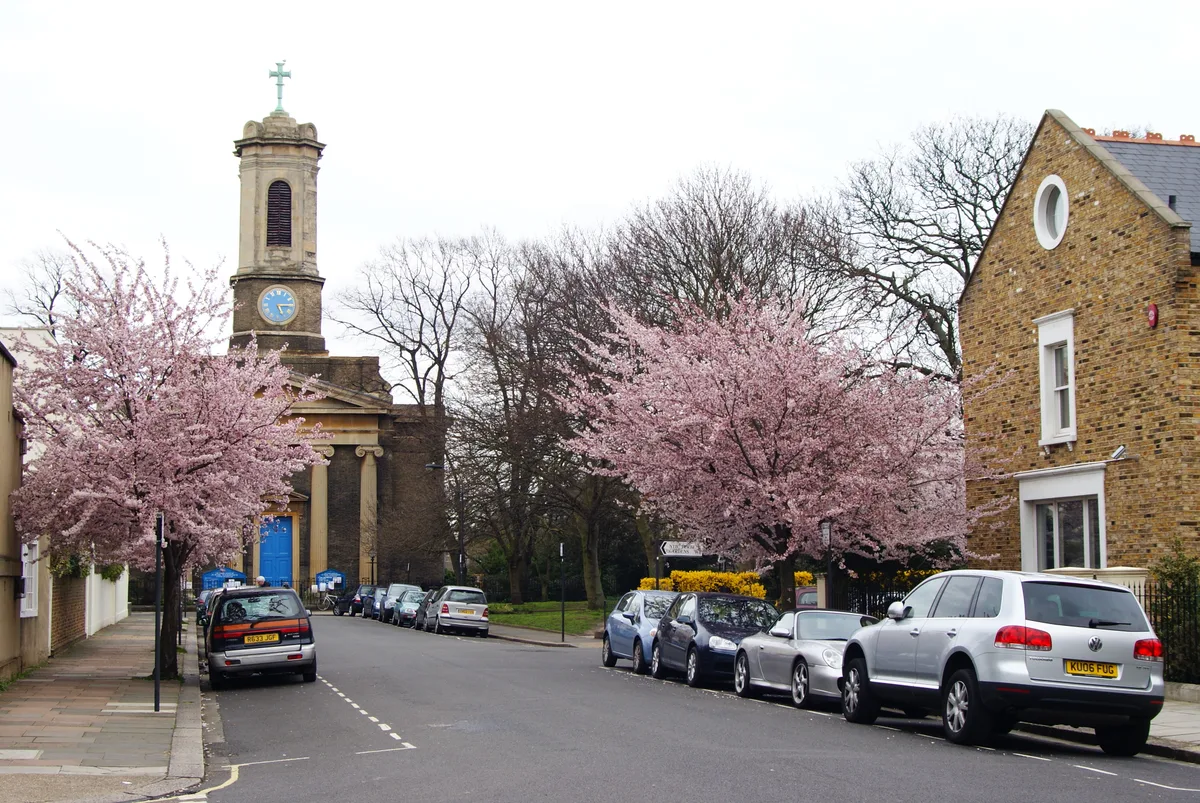
St Peter's Church, Hammersmith
Historic churches · 0.2 km

Black Lion
Historic pubs · 0.2 km

A P Herbert
Memorials & monuments · 0.2 km

Emery Walker
Memorials & monuments · 0.3 km
Edward Johnston
Memorials & monuments · 0.3 km

Black Bull Figure Outside The Ravenscourt Arms Public House
Public art & sculpture · 0.4 km
.jpg?width=1200)
Black Bull
Parks · 0.4 km

Strawberry House
Historic houses · 0.4 km

Walpole House
Historic houses · 0.4 km
Nearby
📷 5Gardens · London
22 St Peter's Square
22 St Peter's Square — a garden in england-london, United Kingdom.
📷 5Historic pubs · London
The Cross Keys, Hammersmith
The Cross Keys, Hammersmith in England London, United Kingdom.
📷 5📷 5Historic churches · London
St Peter's Church, Hammersmith
St Peter's Church, Hammersmith — church in London Borough of Hammersmith and Fulham, UK.
📷 5📷 5Memorials & monuments · London
A P Herbert
A P Herbert — a memorial in england-london, United Kingdom.
Where to eat & stay near Greek Runner
Places to stay
 📷 7
📷 7 📷 5
📷 5Hotels · London
Holiday Inn Express London Hammersmith
Holiday Inn Express London Hammersmith — a hotel in england london. 3-star. Brand: Holiday Inn Express.
 📷 5
📷 5Hotels · London
Seraphine Hammersmith Hotel
Seraphine Hammersmith Hotel — a hotel in england london. 4-star. Brand: Best Western.
 📷 5📷 7📷 5
Hotels · London
Heeton Concept Hotel - Luma Hammersmith
Heeton Concept Hotel - Luma Hammersmith — a hotel in england london.
Places to eat & drink
📷 5Historic pubs · London
The Cross Keys, Hammersmith
The Cross Keys, Hammersmith in England London, United Kingdom.
📷 5 📷 7
📷 7 📷 7
📷 7 📷 5
📷 5 📷 7
📷 7Other places from this era
 📷 5
📷 5Heritage railway stations · London
Lamp Standard
Lamp Standard — Public artwork (sculpture).
.jpg?width=1200) 📷 5
📷 5Heritage railway stations · London
Tinworth pillar
Tinworth pillar — Public artwork (sculpture) by George Tinworth.
.jpg?width=1200) 📷 5
📷 5Heritage railway stations · London
William Shakespeare
William Shakespeare — Public artwork (statue).
 📷 5
📷 5Heritage railway stations · South East England
Lord Palmerston
Lord Palmerston — Public artwork (statue).
More places in this region
 📷 5
📷 5Heritage railway stations · London
A Bullet from a Shooting Star
A Bullet from a Shooting Star — Public artwork (sculpture) by Alex Chinneck.
 📷 5
📷 5Heritage railway stations · London
A Pear and a Fig
A Pear and a Fig — Public artwork (sculpture) by Ali Grant.
 📷 5
📷 5Heritage railway stations · London
Admiral Lord Nelson
Admiral Lord Nelson — Public artwork (statue).
.jpg?width=1200) 📷 5
📷 5Heritage railway stations · London
Assembly
Assembly — Public artwork (installation) by Peter Burke.
Frequently asked questions
- Where is Greek Runner?
- Greek Runner is in London, United Kingdom (postcode W6 9AB), in the parish of Hammersmith and Fulham, unparished area.
- What is Greek Runner?
- Greek Runner — Public artwork (statue).
- How do I get to Greek Runner?
- The nearest railway station is Stamford Brook, about 0.4 km away. The nearest town is Tyburn. Drivers can use postcode W6 9AB.
- When was Greek Runner built?
- Built or established in 1879.
- Is Greek Runner free to visit?
- Yes, Greek Runner is free to enter.
- How do I get to Greek Runner?
- The nearest railway station is Stamford Brook, about 0.4 km away. Drivers can navigate to postcode W6 9AB.