
Historic houses · South East England
Gayhurst House
In or near Gayhurst.
Gayhurst House — a Grade I-listed historic house in england-west-midlands, United Kingdom.

John Salmon — CC BY-SA 2.0 via Wikimedia Commons licence

Plan your visit
- Typical visit
- 1 h–2 h
- Nearest railway station
- Wolverton · 5.4 km
- Family-friendly
- Limited wheelchair access
Getting there & planning your visit
To visit Gayhurst House, the nearest railway station is Wolverton, located 5.4 km away. The postcode for sat-nav is MK16 8LG. Please note that wheelchair accessibility is limited.
About
Gayhurst House is a Grade I-listed building in england-west-midlands, United Kingdom. Grade I status is conferred by Historic England (or Cadw, Historic Environment Scotland or NIEA equivalents) on buildings of exceptional national interest. See the linked Wikipedia article for full historical and architectural details.
Photo gallery
From the Wikipedia article
Gayhurst House (now known as Gayhurst Court) is a late-Elizabethan country house in Buckinghamshire. It is located near the village of Gayhurst, several kilometres north of Milton Keynes. The earliest house dates from the 1520s. In 1597 it was greatly expanded by William Moulsoe. His son-in-law, Everard Digby, completed the rebuilding, prior to his execution in 1606 for participating in the Gunpowder Plot. The house was subsequently owned by the Wrightes, and latterly the Carringtons. Robert Carrington engaged William Burges who undertook much remodelling of both the house and the estate, although his plans for Gayhurst were more extensive still. In the 20th century, the Carringtons sold the house, although retaining much of the surrounding estate. It is now divided into flats, with further housing in the surrounding estate buildings. The house and the adjacent Church of St Peter are Grade I listed buildings and many of the buildings in the grounds have separate listings. Gayhurst House is not open to the public, although it can be seen from the footpath leading to the church.
Excerpt from Wikipedia under CC BY-SA 4.0. See the source article linked in Sources below.
Background
History
The house was built in the early sixteenth-century on the site of a Roman villa and Norman manor. It was expanded in 1597 by William Moulsoe. The house was completed by his son-in-law, Sir Everard Digby, one of the conspirators involved in the Gunpowder Plot. In spite of the Digby family's disgrace and Everard's execution, his widow, Mary was able to retain the property. Both of their sons, John and Kenelm, were strong Royalists in the English Civil War, during which parliamentary troops were billeted at Gayhurst and an inscription in the porch showing an 'X' and the date 1649 is said to record the execution of Charles I. The estate was subsequently inherited by Sir Kenelm Digby, the…
Architecture
William Moulsoe's house of 1597 was built to a traditional Elizabethan E-plan with projecting wings and a central porch with Doric columns on the south, entrance, front. The matching wings on the north front were infilled during the ownership of the younger George Wrighte, using a Palladian style. The house is of three storeys and seven bays and is built of coursed limestone. Burges planned a full scheme of reconstruction for the 2nd Lord Carrington, including a new tower and a long gallery. Not all of this was carried out, but much of his plans for internal redecoration were undertaken. The style chosen was Anglo/French Renaissance, which Burges considered in keeping with the date of…
Sourced from Wikipedia under CC BY-SA 4.0.
- Coordinates
- 52.1082, -0.7666
- District
- Milton Keynes
- Parish
- Gayhurst
- Postcode
- MK16 8LG
- Parliamentary constituency
- Milton Keynes North
- Established
- 1597
- Nearest railway station
- Wolverton — 5.4 km
- Official site
- mkheritage.org.uk
Sources
- wikidata: Q5528764 (CC0)
- wikipedia: Gayhurst House (CC BY-SA 4.0)
Other places nearby

Gayhurst
Towns & cities · 0.6 km

Tyringham Hall
Historic houses · 1.2 km
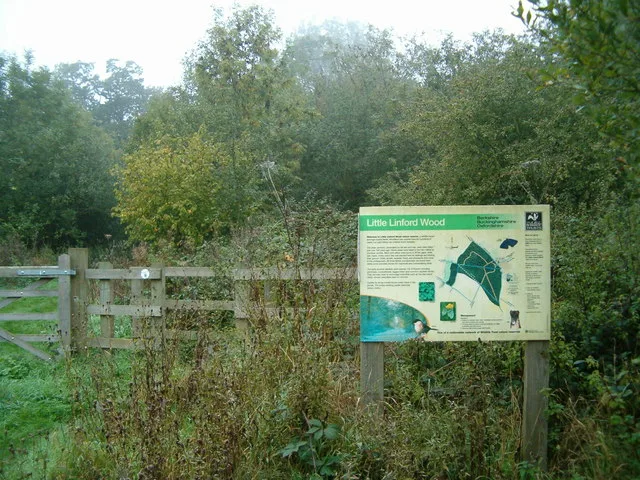
Little Linford Wood
Wildlife reserves · 1.3 km

Tyringham
Villages · 1.6 km

Little Linford Wood
Forests & woodlands · 1.8 km

Little Linford
Villages · 2.0 km

Stoke Goldington & Gayhurst War Memorial
Memorials & monuments · 2.5 km

Stoke Goldington
Towns & cities · 2.5 km

Lathbury
Towns & cities · 3.2 km

Filgrave
Villages · 3.3 km

Newport Pagnell canal
Canals · 3.6 km
St Peter's Church
Historic churches · 3.7 km
Nearby
📷 5Towns & cities · South East England
Gayhurst
Gayhurst — village and civil parish in Milton Keynes, Buckinghamshire, UK.
📷 4Historic houses · South East England
Tyringham Hall
Tyringham Hall — a Grade I-listed historic house in england-west-midlands, United Kingdom.
📷 3Wildlife reserves · South East England
Little Linford Wood
Little Linford Wood is a wildlife reserve in the United Kingdom.
📷 5📷 3Forests & woodlands · South East England
Little Linford Wood
Little Linford Wood is a forest or woodland in the United Kingdom.
📷 5Where to eat & stay near Gayhurst House
Places to stay
 📷 5
📷 5Hotels · South East England
The Swan Revived
The Swan Revived — a hotel in england west midlands.
 📷 5
📷 5Caravan parks · South East England
Lovat Meadow Caravan Park
Lovat Meadow Caravan Park — a caravan park in england west midlands.
 📷 5
📷 5Caravan parks · South East England
Touring Field and Campsite
Touring Field and Campsite — a caravan park in england west midlands.
📷 5Campsites · South East England
Small Rally Field
Small Rally Field — a campsite in england west midlands.
📷 5Campsites · South East England
Large Rally Field
Large Rally Field — a campsite in england west midlands.
📷 5Campsites · South East England
Overspill Rally Field
Overspill Rally Field — a campsite in england west midlands.
Places to eat & drink
 📷 5
📷 5 📷 5
📷 5Historic pubs · South East England
Old King's Arms Public House
Old King's Arms Public House in England South East, United Kingdom.
 📷 5
📷 5Historic pubs · South East England
The Old Castle
The Old Castle in England South East, United Kingdom.
 📷 5
📷 5Historic pubs · South East England
Watts Arms Public House And Watts To Rear
Watts Arms Public House And Watts To Rear in England South East, United Kingdom.
 📷 7
📷 7Historic pubs · South East England
The Cuba Public House
The Cuba Public House in England South East, United Kingdom.
 📷 5
📷 5Historic pubs · South East England
The Carrington Arms Public House
The Carrington Arms Public House in England South East, United Kingdom.
More historic houses in this region
 📷 5
📷 5Historic houses · South East England
12 and 14 High Street, Rochester
12 and 14 High Street, Rochester — building in Rochester, Kent, England, UK.
 📷 5
📷 5Historic houses · South East England
Berkeley House
Berkeley House — house in Rochester, Kent, England, UK.
.jpg?width=1200) 📷 5
📷 5Historic houses · South East England
Betchworth House
Betchworth House — house in Betchworth, Mole Valley, England, UK.
 📷 5
📷 5Historic houses · South East England
Bookham Grove
Bookham Grove — building in Mole Valley, Surrey, England, UK.
Frequently asked questions
- Where is Gayhurst House?
- Gayhurst House is in South-East England, United Kingdom (postcode MK16 8LG), in the parish of Gayhurst.
- What is Gayhurst House?
- Gayhurst House — a Grade I-listed historic house in england-west-midlands, United Kingdom.
- How do I get to Gayhurst House?
- The nearest railway station is Wolverton, about 5.4 km away. The nearest town is Gayhurst. Drivers can use postcode MK16 8LG.
- When was Gayhurst House built?
- Built or established in 1597.
- Who owns Gayhurst House?
- Gayhurst House is owned by Privately owned.
- Is Gayhurst House a listed building?
- Gayhurst House is officially recognised as Grade I listed.
- How do I get to Gayhurst House?
- The nearest railway station is Wolverton, about 5.4 km away. Drivers can navigate to postcode MK16 8LG.