
Memorials & monuments · South East England
Folland Gnat
In or near Hamble-le-Rice.
Folland Gnat — a memorial in england-south-east, United Kingdom.

N Chadwick — CC BY-SA 2.0 via Wikimedia Commons licence

Plan your visit
- Typical visit
- 15 min–45 min
- Nearest railway station
- Piccadilly · 0.9 km
- Free entry
- Dog-friendly
Getting there & planning your visit
To visit the Folland Gnat memorial, the nearest railway station is Piccadilly, which is 0.9 km away. Entry is free. The postcode for sat-nav is SO31 4JU.
About
Folland Gnat is a memorial located in england-south-east, United Kingdom. Sourced from OpenStreetMap (ODbL licence); see local listings for visitor information, opening hours and admission details.
Photo gallery
See it from the streetimagery from 2025
Imagery © Mapillary contributors, CC BY-SA 4.0
Protected designations
- Site of Special Scientific Interest: Hythe to Calshot Marshes SSSI
- Site of Special Scientific Interest: Lee-on-The Solent to Itchen Estuary SSSI
- Ramsar wetland: Solent & Southampton Water
Designations sourced from Natural England open data under OGL v3.
From the Wikipedia article
The Folland Gnat is a British compact swept-wing subsonic fighter aircraft that was developed and produced by Folland Aircraft. Envisioned as an affordable light fighter in contrast to the rising cost and size of typical combat aircraft, it was procured as a trainer aircraft for the Royal Air Force (RAF) as well as by export customers, who used the Gnat in both combat and training capacities. Designed by W. E. W. Petter, the Gnat has its origins in the preceding private venture Folland Midge. The issuing of Operational Requirement OR.303 by the British Air Ministry served to motivate the type's development; the Gnat was later submitted to meet this requirement. Its design allowed for its construction and maintenance tasks to be carried out without specialised tools, making it suitable for use in countries that had not yet become highly industrialised. The Gnat has been viewed as a major motivating factor towards the issuing of the NATO NBMR-1 requirement, which sought to make available a common strike/attack light fighter with which to equip the air forces of the various NATO members. Although never used as a fighter by the Royal Air Force (RAF), the Gnat T.1 jet trainer variant was adopted and operated for some time. In the United Kingdom, the Gnat became well known due to its prominent use as the display aircraft of the RAF's Red Arrows aerobatic team. The Gnat F.1 was exported to Finland, Yugoslavia and India. On 31 July 1958, Lauri Pekuri became the first Finnish pilot to break the sound barrier while flying a Gnat. The Indian Air Force (IAF) became the largest operator and eventually manufactured the aircraft under licence. Impressed by its performance during combat, the IAF proceeded to develop and procured the improved HAL Ajeet, a modified variant of the Gnat. In British service, the Gnat was replaced by the Hawker Siddeley Hawk.
Excerpt from Wikipedia under CC BY-SA 4.0. See the source article linked in Sources below.
Background
History
In October 1950, W. E. W. "Teddy" Petter, a British aircraft designer formerly of Westland Aircraft and English Electric, joined Folland Aircraft as its managing director and chief engineer. Almost immediately upon joining the firm, Petter conducted a study into the economics behind modern fighter manufacturing, and concluded that many combat aircraft entailed far too great a cost in terms of man-hours and material to be readily mass-produced during a major conflict. Development of the Gnat and the specifics of its design were heavily influenced by the issuing of Operational Requirement OR.303, which sought a capable lightweight fighter aircraft. Work to develop the Gnat went ahead,…
Architecture
The Folland Gnat was a purpose-built light fighter aircraft, suitable as both a trainer and a combat aircraft in ground-attack and day-fighter roles. Despite its compact dimensions, the cockpit offered many features expected in standard fighter aircraft of the era, including full pressurisation, climate control, and an ejection seat. The combination of low overall weight and the use of a tricycle landing gear arrangement permitted the aircraft to operate from austere grass airstrips. The fuselage of the Gnat comprised a conventional metal stressed skin structure with extensive flush-rivetting. To reduce workload and cost, intensive fabrication methods such as machining, forging, and casting…
Sourced from Wikipedia under CC BY-SA 4.0.
- Coordinates
- 50.8626, -1.3296
- County
- Hampshire
- District
- Eastleigh
- Parish
- Hamble-le-Rice
- Postcode
- SO31 4JU
- Parliamentary constituency
- Hamble Valley
- Nearest railway station
- Piccadilly — 0.9 km
Sources
- osm: node/3479463001 (ODbL)
- wikipedia: Folland Gnat (CC BY-SA 4.0)
Other places nearby

Hamble Rail Trail
Military museums · 0.4 km

Hamble-le-Rice
Towns & cities · 0.5 km

Netley Military Cemetery
Cemeteries · 0.5 km

Air Transport Auxillary Memorial
Memorials & monuments · 0.6 km

RVR Unfinished Extension
Miniature railways · 0.8 km

RVR Extension
Miniature railways · 0.8 km
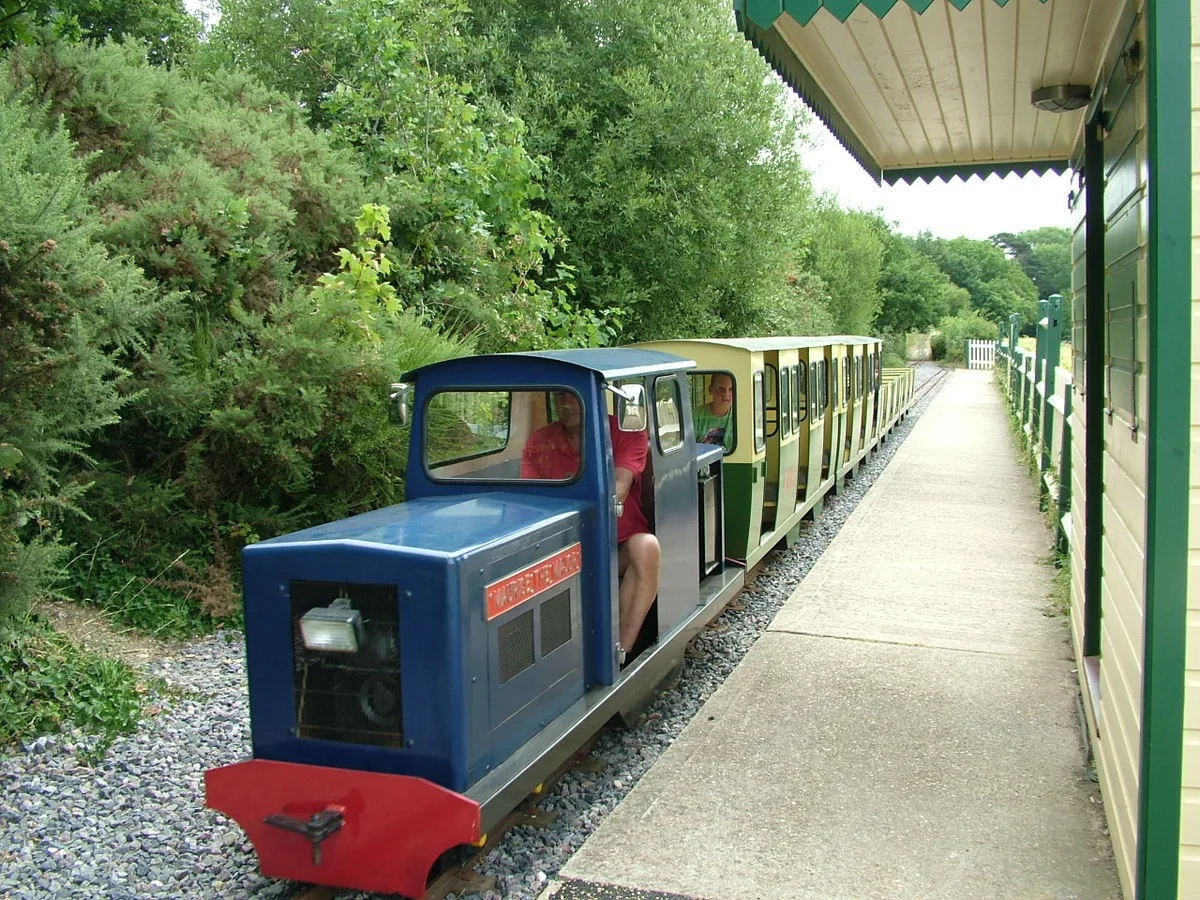
Royal Victoria Railway
Heritage railways · 0.9 km
Carriage Shed Tunnel
Miniature railways · 0.9 km

Hamble-le-Rice War Memorial
Memorials & monuments · 0.9 km
Depot access
Miniature railways · 0.9 km
New Terminus
Miniature railways · 0.9 km

Chapel In The Grounds Of The Royal Victoria Hospital
Chapels · 0.9 km
Nearby
📷 5Military museums · South East England
Hamble Rail Trail
Hamble Rail Trail — a military museum in england south east.
📷 5Towns & cities · South East England
Hamble-le-Rice
Hamble-le-Rice — village in Hampshire, England, UK.
📷 5Cemeteries · South East England
Netley Military Cemetery
Netley Military Cemetery is a cemetery in the United Kingdom.
📷 5Memorials & monuments · South East England
Air Transport Auxillary Memorial
Air Transport Auxillary Memorial — a memorial in england-south-east, United Kingdom.
📷 5Miniature railways · South East England
RVR Unfinished Extension
RVR Unfinished Extension — a miniature railway in england-south-east, United Kingdom.
📷 5Miniature railways · South East England
RVR Extension
RVR Extension — a miniature railway in england-south-east, United Kingdom.
Where to eat & stay near Folland Gnat
Places to stay
 📷 5
📷 5Caravan parks · South East England
Riverside Touring & Hol. Park
Riverside Touring & Hol. Park — a caravan park in england south east.
 📷 5
📷 5Caravan parks · South East England
Sunnydale Farm Touring Park
Sunnydale Farm Touring Park — a caravan park in england south east.
 📷 5
📷 5 📷 5
📷 5Caravan parks · South East England
Solent Breezes
Solent Breezes — a caravan park in england south east.
 📷 5
📷 5Campsites · South East England
Paulines Lodge Scout activity centre
Paulines Lodge Scout activity centre — a campsite in england south east.
 📷 5
📷 5Places to eat & drink
 📷 5
📷 5Historic pubs · South East England
The Victory Inn
The Victory Inn in England South East, United Kingdom.
 📷 7
📷 7Historic pubs · South East England
Prince Consort Public House
Prince Consort Public House in England South East, United Kingdom.
 📷 5
📷 5Historic pubs · South East England
Jolly Sailor Public House
Jolly Sailor Public House in England South East, United Kingdom.
 📷 5
📷 5Historic pubs · South East England
Jolly Farmer Public House
Jolly Farmer Public House in England South East, United Kingdom.
 📷 5
📷 5 📷 5
📷 5Historic pubs · South East England
The Drummond Arms
The Drummond Arms in England South East, United Kingdom.
More memorials in this region
 📷 5
📷 5Memorials & monuments · South East England
Air Forces Memorial
Air Forces Memorial is a memorial in the United Kingdom.
 📷 5
📷 5Memorials & monuments · South East England
All Saints Church
All Saints Church is a memorial in the United Kingdom.
 📷 5
📷 5Memorials & monuments · South East England
Bevans War Memorial
Bevans War Memorial is a memorial in the United Kingdom.
.jpg?width=1200) 📷 5
📷 5Memorials & monuments · South East England
Cumberland Obelisk
Cumberland Obelisk is a memorial in the United Kingdom.
Frequently asked questions
- Where is Folland Gnat?
- Folland Gnat is in Hampshire, South-East England, United Kingdom (postcode SO31 4JU), in the parish of Hamble-le-Rice.
- What is Folland Gnat?
- Folland Gnat — a memorial in england-south-east, United Kingdom.
- How do I get to Folland Gnat?
- The nearest railway station is Piccadilly, about 0.9 km away. The nearest town is Hamble-le-Rice. Drivers can use postcode SO31 4JU.
- Is Folland Gnat a protected site?
- Yes — Folland Gnat is part of the Hythe to Calshot Marshes SSSI Site of Special Scientific Interest and the Lee-on-The Solent to Itchen Estuary SSSI Site of Special Scientific Interest.
- Is Folland Gnat free to visit?
- Yes, Folland Gnat is free to enter.
- How do I get to Folland Gnat?
- The nearest railway station is Piccadilly, about 0.9 km away. Drivers can navigate to postcode SO31 4JU.