
Public art & sculpture · West Midlands
Findings Trail 🅨 ''STAMP'' LETTER
In or near Birmingham.
Findings Trail 🅨 ''STAMP'' LETTER — Public artwork (plate) by Laura Potter.

Wikimedia Commons contributors — see linked file page for photographer and licence licence

Plan your visit
- Typical visit
- 1 h–2 h
- Nearest railway station
- Birmingham Snow Hill · 0.4 km
Getting there & planning your visit
To visit the Findings Trail ''STAMP'' LETTER in Birmingham, the nearest railway station is Birmingham Snow Hill, located 0.4 km away. The postcode for navigation is B3 1JX. Entry is free, and the site is accessible.
About
Findings Trail 🅨 ''STAMP'' LETTER is a place of interest in the United Kingdom. Wikidata describes it as: "Public artwork (plate) by Laura Potter.". Coordinates: 52.4831°, -1.9053°.
Photo gallery
See it from the streetimagery from 2018
Imagery © Mapillary contributors, CC BY-SA 4.0
From the Wikipedia article
The Jewellery Quarter is an area of central Birmingham, England, in the north-western area of Birmingham City Centre, with a population of 19,000 in a 1.07-square-kilometre (264-acre) area. The Jewellery Quarter is Europe's largest concentration of businesses involved in the jewellery trade and produces 40% of all the jewellery made in the UK. It is also home to the world's largest Assay Office, which hallmarks around 12 million items a year. Historically the Jewellery Quarter has been the birthplace of many pioneering advancements in industrial technology. Industry in the area declined over the course of the 20th century, affected by factors such as changes in consumer demand, production methods, the impact of the World Wars and global manufacturing competition. However, during the 21st century the Jewellery Quarter has transformed again to incorporate a significant amount of new residential accommodation, blending urban living within a historical industrial landscape and the retained jewellery trade.
Excerpt from Wikipedia under CC BY-SA 4.0. See the source article linked in Sources below.
Background
History
in St Paul's Square was completed in 1779, although the spire was not added until 1823.]] A survey of 1553 named one of the first goldsmiths of Birmingham, Roger Pemberton. During the 18th and 19th centuries Birmingham prospered from the Industrial Revolution and developed into a large industrial town manufacturing a wide range of products, often from various metals. Many large foundries and glassworks attracted workers from all areas of Britain. A considerable trade developed in the manufacture of gilt buttons, cap badges, pins and small metal “toys”, a term from the era used to describe a whole range of intricate metal objects. According to the Birmingham Directory of 1780 there were 26…
Visiting
gallery on St Pauls. The wall plaques are by William Bloye.]] As well as being an industrial area, the Jewellery Quarter has become a tourist attraction itself as many of the workshops retain their 19th-century appearance. Birmingham City Council first recognised the importance of tourism in raising the profile of the Jewellery Quarter in the 1980s. Studies were commissioned on the industry and potential for tourism in the area. These were put together into a strategy which included aims such as improving views in the area, established a museum and a trade centre to rival Germany and Italy. This was accepted, except the trade centre proposal. The first things to be implemented were the…
Sourced from Wikipedia under CC BY-SA 4.0.
- Coordinates
- 52.4831, -1.9053
- District
- Birmingham
- Parish
- Birmingham, unparished area
- Postcode
- B3 1JX
- Parliamentary constituency
- Birmingham Ladywood
- Nearest railway station
- Birmingham Snow Hill — 0.4 km
Sources
- osm: n12823858744 (ODbL)
- wikipedia: Jewellery Quarter (CC BY-SA 4.0)
- commons: Chamberlain Clock and the Rose Villa Tavern, Jewellery Quarter, Birmingham UK.jpg (CC BY-SA 4.0)
Other places nearby
Findings Trail 🅐 TUNNEL
Public art & sculpture · 0.0 km
Findings Trail 🅩 TELEPHONE RECIEVER
Public art & sculpture · 0.0 km
Findings Trail 🅧 HEART WITH CANAL
Canals · 0.0 km
Findings Trail ▲ HEART
Public art & sculpture · 0.0 km
Findings Trail ■ FINISH
Public art & sculpture · 0.0 km

Jewellery Quarter Gateway: ‘Made in’ Geology
Public art & sculpture · 0.0 km
Findings Trail 🅦 FILM PROJECTOR
Natural landmarks · 0.1 km

G R Elkington
Memorials & monuments · 0.1 km
Findings Trail 🅥 PLATED SAMPLE
Public art & sculpture · 0.1 km
Findings Trail 🅑 PRECIOUS METAL SYMBOLS
Public art & sculpture · 0.1 km
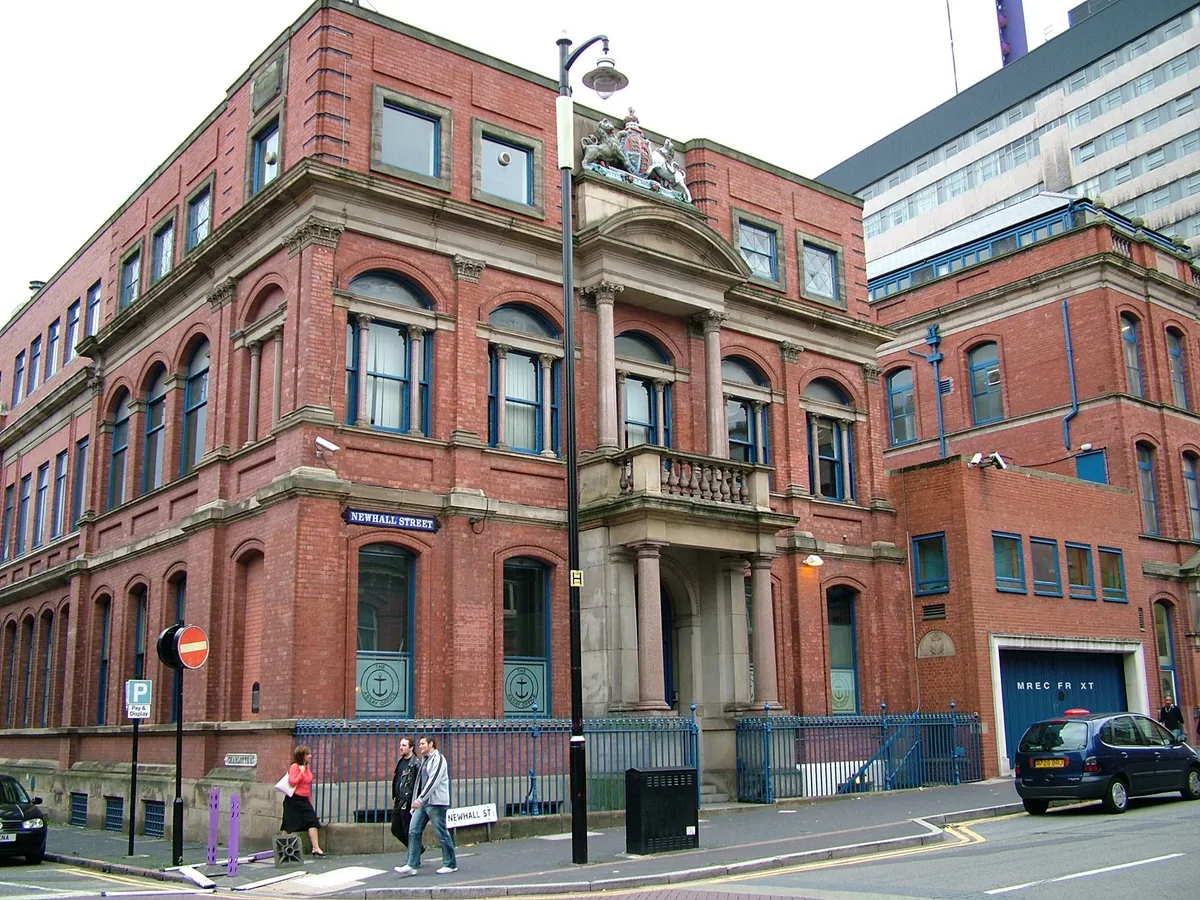
Birmingham Assay Office
Museums · 0.1 km

Alexander Parkes
Memorials & monuments · 0.1 km
Nearby
📷 3Public art & sculpture · West Midlands
Findings Trail 🅐 TUNNEL
Findings Trail 🅐 TUNNEL — Public artwork (plate) by Laura Potter.
📷 3Public art & sculpture · West Midlands
Findings Trail 🅩 TELEPHONE RECIEVER
Findings Trail 🅩 TELEPHONE RECIEVER — Public artwork (plate) by Laura Potter.
📷 3Canals · West Midlands
Findings Trail 🅧 HEART WITH CANAL
Findings Trail 🅧 HEART WITH CANAL — Public artwork (plate) by Laura Potter.
📷 3Public art & sculpture · West Midlands
Findings Trail ▲ HEART
Findings Trail ▲ HEART — Public artwork (plate) by Laura Potter.
📷 3Public art & sculpture · West Midlands
Findings Trail ■ FINISH
Findings Trail ■ FINISH — Public artwork (plate) by Laura Potter.
📷 3Public art & sculpture · West Midlands
Jewellery Quarter Gateway: ‘Made in’ Geology
Jewellery Quarter Gateway: ‘Made in’ Geology — Public artwork (sculpture) by Anuradha Patel;Form Fabrications (Birmingham) Ltd..
Where to eat & stay near Findings Trail 🅨 ''STAMP'' LETTER
Places to stay
 📷 7
📷 7Hotels · West Midlands
Hampton by Hilton Birmingham Jewellery Quarter
Hampton by Hilton Birmingham Jewellery Quarter — a hotel in england west midlands. 3-star. Brand: Hampton.
 📷 5
📷 5 📷 5
📷 5Hotels · West Midlands
Hyatt Regency Birmingham
Hyatt Regency Birmingham — a hotel in england west midlands. 4-star. Brand: Hyatt Regency.
 📷 5
📷 5 📷 5
📷 5Hotels · West Midlands
Leonardo Royal Hotel
Leonardo Royal Hotel — a hotel in england west midlands. Brand: Leonardo Royal Hotel.
 📷 5
📷 5Places to eat & drink
 📷 3
📷 3Historic pubs · West Midlands
Queens Arms
Queens Arms — Historic pub — listed building or notable heritage status.
 📷 5
📷 5Restaurants · West Midlands
Pasta di Piazza
Pasta di Piazza — a restaurant in england west midlands.
.jpg?width=1200) 📷 5
📷 5Historic pubs · West Midlands
The Royal
The Royal — Historic pub — listed building or notable heritage status.
 📷 6
📷 6Historic pubs · West Midlands
The Wellington
The Wellington — Historic pub — listed building or notable heritage status.
 📷 5
📷 5Historic pubs · West Midlands
The Old Joint Stock
The Old Joint Stock — Historic pub — listed building or notable heritage status.
.jpg?width=1200) 📷 3
📷 3Historic pubs · West Midlands
Lost & Found
Lost & Found — Historic pub — listed building or notable heritage status.
More places in this region
 📷 3
📷 3Public art & sculpture · West Midlands
Colin Grazier Memorial
Colin Grazier Memorial in England East Midlands, United Kingdom.
 📷 3
📷 3Public art & sculpture · West Midlands
The Rescue Miner
The Rescue Miner — a public art in england-east-midlands, United Kingdom.
📷 3Public art & sculpture · West Midlands
The Brereton Miner
The Brereton Miner — a public art in england-east-midlands, United Kingdom.
📷 3Public art & sculpture · West Midlands
The Deputy Miner
The Deputy Miner — a public art in england-east-midlands, United Kingdom.
Frequently asked questions
- Where is Findings Trail 🅨 ''STAMP'' LETTER?
- Findings Trail 🅨 ''STAMP'' LETTER is in the West Midlands, United Kingdom (postcode B3 1JX), in the parish of Birmingham, unparished area.
- What is Findings Trail 🅨 ''STAMP'' LETTER?
- Findings Trail 🅨 ''STAMP'' LETTER — Public artwork (plate) by Laura Potter.
- How do I get to Findings Trail 🅨 ''STAMP'' LETTER?
- The nearest railway station is Birmingham Snow Hill, about 0.4 km away. The nearest town is Birmingham. Drivers can use postcode B3 1JX.
- How do I get to Findings Trail 🅨 ''STAMP'' LETTER?
- The nearest railway station is Birmingham Snow Hill, about 0.4 km away. Drivers can navigate to postcode B3 1JX.