
Museums · South East England
Elham Valley Railway
In or near Sandgate.
The Elham Valley Railway was a line connecting Folkestone and Canterbury in Kent, England. It opened between 1887 and 1889 and closed in 1947. The line was originally proposed by the independent Elham

David Anstiss — CC BY-SA 2.0 via Wikimedia Commons licence

Plan your visit
- Typical visit
- 1.5 h–3 h
- Best time of year
- Year-round
- Nearest railway station
- Folkestone West · 3.0 km
- Family-friendly
- Limited wheelchair access
Getting there & planning your visit
To visit the Elham Valley Railway, the nearest railway station is Folkestone West, located 3 km away. The postcode for sat-nav is CT18 8AZ. Please note that wheelchair accessibility is limited.
About
The Elham Valley Railway was a line connecting Folkestone and Canterbury in Kent, England. It opened between 1887 and 1889 and closed in 1947. The line was originally proposed by the independent Elham Valley Light Railway Company in the mid-19th century. After the project was cancelled owing to financial difficulties, it was revived by the South Eastern Railway who were competing with the rival London, Chatham and Dover Railway for railway traffic. The scheme was complicated by the imposing geography of the Elham Valley and the construction of two significant tunnels. The southern section from Cheriton to Barham opened in 1887, with the northern section to Canterbury opening two years later. The Elham Valley Railway was never commercially successful as it passed through predominantly rural areas. During World War II it was appropriated by the War Department who used it for defence, including a large rail-mounted gun stationed on the line. After the conflict, the line passed back into civilian use, but the route now had competing bus traffic. A shuttle service from Folkestone to Lyminge was reinstated in 1946, but closed the following year; the remainder of the line never re-opened. Some of the railway has been demolished, including Elham railway station, but parts of the infrastructure including the two tunnels have survived. The history of the line is commemorated in a local museum.
Photo gallery
Summary from the official site
The Elham Valley Railway is a heritage railway that offers visitors a glimpse into the history of rail travel in the region. Visitors can explore the restored railway line and enjoy scenic views of the surrounding countryside.
Read more on the official property page.
Protected designations
- Site of Special Scientific Interest: Folkestone to Etchinghill Escarpment SSSI
- Area of Outstanding Natural Beauty: Kent Downs
Designations sourced from Natural England open data under OGL v3.
From the Wikipedia article
The Elham Valley Railway was a line connecting Folkestone and Canterbury in Kent, England. It opened between 1887 and 1889 and closed in 1947. The line was originally proposed by the independent Elham Valley Light Railway Company in the mid-19th century. After the project was cancelled owing to financial difficulties, it was revived by the South Eastern Railway who were competing with the rival London, Chatham and Dover Railway for railway traffic. The scheme was complicated by the imposing geography of the Elham Valley and the construction of two significant tunnels. The southern section from Cheriton to Barham opened in 1887, with the northern section to Canterbury opening two years later. The Elham Valley Railway was never commercially successful as it passed through predominantly rural areas. During World War II it was appropriated by the War Department who used it for defence, including a large rail-mounted gun stationed on the line. After the conflict, the line passed back into civilian use, but the route now had competing bus traffic. A shuttle service from Folkestone to Lyminge was reinstated in 1946, but closed the following year; the remainder of the line never re-opened. Some of the railway has been demolished, including Elham railway station, but parts of the infrastructure including the two tunnels have survived. The history of the line is commemorated in a local museum.
Excerpt from Wikipedia under CC BY-SA 4.0. See the source article linked in Sources below.
Background
History
The South Eastern Railway opened the main line to Ashford in 1842. A connection to Folkestone opened the following year and to Canterbury in 1846. At the same time, the East Kent Railway was constructing a line from Canterbury to Dover. However, the imposing geography of the Elham Valley that connects Canterbury to Folkestone meant that unlike much of Kent, no railway line was proposed to run through it during the Railway Mania of this time. The valley was poorly connected to the nearest market towns, Ashford and Canterbury, with the main road being little more than a dirt track. Landowners and residents saw that they were isolated in the absence of a railway, and proposed an independent…
Architecture
Construction formally started on 28 August 1884 with the "cutting of the first sod" by Sir George Russell at Peene near Folkestone. Work had started on the 97 yard Etchinghill Tunnel before any ground had been cut for the main track. The entire line was undulating, including a stiff climb at 1 in 90 for 2+1/2 miles from Cheriton Junction. It approached by a short climb at 1 in 86 from the south; running south from Harbledown Junction there was a mile-long climb at 1 in 70 followed by a mile and a half at 1 in 183. The work was engineered by Thomas A. Walker. Residents of Cheriton and Newington requested the SER to build a station for their villages, but were refused. Construction was quick,…
Sourced from Wikipedia under CC BY-SA 4.0.
- Coordinates
- 51.0993, 1.1174
- County
- Kent
- District
- Folkestone and Hythe
- Parish
- Newington
- Postcode
- CT18 8AZ
- Parliamentary constituency
- Ashford
- Phone
- +44 1303 273014
- Nearest railway station
- Folkestone West — 3 km
- Opening
- {{Start date|1887|07|04|df=y}} (Cheriton–Barham)<br/>{{Start date|1889|07|01|df=y}} (Barham–Canterbury)
- Official site
- www.elhamvalleylinetrust.org
Sources
- wikipedia: Elham Valley Railway (CC BY-SA 4.0)
Other places nearby
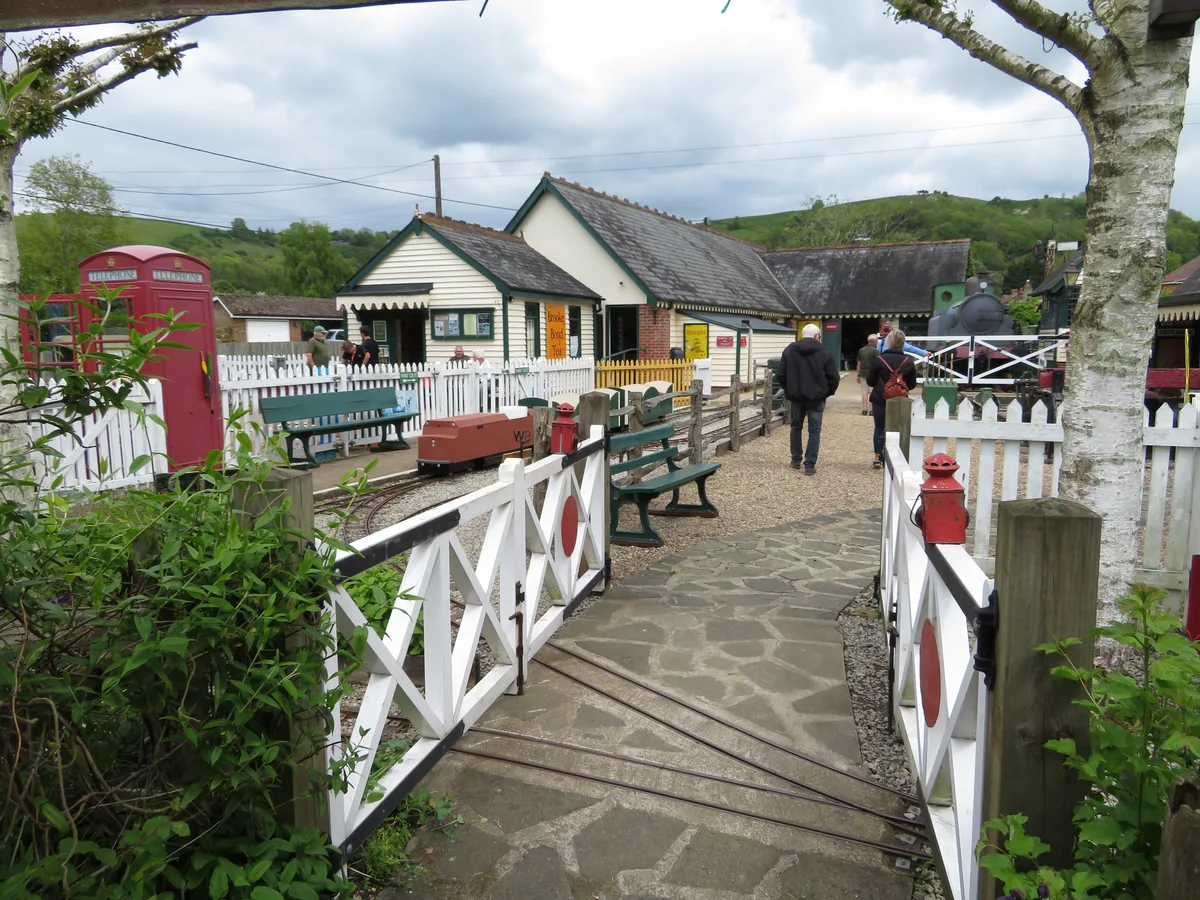
Elham Valley Countryside Centre And Railway Museum
Museums · 0.1 km
Railway Museum
Museums · 0.2 km

Channel Tunnel Model
Public art & sculpture · 0.5 km

Monument To Mark Turner About 4 Metres North Of North Chapel Of Church Of St Nicholas
Memorials & monuments · 0.6 km
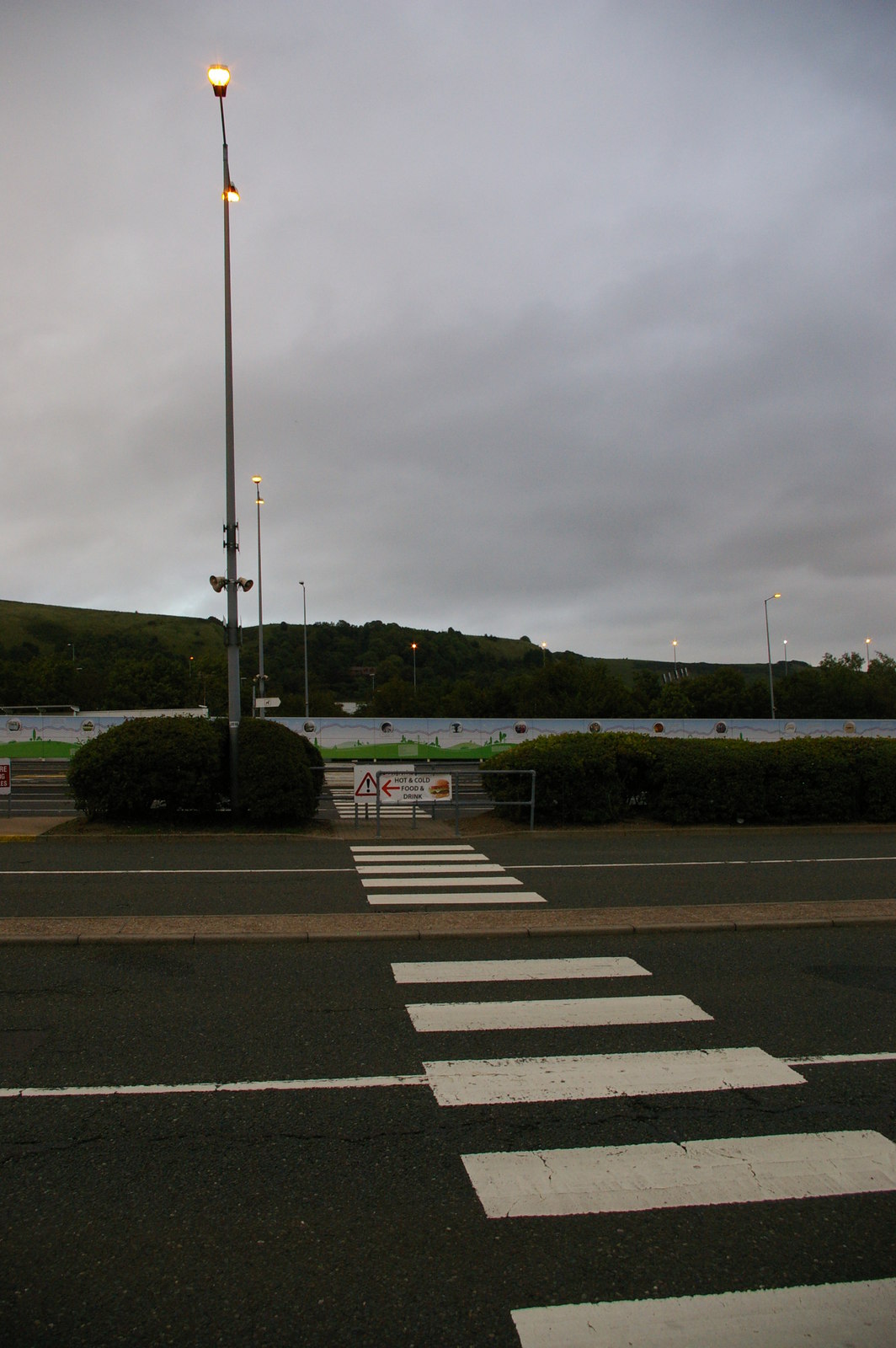
Danton Pinch
Vineyards · 0.8 km

Newington, Folkestone and Hythe
Other places · 0.8 km

Newington
Castles · 1.2 km

Beachborough Park
Historic houses · 1.4 km

Church of St Martin
Historic churches · 1.6 km

Summerhouse Hill
Mountains & hills · 1.7 km
Summerhouse Hill
Mountains & hills · 1.7 km

Pete's Field
Campsites · 2.0 km
Nearby
📷 5Museums · South East England
Elham Valley Countryside Centre And Railway Museum
Elham Valley Countryside Centre And Railway Museum — museum in Folkestone, England, UK.
Museums · South East England
Railway Museum
Railway Museum — a museum in england south east.
📷 5Public art & sculpture · South East England
Channel Tunnel Model
Channel Tunnel Model — a public art in england-south-east, United Kingdom.
📷 5Memorials & monuments · South East England
Monument To Mark Turner About 4 Metres North Of North Chapel Of Church Of St Nicholas
Monument To Mark Turner About 4 Metres North Of North Chapel Of Church Of St Nicholas — Grade II listed building-listed memorial in england-south-east, United Kingdom.
📷 5Vineyards · South East England
Danton Pinch
Danton Pinch — a UK vineyard in england south east, producing English or Welsh wine from cool-climate grape varieties.
📷 5Other places · South East England
Newington, Folkestone and Hythe
Newington, Folkestone and Hythe — a other in england-south-east, United Kingdom.
Where to eat & stay near Elham Valley Railway
Places to stay
📷 5 📷 5
📷 5 📷 5
📷 5 📷 5
📷 5Hotels · South East England
Best Western Plus Burlington Hotel
Best Western Plus Burlington Hotel — a hotel in england south east. Brand: Best Western Plus.
 📷 7
📷 7 📷 5
📷 5Caravan parks · South East England
Black Horse Farm
Black Horse Farm — a caravan park in england south east.
Places to eat & drink
 📷 5
📷 5Historic pubs · South East England
The White Hart Inn
The White Hart Inn in England South East, United Kingdom.
 📷 5
📷 5Historic pubs · South East England
Dukes Head Inn
Dukes Head Inn in England South East, United Kingdom.
 📷 5
📷 5Historic pubs · South East England
The Samuel Peto
The Samuel Peto in England South East, United Kingdom.
 📷 5
📷 5Historic pubs · South East England
The Martello Public House
The Martello Public House in England South East, United Kingdom.
 📷 5
📷 5Historic pubs · South East England
The Five Bells
The Five Bells in England South East, United Kingdom.
 📷 5
📷 5More museums in this region
 📷 5
📷 5Museums · South East England
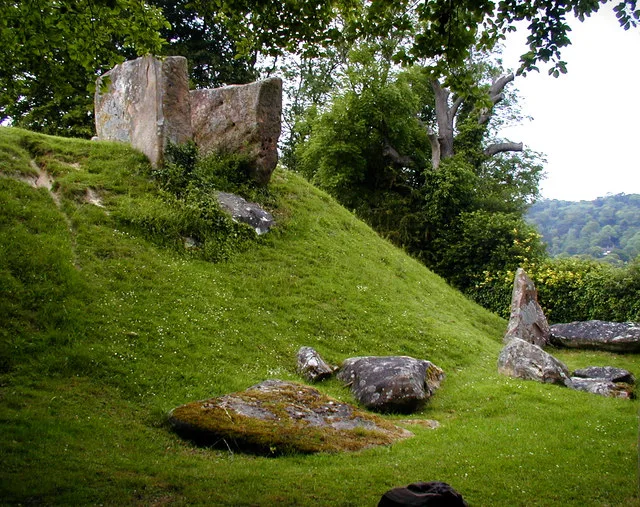
Coldrum Long Barrow
Coldrum Long Barrow — neolithic chambered long barrow near Trottiscliffe, Kent, England, UK.
 📷 5
📷 5Museums · South East England
Guildford House
Guildford House — house in Guildford, Surrey, England, UK.
 📷 5
📷 5Museums · South East England
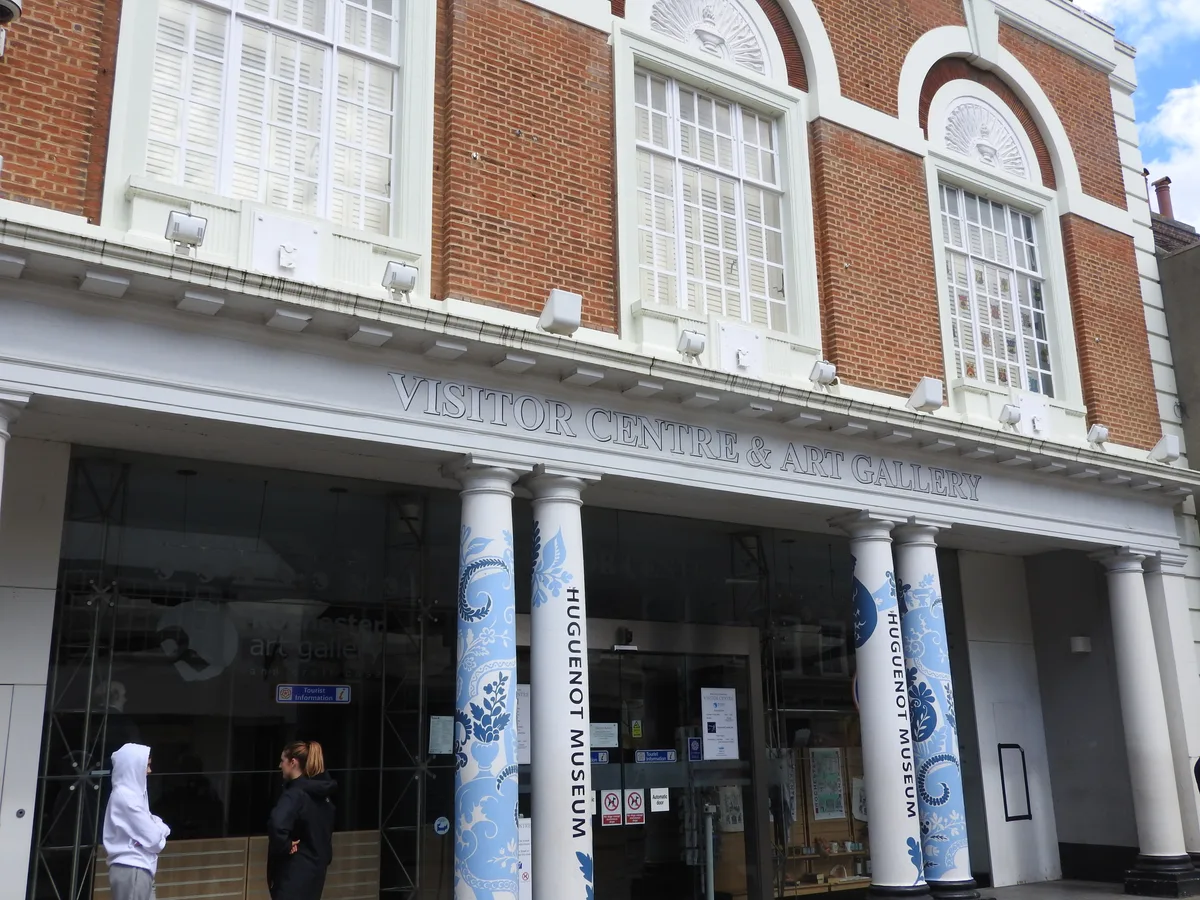
Huguenot Museum
Huguenot Museum — museum in Rochester, England, UK.
 📷 5
📷 5Museums · South East England
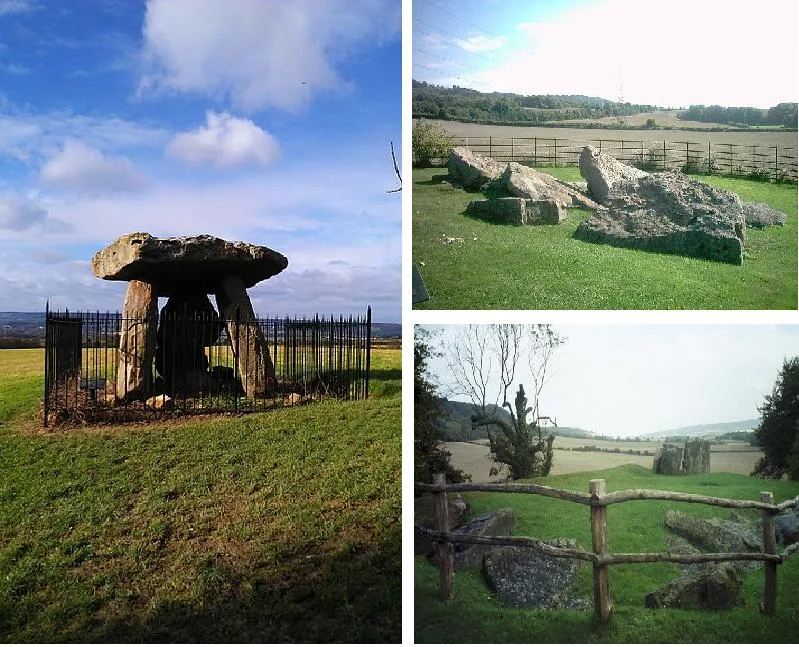
Medway megaliths
Medway megaliths — group of long barrows in Kent, England.
Frequently asked questions
- Where is Elham Valley Railway?
- Elham Valley Railway is in Kent, South-East England, United Kingdom (postcode CT18 8AZ), in the parish of Newington.
- What is Elham Valley Railway?
- The Elham Valley Railway was a line connecting Folkestone and Canterbury in Kent, England. It opened between 1887 and 1889 and closed in 1947. The line was originally proposed by the independent Elham
- How do I get to Elham Valley Railway?
- The nearest railway station is Folkestone West, about 3.0 km away. The nearest town is Sandgate. Drivers can use postcode CT18 8AZ.
- Who owns Elham Valley Railway?
- Elham Valley Railway is owned by | operator = South Eastern Railway (1887–1899)<br />South Eastern and Chatham Railway (1899–1923)<br />Southern Railway (1923–1947).
- Is Elham Valley Railway a protected site?
- Yes — Elham Valley Railway is part of the Folkestone to Etchinghill Escarpment SSSI Site of Special Scientific Interest and the Kent Downs National Landscape (AONB).
- How do I get to Elham Valley Railway?
- The nearest railway station is Folkestone West, about 3.0 km away. Drivers can navigate to postcode CT18 8AZ.