
Historic bridges · Central Scotland
Elgin Railway Bridge, Charlestown
In or near Limekilns.
Elgin Railway Bridge, Charlestown — category B listed building-listed bridge in scotland-central, United Kingdom.

Paul McIlroy — CC BY-SA 2.0 via Wikimedia Commons licence

Plan your visit
- Typical visit
- 15 min–30 min
- Nearest railway station
- Dunfermline City · 4.8 km
- Free entry
- Dog-friendly
Getting there & planning your visit
To visit Elgin Railway Bridge in Charlestown, the nearest railway station is Dunfermline City, located 4.8 km away. Entry to the bridge is free.
About
Elgin Railway Bridge, Charlestown is a category B listed building-listed bridge in scotland-central, United Kingdom, registered on the Historic Environment Scotland register (entry LB3755). Listed status protects buildings and structures of special architectural or historic interest. See the linked Wikipedia article for further details.
Photo gallery
Heritage listing
Category B Group Category Details 100000019 - see notes Date Added 17/03/1978 Supplementary Information Updated 26/06/2017 Local Authority Fife Planning Authority Fife Parish Dunfermline NGR NT 06213 83696 Coordinates 306213, 683696 — Circa 1795. Coursed, sandstone rubble; roughly droved ashlar dressings and soffits. 3 segmental arches, metal tie plates over centre and S end arches; sloping buttress at S end, W side. Sandstone rubble parapet; rough rubble coping. Cobbled road. Steep drop to W, gentler slope to E. Built to carry former Elgin Railway. — A-Group with 1-90 Charlestown Village, exluding 36-37 and 52-55 Charlestown Village; Charlestown, Camsie House; Charlestown Harbour; Charlestown Harbour Road, Limekilns; Charlestown Village, K6 Telephone Kiosk; Charlestown Village, The Queen s Hall; Charlestown, 8, 10, 14, The Sutlery, 16, 18 Rocks Road; Charlestown, 12 Rocks Road, The Old School House; Charlestown, Rocks Road, Former Estate Workshop; Charlestown, Rocks Road, Old School. Construction of the Elgin Railway began in 1774. It was built to carry coal from the various pits situated near Dunfermline, to Limekilns where it was shipped away. A number of landlords who owned pits, or on whose land the proposed route of the railway fell, were involved in the construction of the railway, including Sir John Halkett of Pitfirrane, Robert Wellwood of Garvock and Pitliver and George Chalmers of Pittencrieff. In 1790 Earl Elgin took complete ownership of the railway. Initially the railway took the form of a wagonway with wooden rails and horse power. The wooden rails were replaced by iron and in 1852 steam engines provided the power. Coal was transported from pits at Berrielaw and Knockhouse, through Crossford, the Broomhall Estate and Limekilns to Limekilns Harbour with a
From Historic Environment Scotland under OGL v3.
Place summary
Elgin Railway Bridge is a bridge located in Charlestown, central Scotland. It is designated as a category B listed building, recognising its historical and architectural significance.
AI-generated from the structured facts on this page (operator, designation, listing, era). Not a substitute for visiting.
- Coordinates
- 56.0369, -3.5068
- District
- Fife
- Postcode
- KY11 3ET
- Parliamentary constituency
- Dunfermline and Dollar
- Nearest railway station
- Dunfermline City — 4.8 km
Sources
- wikidata: Q17816261 (CC0)
Other places nearby

Lime Kilns
Archaeological sites · 0.3 km

Lime Kilns
Archaeological sites · 0.3 km
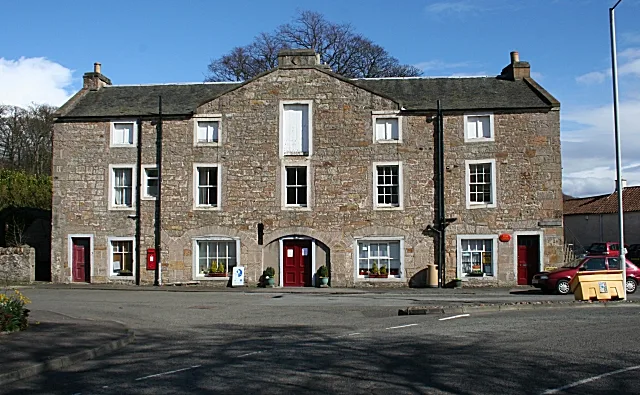
Sutlery Building with Shop and Post Office, 8-20 Rocks Road, Charlestown
Palaces · 0.4 km

Charlestown Light (historical)
Lighthouses · 0.4 km

Scottish Lime Centre - Charlestown Workshops
Natural landmarks · 0.4 km

Charlestown Harbour
Harbours & ports · 0.4 km

Charlestown
Villages · 0.5 km

Crombie, Waukmill
Vineyards · 0.7 km

Charlestown railway station
Heritage railway stations · 0.8 km

Ironmill Bay
Natural landmarks · 1.0 km
War Memorial, Limekilns
Memorials & monuments · 1.0 km

Limekilns War Memorial
Memorials & monuments · 1.0 km
Nearby
📷 3Archaeological sites · Central Scotland
Lime Kilns
Lime Kilns — a archaeological in scotland-central, United Kingdom.
📷 5★ Iconic📷 3Palaces · Central Scotland
Sutlery Building with Shop and Post Office, 8-20 Rocks Road, Charlestown
Sutlery Building with Shop and Post Office, 8-20 Rocks Road, Charlestown — Convenience store in Fife, Scotland, UK.
📷 5Lighthouses · Central Scotland
Charlestown Light (historical)
Charlestown Light (historical) — a lighthouse in scotland central.
📷 3Natural landmarks · Central Scotland
Scottish Lime Centre - Charlestown Workshops
Scottish Lime Centre - Charlestown Workshops — a other in scotland-central, United Kingdom.
📷 3Harbours & ports · Central Scotland
Charlestown Harbour
Charlestown Harbour — harbor in Charlestown, Fife, Scotland, UK.
Where to eat & stay near Elgin Railway Bridge, Charlestown
Places to stay
 📷 5
📷 5Hotels · Central Scotland
Keavil House Hotel
Keavil House Hotel — a hotel in scotland central.
📷 7Hotels · Central Scotland
Adamson Hotel
Adamson Hotel — a hotel in scotland central.
 📷 5
📷 5Hotels · Central Scotland
Garvock House Hotel
Garvock House Hotel — a hotel in scotland central.
 📷 5
📷 5Hotels · Central Scotland
DoubleTree by Hilton Edinburgh - Queensferry Crossing
DoubleTree by Hilton Edinburgh - Queensferry Crossing — a hotel in scotland central. 3-star. Brand: DoubleTree.
 📷 5
📷 5 📷 5
📷 5Places to eat & drink
 📷 5
📷 5Restaurants · Central Scotland
Champany Inn
Champany Inn — a restaurant in scotland central.
 📷 6
📷 6Historic pubs · Central Scotland
The Burgh Arms
The Burgh Arms in Scotland Islands, United Kingdom.
 📷 7
📷 7Historic pubs · Central Scotland
Red Lion Inn, Low Causeway, Culross
Red Lion Inn, Low Causeway, Culross in Scotland Central, United Kingdom.
 📷 7
📷 7Historic pubs · Central Scotland
Red Lion Inn, 50 High Street, Linlithgow
Red Lion Inn, 50 High Street, Linlithgow in Scotland Central, United Kingdom.
 📷 7
📷 7Historic pubs · Central Scotland
The Crown Arms, 177-179 High Street, Linlithgow
The Crown Arms, 177-179 High Street, Linlithgow in Scotland Central, United Kingdom.
 📷 7
📷 7More bridges in this region
 📷 3
📷 3Historic bridges · Central Scotland
Kelloe House
Kelloe House in England North East, United Kingdom.
 📷 4
📷 4Historic bridges · Central Scotland
Chirnsidebridge
Chirnsidebridge in England North East, United Kingdom.
 📷 3
📷 3.jpg?width=1200) 📷 3
📷 3Historic bridges · Central Scotland
Achnamara Clapper Bridge
Achnamara Clapper Bridge is a historic bridge in the United Kingdom.
Frequently asked questions
- Where is Elgin Railway Bridge, Charlestown?
- Elgin Railway Bridge, Charlestown is in central Scotland, United Kingdom (postcode KY11 3ET).
- What is Elgin Railway Bridge, Charlestown?
- Elgin Railway Bridge, Charlestown — category B listed building-listed bridge in scotland-central, United Kingdom.
- How do I get to Elgin Railway Bridge, Charlestown?
- The nearest railway station is Dunfermline City, about 4.8 km away. The nearest town is Limekilns. Drivers can use postcode KY11 3ET.
- Is Elgin Railway Bridge, Charlestown a listed building?
- Elgin Railway Bridge, Charlestown is officially recognised as category B listed building listed.
- Is Elgin Railway Bridge, Charlestown free to visit?
- Yes, Elgin Railway Bridge, Charlestown is free to enter.
- How do I get to Elgin Railway Bridge, Charlestown?
- The nearest railway station is Dunfermline City, about 4.8 km away. Drivers can navigate to postcode KY11 3ET.