
Historic houses · South West England
Dundas Aqueduct
In or near Limpley Stoke.
Dundas Aqueduct — a Grade I-listed historic house in england-south-east, United Kingdom.

Oli Allen — CC BY-SA 2.0 via Wikimedia Commons licence

Plan your visit
- Typical visit
- 1 h–2 h
- Nearest railway station
- Freshford · 2.3 km
- Family-friendly
- Limited wheelchair access
Getting there & planning your visit
To visit Dundas Aqueduct, the nearest railway station is Freshford, located 2.3 km away. The postcode for sat-nav is BA2 7BN. Accessibility is limited for wheelchair users.
About
Dundas Aqueduct is a Grade I-listed building in england-south-east, United Kingdom. Grade I status is conferred by Historic England (or Cadw, Historic Environment Scotland or NIEA equivalents) on buildings of exceptional national interest. See the linked Wikipedia article for full historical and architectural details.
Photo gallery
360° viewimagery from 2021
Imagery © Mapillary contributors, CC BY-SA 4.0
Protected designations
- Area of Outstanding Natural Beauty: Cotswolds
Designations sourced from Natural England open data under OGL v3.
From the Wikipedia article
Dundas Aqueduct (grid reference ST785625) is an aqueduct in England which carries the Kennet and Avon Canal over the River Avon (the Somerset / Wiltshire border) and the Wessex Main Line railway. The aqueduct is near Monkton Combe, Somerset, and is about 2+1⁄2 miles (4 km) south-east of the city of Bath. It was designed by John Rennie and chief engineer John Thomas between 1797 and 1801, and completed in 1805. James McIlquham was appointed contractor. It is named after Charles Dundas, the first chairman of the Kennet and Avon Canal Company. The aqueduct is 150 feet (45.7 m) long with three arches built of Bath stone, with Doric pilasters, and balustrades at each end. The central semicircular arch spans 64 feet (19.5 m), and the two oval side arches span 20 feet (6.1 m). The canal crosses back across the Avon and the railway on another aqueduct at Avoncliff. This diversion onto the right bank of the Avon avoids the steep sides of the river valley at Limpley Stoke, and the need to cross the Midford Brook and River Frome. The aquecuct is a Grade I listed structure, and was the first canal structure to be designated as a scheduled monument in 1951. Over many years, leaks had developed and the aqueduct was closed in 1954. For a while in the 1960s and 1970s, the canal was dry and it was possible to walk along the bed on each side of the river, as well as through the aqueduct itself. The aqueduct was relined with polythene and concrete and restored, reopening in 1984. Care was taken not to disturb a colony of bats living under the aqueduct. The aqueduct is also the junction between the Kennet and Avon Canal and the largely derelict Somerset Coal Canal. The short stretch of the Somerset Coal Canal still in water forms Brassknocker Basin, used for boat moorings, cycle hire and a cafe, and is next to Dundas Wharf where the small tollhouse, warehouse and crane still stand. The stretch of river below and above the aqueduct has been used by Monkton Combe School Boat Club…
Excerpt from Wikipedia under CC BY-SA 4.0. See the source article linked in Sources below.
- Coordinates
- 51.3614, -2.3106
- District
- Bath and North East Somerset
- Parish
- Monkton Combe
- Postcode
- BA2 7BN
- Parliamentary constituency
- Frome and East Somerset
- Nearest railway station
- Freshford — 2.3 km
- Official site
- canalrivertrust.org.uk
Sources
- wikidata: Q2859207 (CC0)
- wikipedia: Dundas Aqueduct (CC BY-SA 4.0)
Featured in this guide
Other places nearby

Midford Brook
Museums · 0.1 km

Dundas Horse Bridge At St 784 626
Historic bridges · 0.1 km

Combe Grove Manor Hotel
Hotels · 1.1 km

Lock Up, Mill Lane
Historic houses · 1.2 km

Monkton Combe School
Natural landmarks · 1.2 km

Kennet And Avon Canal, Limpley Stoke Canal Bridge
Historic bridges · 1.3 km

The Wheelwright's Arms
Historic pubs · 1.3 km

Limpley Stoke Bridge (or Stokeford Bridge)
Historic bridges · 1.3 km
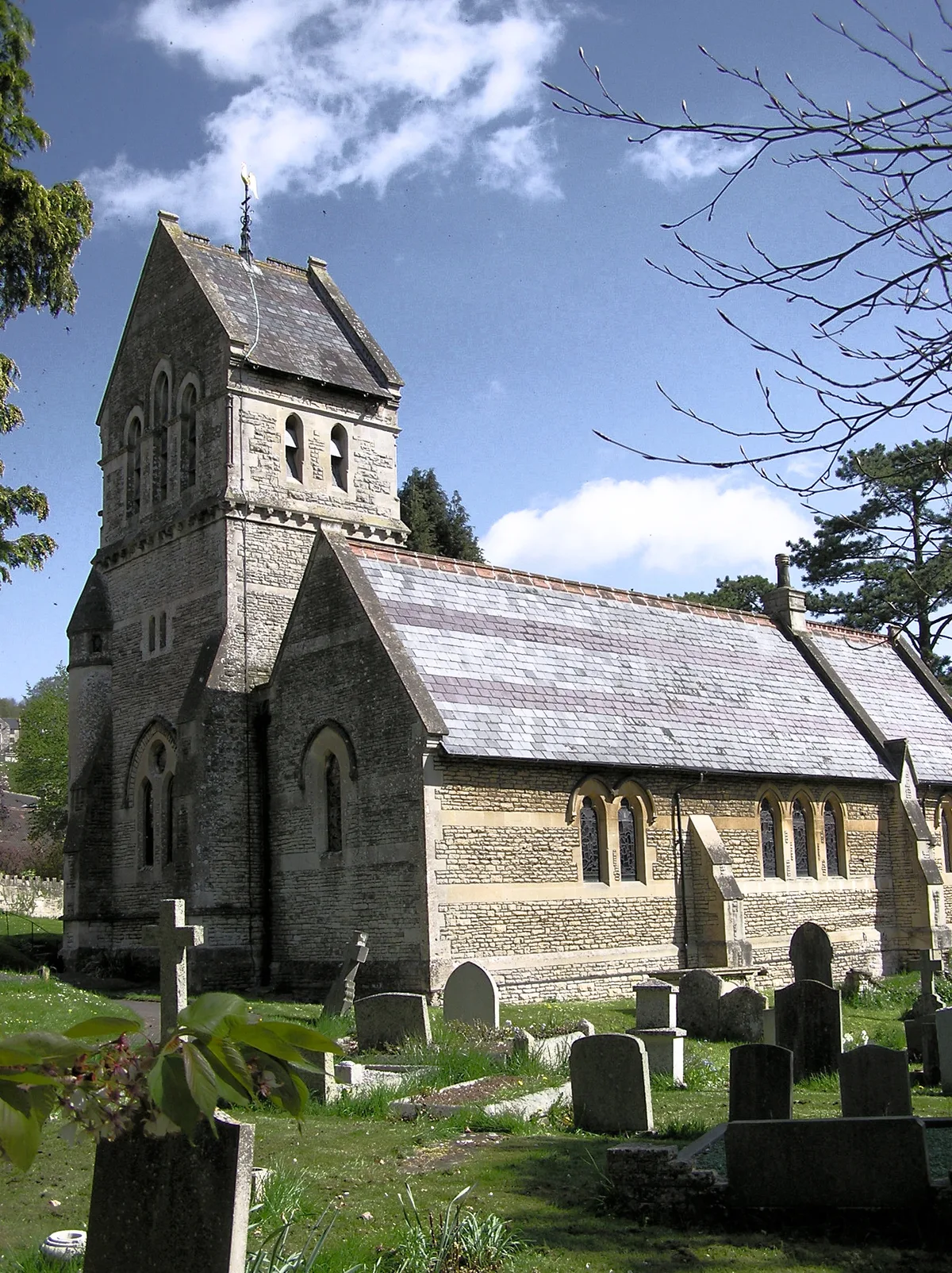
St Michael's Church, Monkton Combe
Historic churches · 1.4 km

The Hop Pole Inn
Historic pubs · 1.5 km

Rainbow Wood Farm
B&Bs · 1.5 km

The American Museum (Claverton Manor)
Museums · 1.5 km
Nearby
📷 5Museums · South West England
Midford Brook
Midford Brook is a small river in Somerset, England. It is formed by the convergence of the Wellow Brook and Cam Brook at Midford. It passes Tucking Mill and joins the River Avon close to the Dundas A
📷 5Historic bridges · South West England
Dundas Horse Bridge At St 784 626
Dundas Horse Bridge At St 784 626 — Grade II listed building-listed bridge in england-south-east, United Kingdom.
📷 5Hotels · South West England
Combe Grove Manor Hotel
Combe Grove Manor Hotel — a hotel in england south east.
📷 5Historic houses · South West England
Lock Up, Mill Lane
Lock Up, Mill Lane — a Grade II-listed historic house in england-south-east, United Kingdom.
📷 5Natural landmarks · South West England
Monkton Combe School
Monkton Combe School — a school heritage in england-south-east, United Kingdom.
📷 5Historic bridges · South West England
Kennet And Avon Canal, Limpley Stoke Canal Bridge
Kennet And Avon Canal, Limpley Stoke Canal Bridge — Grade II listed building-listed bridge in england-south-east, United Kingdom.
Where to eat & stay near Dundas Aqueduct
Places to stay
📷 5Hotels · South West England
Combe Grove Manor Hotel
Combe Grove Manor Hotel — a hotel in england south east.
📷 5B&Bs · South West England
Rainbow Wood Farm
Rainbow Wood Farm — a bed-and-breakfast in england south east.
 📷 5
📷 5 📷 5
📷 5B&Bs · South West England
Brindleys
Brindleys — a bed-and-breakfast in england south east.
 📷 7
📷 7Hotels · South West England
Pulteney House
Pulteney House — a hotel in england south east.
 📷 5
📷 5Hotels · South West England
The Bath Spa Hotel
The Bath Spa Hotel — a hotel in england south east. Brand: Macdonald Hotels and Resort.
Places to eat & drink
📷 7Historic pubs · South West England
The Wheelwright's Arms
The Wheelwright's Arms in England South West, United Kingdom.
📷 7Historic pubs · South West England
The Hop Pole Inn
The Hop Pole Inn in England South West, United Kingdom.
 📷 5
📷 5Cafés · South West England
The Darling Deli Kitchen
The Darling Deli Kitchen — a café in england south east.
 📷 5
📷 5Historic pubs · South West England
The Inn Public House
The Inn Public House in England South West, United Kingdom.
 📷 5
📷 5Historic pubs · South West England
Cross Keys Inn
Cross Keys Inn in England South West, United Kingdom.
 📷 5
📷 5More historic houses in this region
 📷 5
📷 5Historic houses · South West England
1 South Parade
1 South Parade — Grade I listed house in Bath, Somerset, England, UK.
_(geograph_6440799).jpg?width=1200) 📷 5
📷 5Historic houses · South West England
1-4 Lansdowne Grove, Morris Lane
1-4 Lansdowne Grove, Morris Lane — houses in Devizes, Wiltshire, England, UK.
 📷 5
📷 5Historic houses · South West England
2 North Parade
2 North Parade — building in Bath, UK; part of Abbey Hotel.
 📷 5
📷 5Historic houses · South West England
2, South Place, Lacock Road
2, South Place, Lacock Road — house in Corsham, Wiltshire, England, UK.
Frequently asked questions
- Where is Dundas Aqueduct?
- Dundas Aqueduct is in South-West England, United Kingdom (postcode BA2 7BN), in the parish of Monkton Combe.
- What is Dundas Aqueduct?
- Dundas Aqueduct — a Grade I-listed historic house in england-south-east, United Kingdom.
- How do I get to Dundas Aqueduct?
- The nearest railway station is Freshford, about 2.3 km away. The nearest town is Limpley Stoke. Drivers can use postcode BA2 7BN.
- Is Dundas Aqueduct a listed building?
- Dundas Aqueduct is officially recognised as Grade I listed.
- Is Dundas Aqueduct a protected site?
- Yes — Dundas Aqueduct is part of the Cotswolds National Landscape (AONB).
- How do I get to Dundas Aqueduct?
- The nearest railway station is Freshford, about 2.3 km away. Drivers can navigate to postcode BA2 7BN.