
UNESCO World Heritage · East Midlands
Derwent Valley Mills
In or near Cromford.
Derwent Valley Mills — World Heritage Site, where water-powered cotton-spinning mills were first built in the UK.

Wikimedia Commons contributors — see linked file page for photographer and licence licence

Plan your visit
- Typical visit
- 2 h–4 h
- Nearest railway station
- Cromford · 0.7 km
- Free entry
- Wheelchair accessible
Getting there & planning your visit
To visit Derwent Valley Mills, the nearest railway station is Cromford, located 0.7 km away. The postcode for sat-nav is DE4 3RP. The site is wheelchair accessible.
About
Derwent Valley Mills is inscribed on the UNESCO World Heritage List. Wikidata describes it as: "World Heritage Site, where water-powered cotton-spinning mills were first built in the UK". Coordinates: 53.1080°, -1.5560°.
Photo gallery
See it from the streetimagery from 2021
Imagery © Mapillary contributors, CC BY-SA 4.0
Summary from the official site
The Derwent Valley Mills is a UNESCO World Heritage Site located in Derbyshire, showcasing the region's rich industrial and social history from the 18th and 19th centuries. Visitors can explore historic mill complexes, scenic countryside, and enjoy activities such as walking and cycling along the river valley.
Read more on the official property page.
From the Wikipedia article
Derwent Valley Mills is a World Heritage Site along the River Derwent in Derbyshire, England, designated in December 2001. It is administered by the Derwent Valley Mills Partnership. The modern factory, or 'mill', system was born here in the 18th century to accommodate the new technology for spinning cotton developed by Richard Arkwright. With advancements in technology, it became possible to produce cotton continuously. The system was adopted throughout the valley, and later spread so that by 1788 there were over 200 Arkwright-type mills in Britain. Arkwright's inventions and system of organising labour was exported to Europe and the United States. Water-power was first introduced to England by John Lombe at his silk mill in Derby in 1719, but it was Richard Arkwright who applied water-power to the process of producing cotton in the 1770s. His patent of a water frame allowed cotton to be spun continuously, meaning it could be produced by unskilled workers. Cromford Mill was the site of Arkwright's first mill, with nearby Cromford village significantly expanded for his then-new workforce; this system of production and workers' housing was copied throughout the valley. To ensure the presence of a labour force, it was necessary to construct housing for the mill workers. Thus, new settlements were established by mill owners around the mills – sometimes developing a pre-existing community – with their own amenities such as schools, chapels, and markets. Most of the housing still exists and is still in use. Transport infrastructure was built to open new markets for the mills' produce. Mills and workers' settlements were established at Belper, Darley Abbey, and Milford by Arkwright's competitors. Arkwright-type mills were so successful that sometimes they were copied without paying royalties to Richard Arkwright. The cotton industry in the Derwent Valley went into decline in the first quarter of the 19th century as the market shifted towards Lancashire which was better…
Excerpt from Wikipedia under CC BY-SA 4.0. See the source article linked in Sources below.
Background
History
In the late 17th century silk making expanded due to demand for silk as part of fashionable garments. In an attempt to increase production through the use of water power, Thomas Cotchett commissioned engineer George Sorocold to build a mill near the centre of Derby on an island in the River Derwent. Although the experiment was unsuccessful, it convinced John Lombe – an employee of Cotchett – that if water power could be perfected there was a market for its produce. He engaged in industrial espionage and gained plans of Italian machines. He patented the design in 1719 and built a five-storey mill 33.5 x next to Crotchett's mill. By 1763, 30 years after Lombe's patent had expired, only seven…
Sourced from Wikipedia under CC BY-SA 4.0.
- Coordinates
- 53.1080, -1.5560
- County
- Derbyshire
- District
- Derbyshire Dales
- Parish
- Cromford
- Postcode
- DE4 3RP
- Parliamentary constituency
- Derbyshire Dales
- Nearest railway station
- Cromford — 0.7 km
- Official site
- www.derwentvalleymills.org
Sources
- wikidata: Q646076 (CC0)
- wikipedia: Derwent Valley Mills (CC BY-SA 4.0)
- commons: Arkwright Masson Mills.jpg (CC BY-SA 4.0)
Featured in these 2 guides
Other places nearby

Cromford Wharf
Marinas · 0.1 km

Cromford Mill
Museums · 0.1 km

Cromford Mills
Museums · 0.1 km

Cromford War Memorial
Memorials & monuments · 0.2 km

North East Boundary Walls At Cromford Wharf
Holy wells · 0.3 km

North West Boundary Walls At Cromford Wharf
Holy wells · 0.3 km
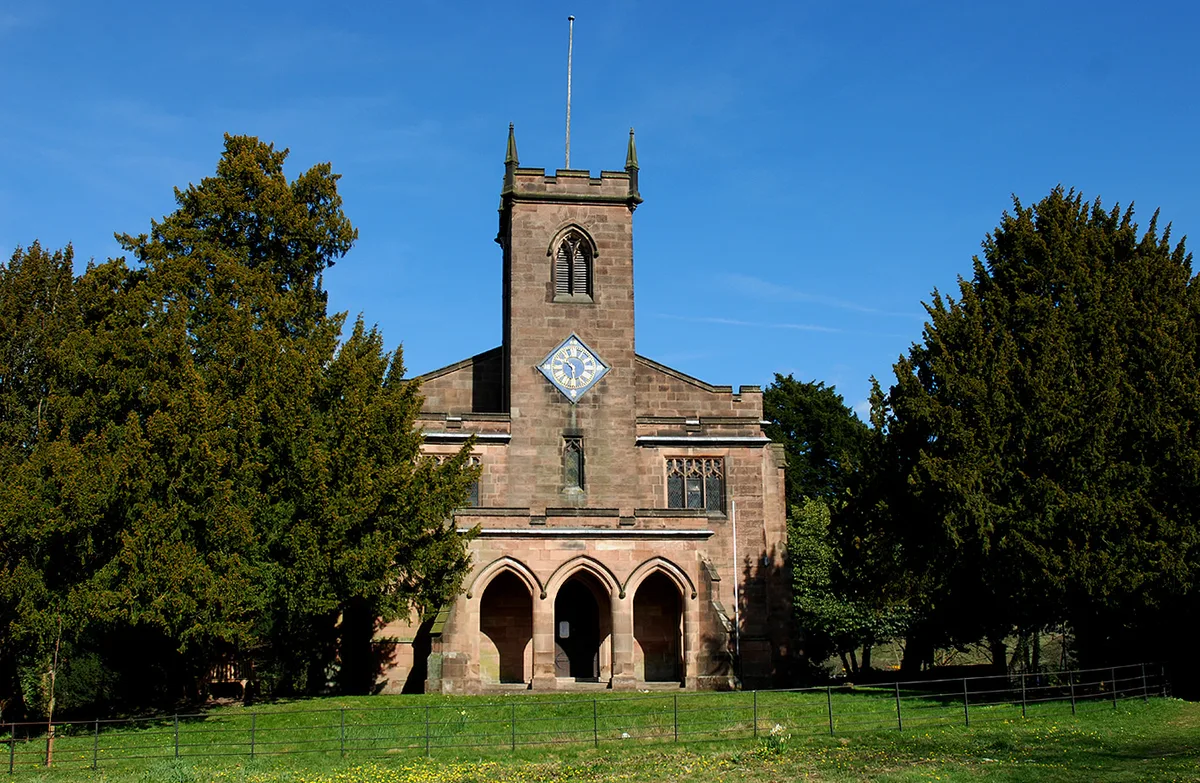
St Mary's Church, Cromford
Historic churches · 0.3 km

Greyhound Hotel
Historic pubs · 0.3 km

Cromford
Towns & cities · 0.3 km

Matlock Bath
Towns & cities · 0.3 km
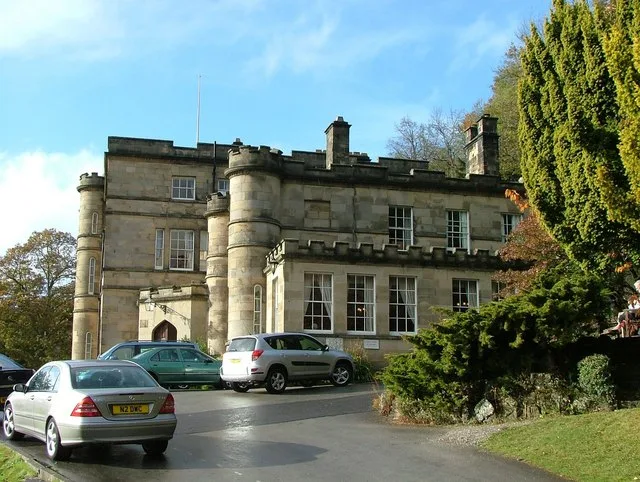
Willersley Castle
Castles · 0.4 km

Scarthin War Memorial
Memorials & monuments · 0.4 km
Nearby
📷 5★ Iconic📷 5Museums · East Midlands
Cromford Mill
Cromford Mill is the world's first water-powered cotton spinning mill, developed by Richard Arkwright in 1771 in Cromford, Derbyshire, England. The mill structure is classified as a Grade I listed bui
📷 3Museums · East Midlands
Cromford Mills
Cromford Mills — a museum in england-east-midlands, United Kingdom.
📷 4Memorials & monuments · East Midlands
Cromford War Memorial
Cromford War Memorial — Grade II listed building-listed memorial in england-east-midlands, United Kingdom.
📷 3Holy wells · East Midlands
North East Boundary Walls At Cromford Wharf
North East Boundary Walls At Cromford Wharf — Grade II listed wall in Cromford, Derbyshire Dales, Derbyshire, England, UK.
📷 3Holy wells · East Midlands
North West Boundary Walls At Cromford Wharf
North West Boundary Walls At Cromford Wharf — building in Cromford, Derbyshire Dales, Derbyshire, England, UK.
Where to eat & stay near Derwent Valley Mills
Places to stay
 📷 5
📷 5Hotels · East Midlands
New Bath Hotel
New Bath Hotel — a hotel in england east midlands.
 📷 7
📷 7 📷 5
📷 5Caravan parks · East Midlands
Birchwood Farm
Birchwood Farm — a caravan park in england east midlands.
 📷 7
📷 7Hotels · East Midlands
High Tor Hotel
High Tor Hotel — a hotel in england east midlands.
 📷 5
📷 5Campsites · East Midlands
Middleton Top Campsite (Caravan & Camping Club)
Middleton Top Campsite (Caravan & Camping Club) — a campsite in england east midlands.
 📷 5
📷 5Places to eat & drink
📷 7Historic pubs · East Midlands
Greyhound Hotel
Greyhound Hotel in England East Midlands, United Kingdom.
📷 5 📷 5
📷 5Historic pubs · East Midlands
Duke William Inn
Duke William Inn in England East Midlands, United Kingdom.
 📷 5
📷 5 📷 5
📷 5 📷 5
📷 5Restaurants · East Midlands
Le Mistral
Le Mistral — a restaurant in england east midlands.
Frequently asked questions
- Where is Derwent Valley Mills?
- Derwent Valley Mills is in Derbyshire, the East Midlands, United Kingdom (postcode DE4 3RP), in the parish of Cromford.
- What is Derwent Valley Mills?
- Derwent Valley Mills — World Heritage Site, where water-powered cotton-spinning mills were first built in the UK.
- How do I get to Derwent Valley Mills?
- The nearest railway station is Cromford, about 0.7 km away. The nearest town is Cromford. Drivers can use postcode DE4 3RP.
- Is Derwent Valley Mills free to visit?
- Yes, Derwent Valley Mills is free to enter.
- How do I get to Derwent Valley Mills?
- The nearest railway station is Cromford, about 0.7 km away. Drivers can navigate to postcode DE4 3RP.