
Historic bridges · South West England
Clyst St Mary Bridge and causeway
In or near Sowton.
Clyst St Mary Bridge and causeway — scheduled monument-listed bridge in england-south-west, United Kingdom.

Derek Harper — CC BY-SA 2.0 via Wikimedia Commons licence

Plan your visit
- Typical visit
- 15 min–30 min
- Nearest railway station
- Digby and Sowton · 1.2 km
- Free entry
- Dog-friendly
Getting there & planning your visit
To visit Clyst St Mary Bridge and causeway, the nearest railway station is Digby and Sowton, located 1.2 km away. Entry is free. The postcode for sat-nav is EX5 1BR.
About
Clyst St Mary Bridge and causeway is a scheduled monument-listed bridge in england-south-west, United Kingdom, registered on the National Heritage List for England (NHLE entry 1020209). Listed status protects buildings and structures of special architectural or historic interest. See the linked Wikipedia article for further details.
Photo gallery
See it from the streetimagery from 2022
Imagery © Mapillary contributors, CC BY-SA 4.0
Heritage listing
Details The monument includes Clyst St Mary Bridge and causeway. The bridge, which is first recorded in the early decades of the 13th century, comprises several arches linked by a walled causeway which once carried the road from Sidmouth to Exeter across the River Clyst and its flood plain. The bridge stands just to the west of the village of Clyst St Mary (formerly Bishop's Clyst) about 5km east of Exeter at a crossing point of the river which may have been in use during the Roman period. The stone-built bridge is considered to be the oldest surviving medieval bridge in Devon outside the city of Exeter with an earliest documentary reference of 1238 (as `pontem de Clist'). The bridge has been shown to display at least four episodes of construction ranging from the medieval to the post- medieval periods. Earlier commentators have suggested that the two low segmental arches spanning the River Clyst itself at the western end of the bridge represent the most ancient part of the structure, possibly that referred to in 1238. These arches are 3.4m wide and they would have carried a roadway 2.8m in width. Each vault is supported by four chamfered ribs springing from a level 1.16m above a plinth. Construction is of trap (a volcanic basalt) and sandstone ashlar; the ribs are entirely of sandstone. Significantly, there is no Heavitree stone in their construction. Major quarrying of the distinctive red breccia known as Heavitree stone took place in nearby areas, including the parish of Heavitree from whence the stone derived its name, from the mid-14th century onwards. Its absence in the western bridge arches would support a suggested 13th-early 14th century date for construction; quarries of volcanic trap lie at much greater distance and Heavitree stone would almost certainly have
From the Historic England List Entry under OGL v3.
Place summary
Clyst St Mary Bridge and causeway, located in South-West England, is a scheduled monument. This bridge is notable for its historical significance and engineering, reflecting the region's heritage.
AI-generated from the structured facts on this page (operator, designation, listing, era). Not a substitute for visiting.
- Coordinates
- 50.7103, -3.4579
- County
- Devon
- District
- East Devon
- Parish
- Clyst St. Mary
- Postcode
- EX5 1BR
- Parliamentary constituency
- Exmouth and Exeter East
- Nearest railway station
- Digby and Sowton — 1.2 km
Sources
- wikidata: Q17674912 (CC0)
Other places nearby

The Blue Ball
B&Bs · 0.5 km

Clyst St Mary
Villages · 0.6 km

Battle of Clyst St Mary 1549
Forts · 0.6 km

Baker Bridge
Historic bridges · 0.9 km

Exeter Trampoline Academy
Trampoline parks · 1.2 km

Tithe Barn 150 Metres South-east Of Bishop's Court
Historic houses · 1.2 km
Stable Block Adjoining Tithe Barn To North-north-west
Historic houses · 1.2 km
Bishop's Court, Devon
Palaces · 1.2 km

Westpoint Arena
Stadiums · 1.3 km

Devon County Showground
Natural landmarks · 1.4 km
.jpg?width=1200)
Chapel At Digby Hospital
Chapels · 1.5 km
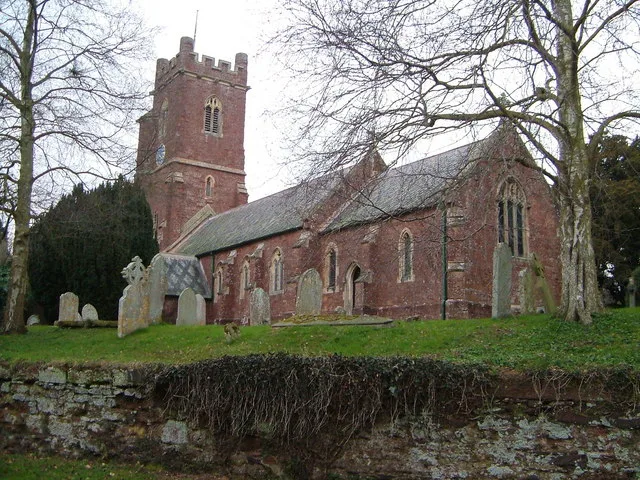
Parish Church of St Michael and All Angels
Historic churches · 1.5 km
Nearby
📷 5B&Bs · South West England
The Blue Ball
The Blue Ball — a bed-and-breakfast in england south west.
📷 5📷 5Forts · South West England
Battle of Clyst St Mary 1549
Battle of Clyst St Mary 1549 is a fort in the United Kingdom.
📷 5Historic bridges · South West England
Baker Bridge
Baker Bridge is a historic bridge in the United Kingdom.
📷 3Trampoline parks · South West England
Exeter Trampoline Academy
Exeter Trampoline Academy — a trampoline park in england-south-west, United Kingdom.
📷 3Historic houses · South West England
Tithe Barn 150 Metres South-east Of Bishop's Court
Tithe Barn 150 Metres South-east Of Bishop's Court — a Grade I-listed historic house in england-south-west, United Kingdom.
Where to eat & stay near Clyst St Mary Bridge and causeway
Places to stay
📷 5B&Bs · South West England
The Blue Ball
The Blue Ball — a bed-and-breakfast in england south west.
 📷 5
📷 5 📷 5
📷 5Caravan parks · South West England
Courtbrook Farm CL
Courtbrook Farm CL — a caravan park in england south west.
 📷 5
📷 5Hotels · South West England
Gipsy Hill Hotel
Gipsy Hill Hotel — a hotel in england south west.
 📷 5
📷 5 📷 7
📷 7Hotels · South West England
Hampton by Hilton Exeter Airport
Hampton by Hilton Exeter Airport — a hotel in england south west. 3-star. Brand: Hampton by Hilton.
Places to eat & drink
 📷 7
📷 7Restaurants · South West England
Toby Carvery
Toby Carvery — a restaurant in england south west. Cuisine: british. Brand: Toby Carvery.
 📷 7
📷 7Restaurants · South West England
Miller & Carter
Miller & Carter — a restaurant in england south west. Cuisine: steak. Brand: Miller & Carter.
 📷 5
📷 5Restaurants · South West England
Denley's Essence of India
Denley's Essence of India — a restaurant in england south west. Cuisine: indian.
 📷 7
📷 7Restaurants · South West England
Beefeater
Beefeater — a restaurant in england south west. Cuisine: british. Brand: Beefeater.
 📷 7
📷 7Historic pubs · South West England
Passage House Inn
Passage House Inn in England South West, United Kingdom.
 📷 7
📷 7More bridges in this region
 📷 5
📷 5Historic bridges · South West England
Avoncliff Aqueduct
Avoncliff Aqueduct is a historic bridge in the United Kingdom.
📷 5Historic bridges · South West England
Avoncliff Aqueduct
Avoncliff Aqueduct is a historic bridge in the United Kingdom.
 📷 5
📷 5Historic bridges · South West England
Bradford Viaduct
Bradford Viaduct is a historic bridge in the United Kingdom.
 📷 5
📷 5Historic bridges · South West England
Chippenham Viaduct
Chippenham Viaduct is a historic bridge in the United Kingdom.
Frequently asked questions
- Where is Clyst St Mary Bridge and causeway?
- Clyst St Mary Bridge and causeway is in Devon, South-West England, United Kingdom (postcode EX5 1BR), in the parish of Clyst St. Mary.
- What is Clyst St Mary Bridge and causeway?
- Clyst St Mary Bridge and causeway — scheduled monument-listed bridge in england-south-west, United Kingdom.
- How do I get to Clyst St Mary Bridge and causeway?
- The nearest railway station is Digby and Sowton, about 1.2 km away. The nearest town is Sowton. Drivers can use postcode EX5 1BR.
- Is Clyst St Mary Bridge and causeway a listed building?
- Clyst St Mary Bridge and causeway is officially recognised as scheduled monument listed.
- Is Clyst St Mary Bridge and causeway free to visit?
- Yes, Clyst St Mary Bridge and causeway is free to enter.
- How do I get to Clyst St Mary Bridge and causeway?
- The nearest railway station is Digby and Sowton, about 1.2 km away. Drivers can navigate to postcode EX5 1BR.