
Historic bridges · South Wales
Chepstow Railway Bridge
In or near Aust.
Chepstow Railway Bridge — a Grade II-listed bridge in wales-south, United Kingdom.

Jaggery — CC BY-SA 2.0 via Wikimedia Commons licence

Plan your visit
- Typical visit
- 15 min–30 min
- Nearest railway station
- Chepstow · 0.5 km
- Free entry
- Dog-friendly
Getting there & planning your visit
Chepstow Railway Bridge is located in South Wales, with the nearest railway station being Chepstow, just 0.5 km away. Entry to the bridge is free.
About
Chepstow Railway Bridge is a Grade II-listed building in wales-south, United Kingdom. Grade II status is conferred by Historic England (or Cadw, Historic Environment Scotland or NIEA equivalents) on buildings of exceptional national interest. See the linked Wikipedia article for full historical and architectural details.
Photo gallery
Official information
Chepstow Museum showcases the history of Chepstow, highlighting its significance as a port and market center. Visitors can explore various displays related to local industries and view artworks that celebrate the area's appeal to artists and tourists.
Protected designations
- Site of Special Scientific Interest: River Wye SSSI
- Site of Special Scientific Interest: Severn Estuary SSSI
- Area of Outstanding Natural Beauty: Wye Valley
- Ramsar wetland: Severn Estuary
Designations sourced from Natural England open data under OGL v3.
From the Wikipedia article
Chepstow Railway Bridge was built to the instructions of Isambard Kingdom Brunel in 1852. The "Great Tubular Bridge" over the River Wye at Chepstow, which at that point forms the boundary between Wales and England, is considered one of Brunel's major achievements, despite its appearance. It was economical in its use of materials, and would prove to be the design prototype for Brunel's Royal Albert Bridge at Saltash. Although the superstructure has since been replaced, Brunel's tubular iron supports are still in place. It is a Grade II listed structure.
Excerpt from Wikipedia under CC BY-SA 4.0. See the source article linked in Sources below.
Background
History
works.]] Brunel had to take the two tracks of the South Wales Railway across the River Wye. The Admiralty had insisted on a 300 ft clear span over the river, with the bridge a minimum of 50 ft above high tide. The span would have to be self-supporting, since although the Gloucestershire side of the river consists of a limestone cliff, the Monmouthshire side is low-lying sedimentary deposit subject to regular flooding. Thus on that side, there was nowhere for an abutment capable of either resisting the outward push of an arch bridge, or the inward pull of a conventional suspension bridge. In any case, neither could be used: an arch bridge would not have met the height and width restrictions…
Description
Brunel recognised that a circular cross-section tubular girder – a shallow "bow", excellent in compression and tension – could be strung by suspension chains to form a stiff, self-supporting structure very much lighter (thus less expensive) than a Stephenson-type box girder. Instead of hanging the chains from towers and suspending the bridge deck from them, Brunel used the chains to stress and slightly bow the tubes, which were braced against the chains using struts. The bridge deck was rigid, because it was effectively clamped against the tubes by the chains. Brunel solved the problem in his own way, and for more than 100 years, the Chepstow and subsequently the Royal Albert Bridge were…
Sourced from Wikipedia under CC BY-SA 4.0.
- Coordinates
- 51.6437, -2.6669
- District
- Monmouthshire
- Parish
- Chepstow
- Postcode
- NP16 5FH
- Parliamentary constituency
- Monmouthshire
- Phone
- 01291 625981
- Nearest railway station
- Chepstow — 0.5 km
Sources
- wikidata: Q5091736 (CC0)
- wikipedia: Chepstow Railway Bridge (CC BY-SA 4.0)
Other places nearby

Chepstow Town Slipway
Marinas · 0.2 km

Gloucester Hole
Caves · 0.3 km

Gwy House
Historic houses · 0.4 km
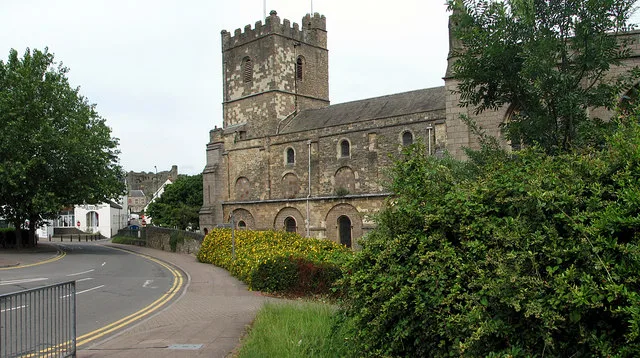
St Mary's Church
Historic churches · 0.4 km

Chepstow Museum
Museums · 0.4 km

Woodfield Arms
B&Bs · 0.4 km

Mint & Mustard
Restaurants · 0.4 km

Old Wye Bridge
Historic bridges · 0.5 km

Castle Terrace, Chepstow
Gardens · 0.5 km

Powis Almshouses
Gardens · 0.5 km

Beaufort Hotel
Historic houses · 0.5 km

Beaufort Hotel
Historic pubs · 0.5 km
Nearby
📷 5📷 5Caves · South Wales
Gloucester Hole
The Gloucester Hole is a roughly square opening in the limestone cliffs of the River Wye, directly opposite the town of Chepstow. The hole itself is on the Tutshill side of the river, in Gloucestershi
📷 3📷 5Historic churches · South Wales
St Mary's Church
St Mary's Church — church in Chepstow, Monmouthshire, Wales.
📷 3📷 5Where to eat & stay near Chepstow Railway Bridge
Places to stay
📷 5 📷 5
📷 5Hotels · South Wales
St Pierre Country Club
St Pierre Country Club — a hotel in wales south.
 📷 5
📷 5 📷 7
📷 7 📷 5
📷 5Campsites · South Wales
Beeches Farm Campsite
Beeches Farm Campsite — a campsite in wales south.
 📷 7
📷 7B&Bs · South Wales
Tintern Old Rectory B&B
Tintern Old Rectory B&B — a bed-and-breakfast in wales south.
Places to eat & drink
📷 5Restaurants · South Wales
Mint & Mustard
Mint & Mustard — a restaurant in wales south.
📷 7 📷 6
📷 6 📷 7
📷 7Historic pubs · South West England
The Boar's Head
The Boar's Head in Wales South, United Kingdom.
 📷 5
📷 5Cafés · South West England
Swan House
Swan House — a café in england west midlands.
 📷 5
📷 5Restaurants · South West England
Roobroo
Roobroo — a restaurant in england west midlands.
More bridges in this region
.jpg?width=1200) 📷 3
📷 3Historic bridges · South Wales
Afon Taff Viaduct
Afon Taff Viaduct is a historic bridge in the United Kingdom.
 📷 3
📷 3Historic bridges · South Wales
Avonmouth Bridge
Avonmouth Bridge is a historic bridge in the United Kingdom.
 📷 5
📷 5Historic bridges · South Wales
Biblins Bridge
Biblins Bridge is a historic bridge in the United Kingdom.
 📷 3
📷 3Historic bridges · South Wales
Blackweir Bridge
Blackweir Bridge is a historic bridge in the United Kingdom.
Frequently asked questions
- Where is Chepstow Railway Bridge?
- Chepstow Railway Bridge is in South Wales, United Kingdom (postcode NP16 5FH), in the parish of Chepstow.
- What is Chepstow Railway Bridge?
- Chepstow Railway Bridge — a Grade II-listed bridge in wales-south, United Kingdom.
- How do I get to Chepstow Railway Bridge?
- The nearest railway station is Chepstow, about 0.5 km away. The nearest town is Aust. Drivers can use postcode NP16 5FH.
- Is Chepstow Railway Bridge a listed building?
- Chepstow Railway Bridge is officially recognised as Grade II listed.
- Is Chepstow Railway Bridge a protected site?
- Yes — Chepstow Railway Bridge is part of the River Wye SSSI Site of Special Scientific Interest and the Severn Estuary SSSI Site of Special Scientific Interest.
- Is Chepstow Railway Bridge free to visit?
- Yes, Chepstow Railway Bridge is free to enter.
- How do I get to Chepstow Railway Bridge?
- The nearest railway station is Chepstow, about 0.5 km away. Drivers can navigate to postcode NP16 5FH.