
Memorials & monuments · North West England
Cenotaph
In or near Manchester.
Cenotaph is a memorial in the United Kingdom.

Wikimedia Commons contributors — see linked file page for photographer and licence licence

Plan your visit
- Typical visit
- 15 min–45 min
- Nearest railway station
- Manchester Oxford Road · 0.6 km
- Free entry
- Dog-friendly
- Wheelchair accessible
Getting there & planning your visit
The Cenotaph is located in Manchester, postcode M2 4EG, and is accessible via Manchester Oxford Road station, which is 0.6 km away. Entry is free, and the site is wheelchair accessible.
About
Cenotaph is a public memorial or monument in the United Kingdom. Records date its origin to 1924. Coordinates: 53.4787°, -2.2431°.
Photo gallery
See it from the streetimagery from 2022
Imagery © Mapillary contributors, CC BY-SA 4.0
Heritage listing
Manchester Cenotaph is a war memorial in St Peter's Square, Manchester, England. Manchester was late in commissioning a First World War memorial compared with most British towns and cities; the city council did not convene a war memorial committee until 1922. The committee quickly achieved its target of raising £10,000 but finding a suitable location for the monument proved controversial. The preferred site in Albert Square would have required the removal and relocation of other statues and monuments, and was opposed by the city's artistic bodies. The next choice was Piccadilly Gardens, an area already identified for a possible art gallery and library; but in the interests of speedier delivery, the memorial committee settled on St Peter's Square.
From the Historic England List Entry under OGL v3.
From the Wikipedia article
Manchester Cenotaph is a war memorial in St Peter's Square, Manchester, England. Manchester was late in commissioning a First World War memorial compared with most British towns and cities; the city council did not convene a war memorial committee until 1922. The committee quickly achieved its target of raising £10,000 but finding a suitable location for the monument proved controversial. The preferred site in Albert Square would have required the removal and relocation of other statues and monuments, and was opposed by the city's artistic bodies. The next choice was Piccadilly Gardens, an area already identified for a possible art gallery and library; but in the interests of speedier delivery, the memorial committee settled on St Peter's Square. The area within the square had been purchased by the City Council in 1906, having been the site of the former St Peter's Church; whose sealed burial crypts remained with burials untouched and marked above ground by a memorial stone cross. Negotiations to remove these stalled so the construction of the cenotaph proceeded with the cross and burials in situ. Having picked a site, it was originally proposed to choose an architect by open competition, but the memorial committee was criticised in the local press when it reserved the right to overrule the judgement of the independent assessor. A sub-committee therefore approached Sir Edwin Lutyens directly, who produced, in a matter of weeks, a variation of his design for the Cenotaph in London. The memorial consists of a central cenotaph and a Stone of Remembrance flanked by twin obelisks, all features characteristic of Lutyens' works. Raised steps on either side of the Stone of Remembrance provided east-facing tribunes for the colour party in memorial parades. The cenotaph is topped by an effigy of a fallen soldier and decorated with relief carvings of the imperial crown, Manchester's coat of arms and inscriptions commemorating the dead. The structures, based on classical…
Excerpt from Wikipedia under CC BY-SA 4.0. See the source article linked in Sources below.
Background
History
, which occupied the site intended for the war memorial, surrounded by the post-WWII garden of remembrance]] . Power lines and platforms for the Metrolink tram system are visible beyond the garden of remembrance.]] St Peter's Square already housed a memorial cross by Temple Moore marking the location of the former St Peter's Church, which had been demolished in 1907. The statutory trustees had agreed with the British Legion in recommending Albert Square as the memorial site; nevertheless the Bishop of Manchester, ex-officio chairman of the trustees, had subsequently indicated approval to relocating the cross and burials from St Peters Square, should this be needed to accommodate the war…
Architecture
Manchester's war memorial is a cenotaph, flanked by twin obelisks, and a Stone of Remembrance, all in Portland stone on a raised coved platform. The memorial covers an area of approximately 93 ft by 53 ft. The cenotaph is 32 ft high made from 160 LT of Portland stone. The pylon is surmounted by a sculpture of an unknown soldier, partially covered by his greatcoat, lying on a catafalque. The pylon rises from the base in diminishing stages, narrowing as it rises. Below the catafalque, on the front and rear, are moulded swords and imperial crowns, and to the sides are Manchester's coat of arms surrounded by laurel wreaths. The cenotaph bears inscriptions below the coat of arms: "" (on the…
Sourced from Wikipedia under CC BY-SA 4.0.
- Coordinates
- 53.4787, -2.2431
- District
- Manchester
- Parish
- Manchester, unparished area
- Postcode
- M2 4EG
- Parliamentary constituency
- Manchester Central
- Phone
- +44 161 235 8888
- Established
- 1924
- Nearest railway station
- Manchester Oxford Road — 0.6 km
Sources
- osm: n1634316329 (ODbL)
- wikipedia: Manchester Cenotaph (CC BY-SA 4.0)
- commons: Manchester War Memorial 2018 03.jpg (CC BY-SA 4.0)
Other places nearby

Memorial to the British Nuclear Test Veterans
Memorials & monuments · 0.0 km

65-71, Princess Street
Historic pubs · 0.0 km

Frederick Crace Calvert
Memorials & monuments · 0.1 km

Two St Peter's Square
Gardens · 0.1 km

Manchester Town Hall
Historic houses · 0.1 km

Rise up, Women
Memorials & monuments · 0.1 km
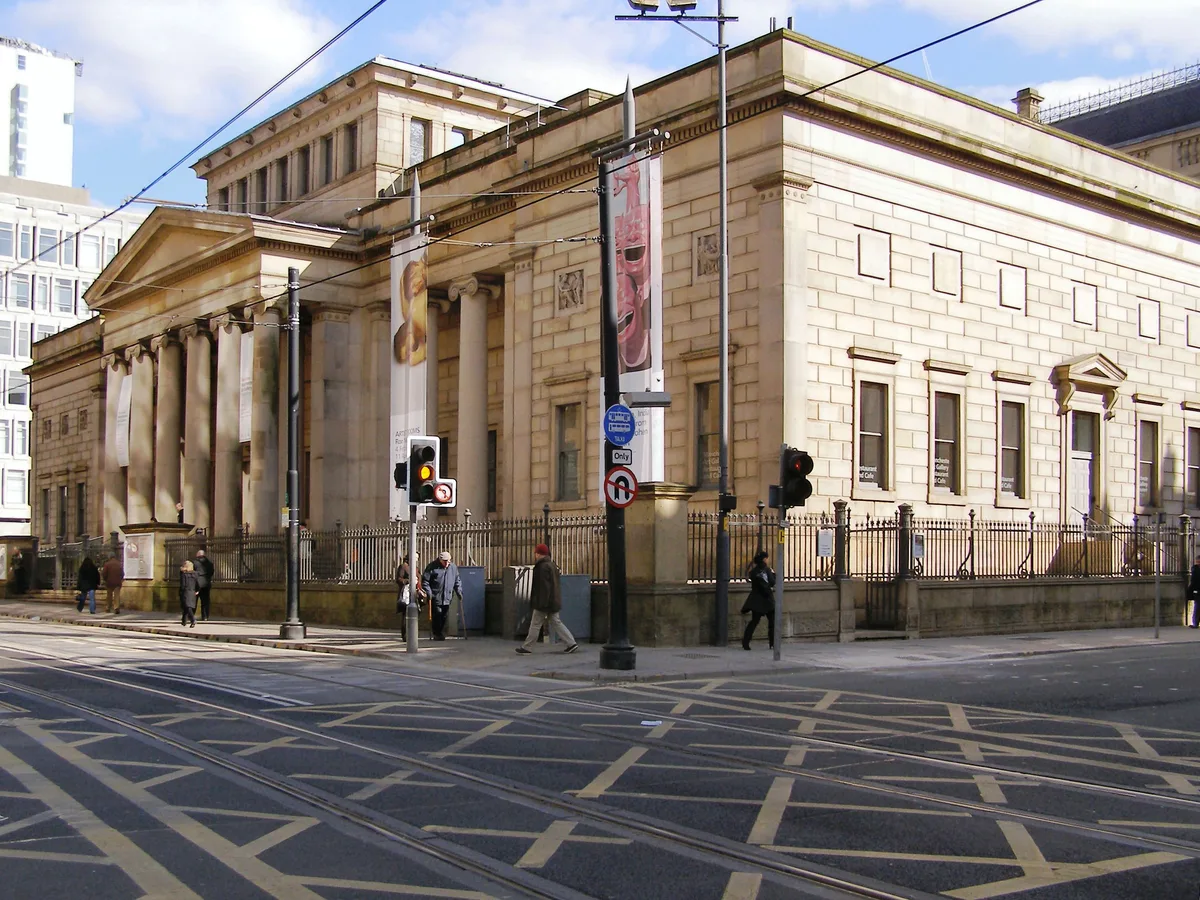
Manchester Art Gallery
Galleries · 0.1 km

Manchester Athenaeum
Gardens · 0.1 km

St Peter's Church, Manchester
Historic churches · 0.1 km

Contemporary Six
Galleries · 0.1 km

Manchester Central Library
Museums · 0.1 km
.JPG?width=1200)
Ahmed Iqbal Ullah Race Relations Resource Centre
Historic libraries · 0.1 km
Nearby
📷 3Memorials & monuments · North West England
Memorial to the British Nuclear Test Veterans
Memorial to the British Nuclear Test Veterans — a memorial in england-west-midlands, United Kingdom.
📷 5Historic pubs · North West England
65-71, Princess Street
65-71, Princess Street in England North West, United Kingdom.
📷 4Memorials & monuments · North West England
Frederick Crace Calvert
Frederick Crace Calvert — a memorial in england-west-midlands, United Kingdom.
📷 4Gardens · North West England
Two St Peter's Square
Two St Peter's Square — a garden in england-west-midlands, United Kingdom.
📷 5Historic houses · North West England
Manchester Town Hall
Manchester Town Hall — a Grade I-listed historic house in england-west-midlands, United Kingdom.
📷 4Memorials & monuments · North West England
Rise up, Women
Rise up, Women — a memorial in england-west-midlands, United Kingdom.
Where to eat & stay near Cenotaph
Places to stay
 📷 5
📷 5Hotels · North West England
King Street Townhouse
King Street Townhouse — a hotel in england west midlands. 4-star. Brand: Eclectic Hotels.
 📷 7
📷 7Hotels · North West England
Midland Hotel
Midland Hotel — a hotel in england west midlands.
 📷 7
📷 7 📷 5
📷 5Hotels · North West England
Whitworth Locke, Civic Quarter
Whitworth Locke, Civic Quarter — a hotel in england west midlands. Brand: Locke.
 📷 7
📷 7Hotels · North West England
Maldron Hotel Manchester City Centre
Maldron Hotel Manchester City Centre — a hotel in england west midlands. 4-star. Brand: Maldron Hotels.
 📷 5
📷 5Hotels · North West England
Hilton Manchester Deansgate
Hilton Manchester Deansgate — a hotel in england west midlands.
Places to eat & drink
📷 5Historic pubs · North West England
65-71, Princess Street
65-71, Princess Street in England North West, United Kingdom.
 📷 5
📷 5Historic pubs · North West England
Nos 74-78, and No 80 (The Grey Horse Public House) and Attached Railings, Portland Street
Nos 74-78, and No 80 (The Grey Horse Public House) and Attached Railings, Portland Street in England North West, United Kingdom.
 📷 7
📷 7Historic pubs · North West England
Sir Ralph Abercromby
Sir Ralph Abercromby in England North West, United Kingdom.
 📷 5
📷 5Historic pubs · North West England
Number 54 And Chop House Public House Thomas's Chop House
Number 54 And Chop House Public House Thomas's Chop House in England North West, United Kingdom.
 📷 5
📷 5Historic pubs · North West England
Peveril Of The Peak Public House
Peveril Of The Peak Public House in England North West, United Kingdom.
 📷 5
📷 5Historic pubs · North West England
The Churchill Public House
The Churchill Public House in England North West, United Kingdom.
Other memorials from this era
.jpg?width=1200) 📷 5
📷 5Memorials & monuments · London
1st Surrey Rifles War Memorial
1st Surrey Rifles War Memorial is a memorial in the United Kingdom.
 📷 5
📷 5Memorials & monuments · London
24th East Surrey Division War Memorial
24th East Surrey Division War Memorial is a memorial in the United Kingdom.
.jpg?width=1200) 📷 5
📷 5Memorials & monuments · London
Alan Brooke, 1st Viscount Alanbrooke
Alan Brooke, 1st Viscount Alanbrooke is a memorial in the United Kingdom.
 📷 5
📷 5Memorials & monuments · London
All Saints Fulham war memorial
All Saints Fulham war memorial is a memorial in the United Kingdom.
More memorials in this region
 📷 3
📷 3Memorials & monuments · North West England
3rd Duke of Bridgewater's monument
3rd Duke of Bridgewater's monument — Monument, dating to 1905.
 📷 3
📷 3Memorials & monuments · North West England
Airborne Forces Memorial
Airborne Forces Memorial is a memorial in the United Kingdom.
 📷 4
📷 4Memorials & monuments · North West England
Albert Memorial
Albert Memorial — Monument, dating to 1869.
 📷 3
📷 3Memorials & monuments · North West England
Armada Beacon
Armada Beacon is a memorial in the United Kingdom.
Frequently asked questions
- Where is Cenotaph?
- Cenotaph is in North-West England, United Kingdom (postcode M2 4EG), in the parish of Manchester, unparished area.
- What is Cenotaph?
- Cenotaph is a memorial in the United Kingdom.
- How do I get to Cenotaph?
- The nearest railway station is Manchester Oxford Road, about 0.6 km away. The nearest town is Manchester. Drivers can use postcode M2 4EG.
- When was Cenotaph built?
- Built or established in 1924.
- Is Cenotaph a listed building?
- Cenotaph is officially recognised as Grade II listed building listed.
- Is Cenotaph free to visit?
- Yes, Cenotaph is free to enter.
- How do I get to Cenotaph?
- The nearest railway station is Manchester Oxford Road, about 0.6 km away. Drivers can navigate to postcode M2 4EG.