
Hill forts · North West England
Castra Deva Victrix
In or near Chester.
Castra Deva Victrix is a hill fort in the United Kingdom.

Wikimedia Commons contributors — see linked file page for photographer and licence licence
.jpg)
Plan your visit
- Typical visit
- 1 h–2 h
- Nearest railway station
- Grosvenor Park Miniature Railway · 0.8 km
- Free entry
- Family-friendly
- Dog-friendly
Getting there & planning your visit
To visit Castra Deva Victrix, you can reach the nearest railway station, Grosvenor Park Miniature Railway, which is 0.8 km away. Entry to the site is free. The postcode for navigation is CH1 1SG.
About
Castra Deva Victrix is a hill fort in the United Kingdom. Coordinates: 53.1914°, -2.8928°. This entry is part of The Great Britain Guide, a free, ad-free, open-data tourist directory.
Photo gallery
Protected designations
- Site of Special Scientific Interest: River Dee (England) SSSI
Designations sourced from Natural England open data under OGL v3.
From the Wikipedia article
Deva Victrix, or simply Deva, was a legionary fortress and town in the Roman province of Britannia on the site of the modern city of Chester. The fortress was built by the Legio II Adiutrix in the 70s AD as the Roman army advanced north against the Brigantes, and rebuilt completely over the next few decades by the Legio XX Valeria Victrix. In the early 3rd century the fortress was again rebuilt. The legion probably remained at the fortress until the late 4th or early 5th century, upon which it fell into disuse. A civilian settlement, or canaba, grew around the fortress. Chester's Roman Amphitheatre, south-east of the fortress, is the largest-known military amphitheatre in Britain. The civilian settlement remained after the Romans departed, eventually becoming the present-day city of Chester. There were peripheral settlements around Roman Deva, including Boughton, the source of the garrison's water supply, and Handbridge, the site of a sandstone quarry and Minerva's Shrine. The shrine is the only in situ, rock-cut Roman shrine in Great Britain. The fortress contained barracks, granaries, headquarters, military baths, and an unusual elliptical building which had it been finished may have been intended to act as the governor of Britain's headquarters.
Excerpt from Wikipedia under CC BY-SA 4.0. See the source article linked in Sources below.
Background
History
roof tile showing the badge and standard of Legion XX, from Holt, in north Wales]] According to the 1st- and 2nd-century geographer Ptolemy, Deva was in the lands of the Cornovii. Their land bordered that of the Brigantes in the north and the Ordovices in the west and included parts of what is now Cheshire, Shropshire, and north Wales. When the Romans' treaty with the Brigantes—who occupied most of what is now Northern England—failed the Romans embarked on military conquest of the area. The campaigns were initially led by Sextus Julius Frontinus and later Gnaeus Julius Agricola. Their expansion into the north of Britannia during the reign of Vespasian meant that the Romans needed a new…
Description
An essential part of the Roman supply lines to all its Britannia legionary fortresses was good access for sea-going ships. Deva needed reliable and regular supplies of foodstuffs, most notably grain and other supplies shipped directly from the Mediterranean area, Gaul, Spain and the Rhinelands. It also expected to have good access to the heavy and bulky raw materials needed to build and maintain a fortress, such as lead and copper from North Wales, and bricks, tiles and pottery from elsewhere in the province. The fortress served as a stepping-off point for military expeditions further north or west, in which ship transport was a key feature. A strategic advantage to siting the fortress here…
Sourced from Wikipedia under CC BY-SA 4.0.
- Coordinates
- 53.1914, -2.8928
- District
- Cheshire West and Chester
- Parish
- Cheshire West and Chester, unparished area
- Postcode
- CH1 1SG
- Parliamentary constituency
- Chester North and Neston
- Nearest railway station
- Grosvenor Park Miniature Railway — 0.8 km
Sources
- wikidata: Q2450247 (CC0)
- wikipedia: Deva Victrix (CC BY-SA 4.0)
- commons: DevaMinervaPlan(bq).jpg (CC BY-SA 4.0)
Other places nearby

Roman Strongroom
Natural landmarks · 0.0 km

Chester Forum Theatre
Theatres · 0.1 km

Coach House
Hotels · 0.1 km

Janya
Public art & sculpture · 0.1 km

Chester Picturehouse
Cinemas · 0.1 km

Gateway Theatre
Open-air theatres · 0.1 km

Chester City Club
Historic houses · 0.1 km

Chester Cathedral
Cathedrals · 0.1 km
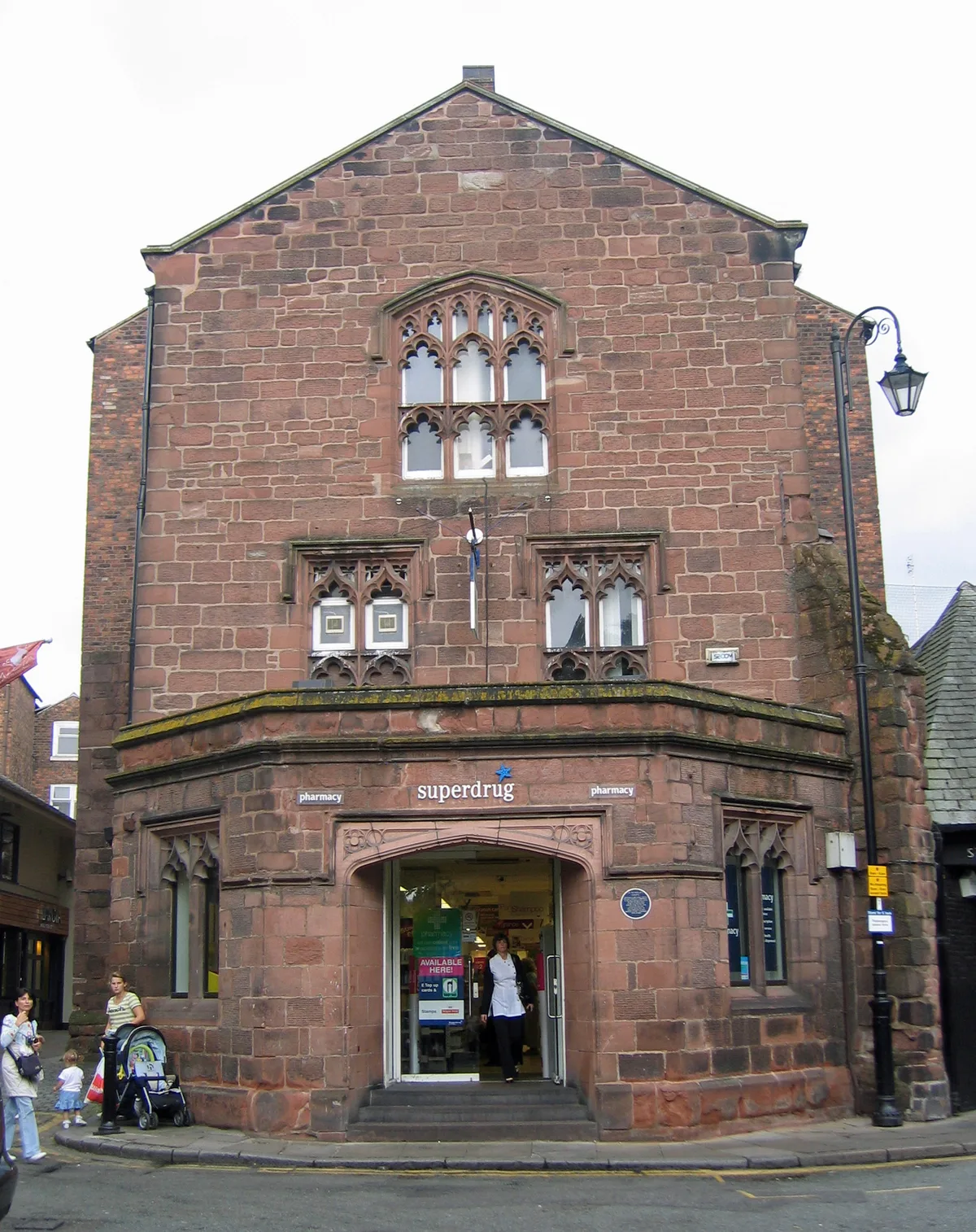
St Nicholas' Chapel, Chester
Historic churches · 0.1 km

St Nicholas' Chapel, Chester
Theatres · 0.1 km
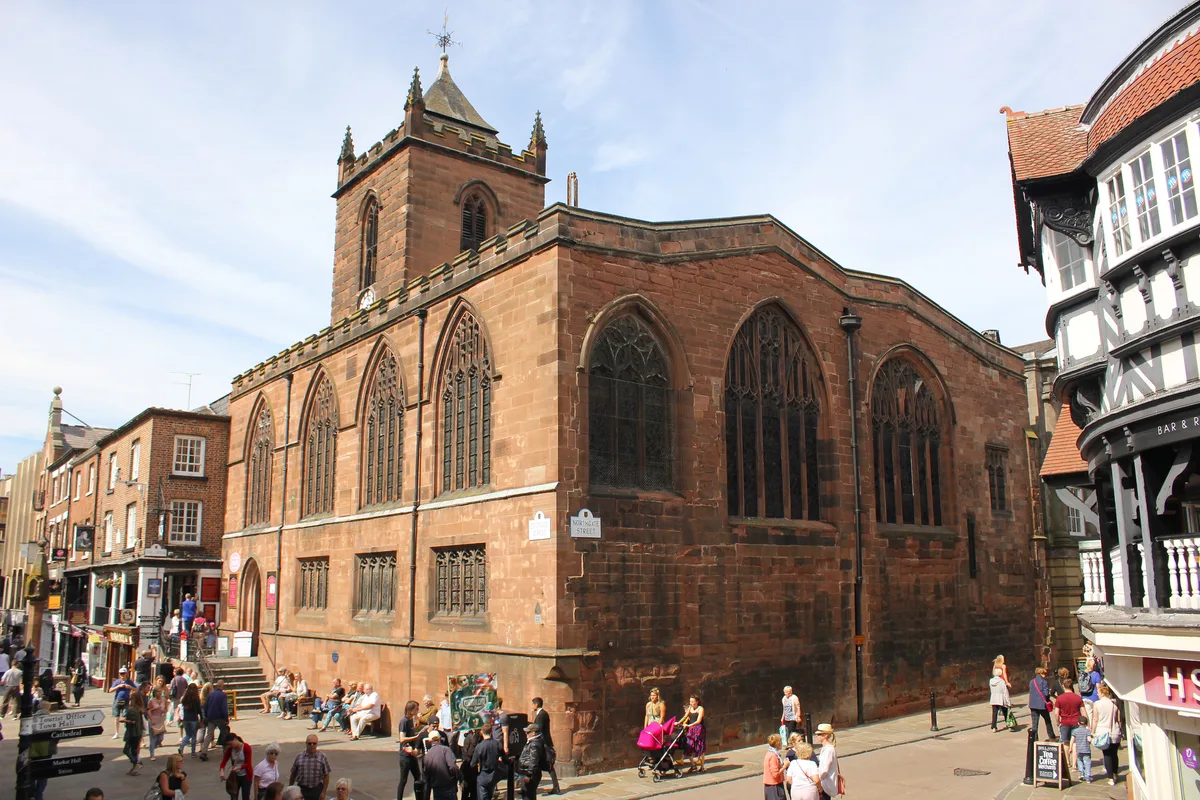
St Peter's Church, Chester
Historic churches · 0.1 km

War Memorial
Memorials & monuments · 0.1 km
Nearby
📷 3Natural landmarks · North West England
Roman Strongroom
Roman Strongroom — a other in wales-north, United Kingdom.
📷 3Theatres · North West England
Chester Forum Theatre
Chester Forum Theatre is a theatre in the United Kingdom.
📷 7📷 4Public art & sculpture · North West England
Janya
Janya — a public art in wales-north, United Kingdom.
📷 5Cinemas · North West England
Chester Picturehouse
Chester Picturehouse — a cinema in wales north.
📷 5Open-air theatres · North West England
Gateway Theatre
Gateway Theatre — a open-air theatre in wales north.
Where to eat & stay near Castra Deva Victrix
Places to stay
📷 7 📷 5
📷 5Hotels · North West England
Mill Hotel & Spa
Mill Hotel & Spa — a hotel in wales north.
 📷 5
📷 5 📷 7
📷 7 📷 7
📷 7 📷 5
📷 5Hotels · North West England
DoubleTree by Hilton Hotel & Spa Chester
DoubleTree by Hilton Hotel & Spa Chester — a hotel in wales north. 4-star. Brand: DoubleTree.
Places to eat & drink
 📷 7
📷 7Historic pubs · North West England
Pied Bull Hotel
Pied Bull Hotel in Wales North, United Kingdom.
 📷 5
📷 5Historic pubs · North West England
Old Custom House Inn, Chester
Old Custom House Inn, Chester in Wales North, United Kingdom.
 📷 5
📷 5Historic pubs · North West England
Public conveniences and former lodge and shop
Public conveniences and former lodge and shop in Wales North, United Kingdom.
 📷 5
📷 5Historic pubs · North West England
Bull and Stirrup Hotel
Bull and Stirrup Hotel in Wales North, United Kingdom.
 📷 5
📷 5Historic pubs · North West England
Oddfellows Arms Public House
Oddfellows Arms Public House in Wales North, United Kingdom.
 📷 7
📷 7Historic pubs · North West England
The Falcon, Chester
The Falcon, Chester in Wales North, United Kingdom.
More places in this region
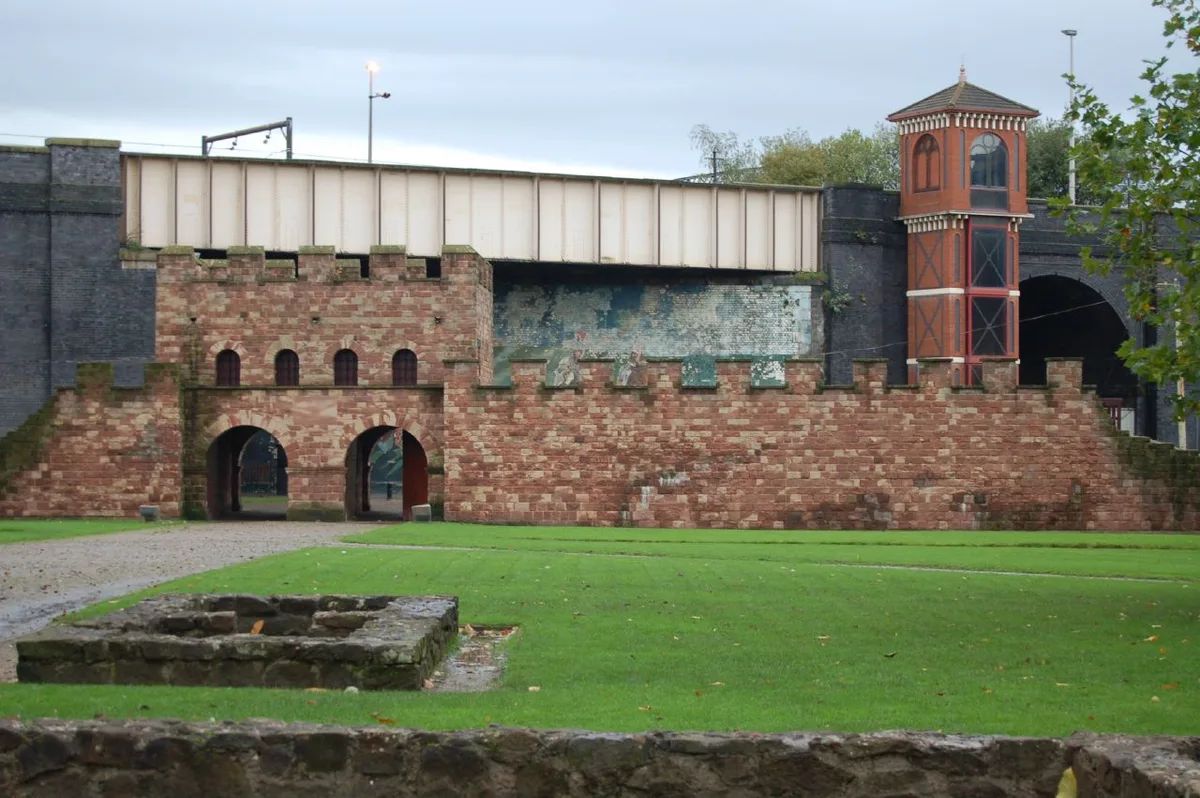 📷 5
📷 5Hill forts · North West England
Mamucium
Mamucium — former Roman fort in the Castlefield area of Manchester in North West England.
 📷 3
📷 3Hill forts · North West England
Timperley Hall
Timperley Hall is a hill fort in the United Kingdom.
 📷 3
📷 3Hill forts · North West England
Watch Hill Castle
Watch Hill Castle — medieval castle in Bowdon, Greater Manchester, England, UK.
 📷 5
📷 5Hill forts · North West England
Buckton Castle
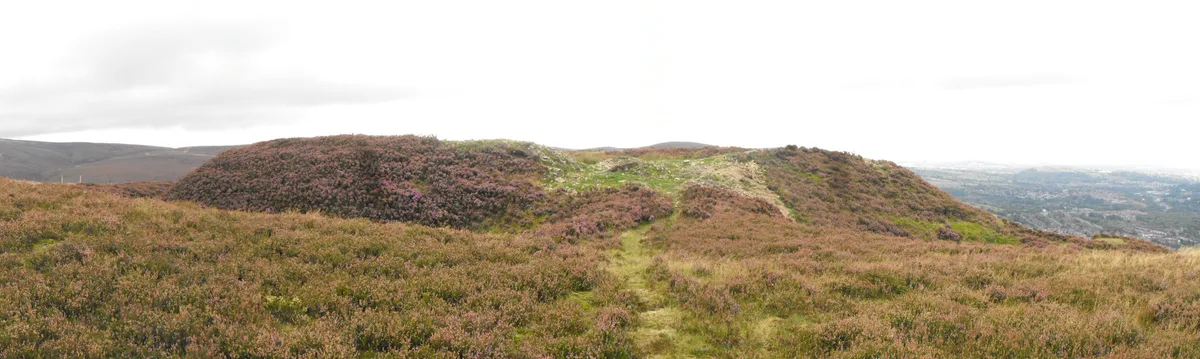
Buckton Castle — 12th-century castle in Mossley, Greater Manchester, England, UK.
Frequently asked questions
- Where is Castra Deva Victrix?
- Castra Deva Victrix is in North-West England, United Kingdom (postcode CH1 1SG), in the parish of Cheshire West and Chester, unparished area.
- What is Castra Deva Victrix?
- Castra Deva Victrix is a hill fort in the United Kingdom.
- How do I get to Castra Deva Victrix?
- The nearest railway station is Grosvenor Park Miniature Railway, about 0.8 km away. The nearest town is Chester. Drivers can use postcode CH1 1SG.
- Is Castra Deva Victrix a protected site?
- Yes — Castra Deva Victrix is part of the River Dee (England) SSSI Site of Special Scientific Interest.
- Is Castra Deva Victrix free to visit?
- Yes, Castra Deva Victrix is free to enter.
- How do I get to Castra Deva Victrix?
- The nearest railway station is Grosvenor Park Miniature Railway, about 0.8 km away. Drivers can navigate to postcode CH1 1SG.