
Viewpoints · South East England
Castle
Also known as: Castell, Caisleán
In or near Wonersh.
Castle is a viewpoint in the United Kingdom.

Colin Smith — CC BY-SA 2.0 via Wikimedia Commons licence

Plan your visit
- Typical visit
- 20 min–45 min
- Best time of year
- Clear days year-round
- Nearest railway station
- Guildford · 0.7 km
- Free entry
- Dog-friendly
Getting there & planning your visit
To visit the Castle viewpoint in Guildford, Surrey, you can take a train to Guildford station, which is 0.7 km away. Admission is free, but please note that the site is not wheelchair accessible. The postcode for sat-nav is GU1 3XP.
About
Castle is a named viewpoint in Surrey, London, marked on Ordnance Survey maps for its outlook. The site is within the Surrey Hills National Landscape (AONB). It sits within the Guildford parliamentary constituency. The nearest railway station is Guildford, about 0.7 km away. Postcode area GU1.
Photo gallery
See it from the streetimagery from 2018
Imagery © Mapillary contributors, CC BY-SA 4.0
Protected designations
- Area of Outstanding Natural Beauty: Surrey Hills
Designations sourced from Natural England open data under OGL v3.
From the Wikipedia article
A castle is a type of fortified structure built during the Middle Ages predominantly by the nobility or royalty and by military orders. Scholars usually consider a castle to be the private fortified residence of a lord or noble. This is distinct from a mansion, palace, and villa, whose main purpose was exclusively for pleasance and are not primarily fortresses but may be fortified. Use of the term has varied over time and, sometimes, has also been applied to structures such as hill forts and 19th- and 20th-century homes built to resemble castles. Over the Middle Ages, when genuine castles were built, they took on a great many forms with many different features, although some, such as curtain walls, arrowslits, and portcullises, were commonplace. European-style castles originated in the 9th and 10th centuries after the fall of the Carolingian Empire, which resulted in its territory being divided among individual lords and princes. These nobles built castles to control the area immediately surrounding them and they were both offensive and defensive structures: they provided a base from which raids could be launched as well as offering protection from enemies. Although their military origins are often emphasised in castle studies, the structures also served as centres of administration and symbols of power. Urban castles were used to control the local populace and important travel routes, and rural castles were often situated near features that were integral to life in the community, such as mills, fertile land, or a water source. Many northern European castles were originally built from earth and timber but had their defences replaced later by stone. Early castles often exploited natural defences, lacking features such as towers and arrowslits and relying on a central keep. In the late 12th and early 13th centuries, a scientific approach to castle defence emerged. This led to the proliferation of towers, with an emphasis on flanking fire. Many new castles were…
Excerpt from Wikipedia under CC BY-SA 4.0. See the source article linked in Sources below.
Background
History
, Bosnia, built around a prehistoric central fortified settlement or acropolis (existed there cca. 17/16th c. to the end of the Bronze Age, cca. 9/8th c. BCE), surrounded by cyclopean walls (similar to Mycenae) dated to the 4th c. BCE.]]
Architecture
site in France (2015).]] Once the site of a castle had been selected – whether a strategic position or one intended to dominate the landscape as a mark of power – the building material had to be selected. An earth and timber castle was cheaper and easier to erect than one built from stone. The costs involved in construction are not well-recorded, and most surviving records relate to royal castles. A castle with earthen ramparts, a motte, timber defences and buildings could have been constructed by an unskilled workforce. The source of man-power was probably from the local lordship, and the tenants would already have the necessary skills of felling trees, digging, and working timber…
Sourced from Wikipedia under CC BY-SA 4.0.
- Coordinates
- 51.2343, -0.5727
- County
- Surrey
- District
- Guildford
- Parish
- Guildford, unparished area
- Postcode
- GU1 3XP
- Parliamentary constituency
- Guildford
- Nearest railway station
- Guildford — 0.7 km
Sources
- osm: n420290374 (ODbL)
- wikipedia: Castle (CC BY-SA 4.0)
Other places nearby
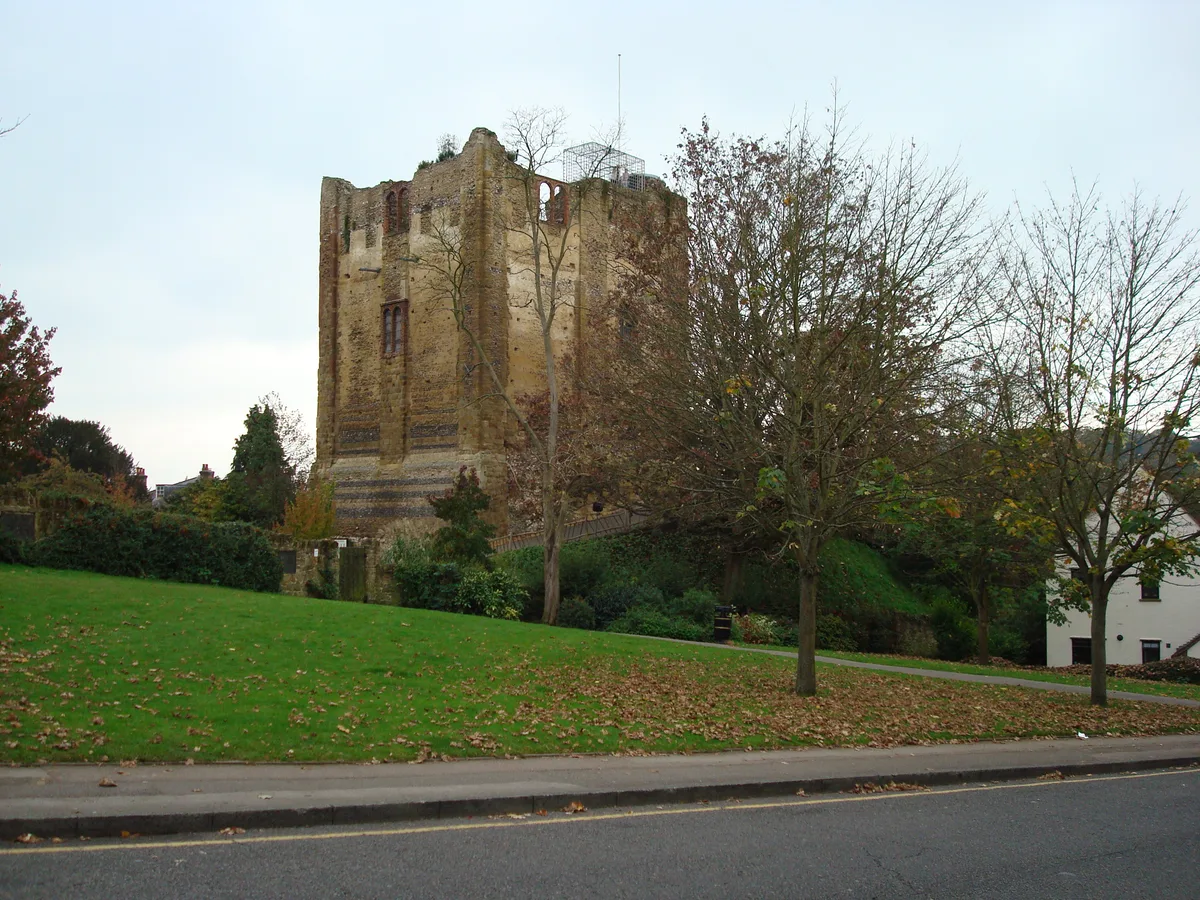
Guildford Castle
Castles · 0.0 km

The Keep
Historic pubs · 0.1 km

Alice Through The Looking-Glass
Public art & sculpture · 0.1 km

Guildford War Memorial
Memorials & monuments · 0.1 km

Guildford Museum
Museums · 0.1 km

Castle Arch
Historic houses · 0.1 km
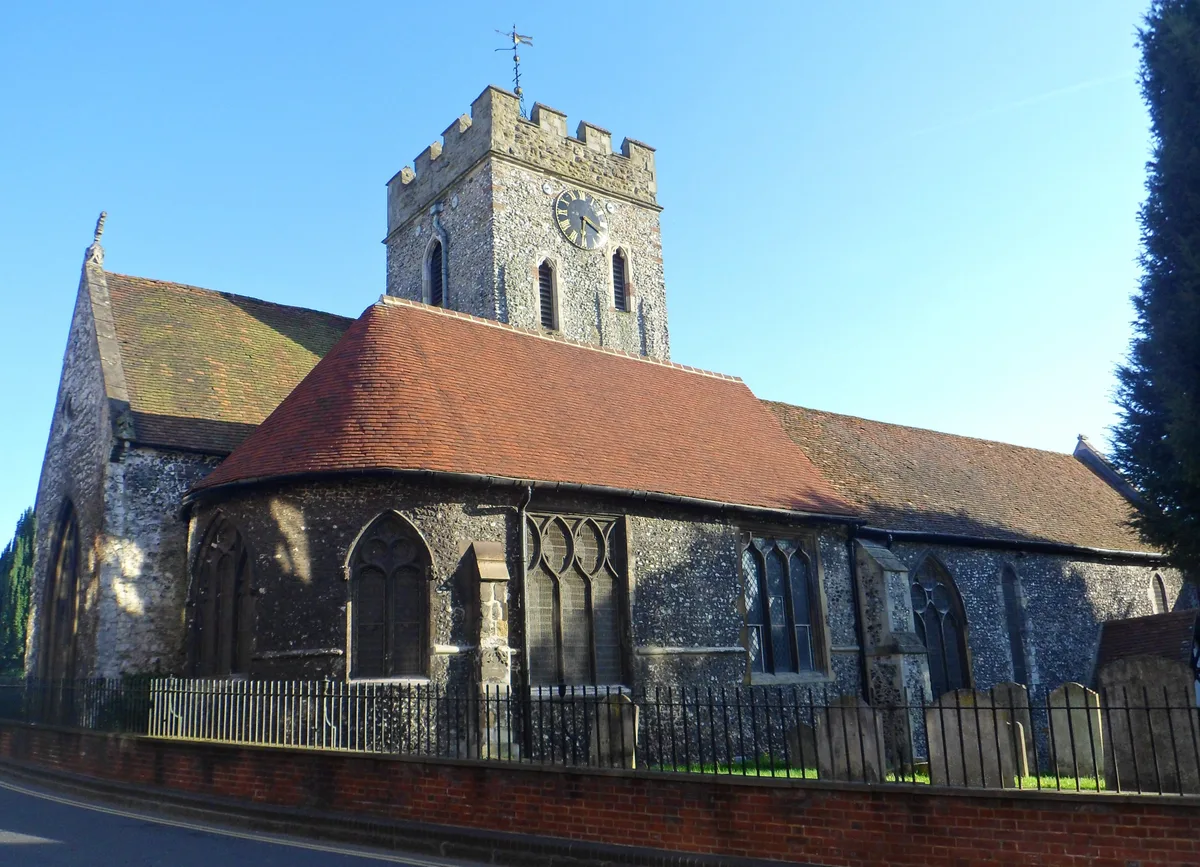
St Mary's Church, Guildford
Historic churches · 0.1 km

13th Century Undercroft shop
Museums · 0.1 km

Medieval Synagogue
Archaeological sites · 0.1 km

Guildford Farmers' Market
Farmers’ markets · 0.2 km

Alfred Smith VC
Memorials & monuments · 0.2 km

The Mill Studio
Theatres · 0.2 km
Nearby
📷 5Castles · South East England
Guildford Castle
Guildford Castle — castle in Guildford, Surrey, England, UK.
📷 7📷 5Public art & sculpture · South East England
Alice Through The Looking-Glass
Alice Through The Looking-Glass — a public art in england-london, United Kingdom.
📷 5Memorials & monuments · South East England
Guildford War Memorial
Guildford War Memorial — Grade II listed building-listed memorial in england-london, United Kingdom.
📷 5Museums · South East England
Guildford Museum
Guildford Museum — a museum in england-london, United Kingdom.
📷 5Historic houses · South East England
Castle Arch
Castle Arch — building in Guildford, Surrey, England, UK.
Where to eat & stay near Castle
Places to stay
 📷 7
📷 7Hotels · South East England
Guildford Harbour Hotel
Guildford Harbour Hotel — a hotel in england london.
 📷 7
📷 7Hotels · South East England
Asperion Hotel
Asperion Hotel — a hotel in england london.
 📷 5
📷 5Hotels · South East England
Travelodge Guildford
Travelodge Guildford — a hotel in england london.
 📷 5
📷 5 📷 5
📷 5Campsites · South East England
Chantry Wood Campsite
Chantry Wood Campsite — a campsite in england london.
 📷 7
📷 7Places to eat & drink
📷 7 📷 7
📷 7Historic pubs · South East England
The Angel Hotel
The Angel Hotel in England South East, United Kingdom.
 📷 6
📷 6Historic pubs · South East England
The Royal Oak Public House
The Royal Oak Public House in England South East, United Kingdom.
 📷 7
📷 7Historic pubs · South East England
Horse And Groom Public House
Horse And Groom Public House in England South East, United Kingdom.
 📷 7
📷 7Historic pubs · South East England
Rodboro Buildings
Rodboro Buildings in England South East, United Kingdom.
 📷 7
📷 7Historic pubs · South East England
The Seahorse Public House
The Seahorse Public House in England South East, United Kingdom.
More viewpoints in this region
 📷 5
📷 5Viewpoints · South East England
Bird Watching
Bird Watching is a viewpoint in the United Kingdom.
 📷 5
📷 5Viewpoints · South East England
Blatchford Down
Blatchford Down is a viewpoint in the United Kingdom.
 📷 5
📷 5Viewpoints · South East England
Box Hill Viewpoint
Box Hill Viewpoint is a viewpoint in the United Kingdom.
 📷 5
📷 5Frequently asked questions
- Where is Castle?
- Castle is in Surrey, South-East England, United Kingdom (postcode GU1 3XP), in the parish of Guildford, unparished area.
- What is Castle?
- Castle is a viewpoint in the United Kingdom.
- How do I get to Castle?
- The nearest railway station is Guildford, about 0.7 km away. The nearest town is Wonersh. Drivers can use postcode GU1 3XP.
- Is Castle a protected site?
- Yes — Castle is part of the Surrey Hills National Landscape (AONB).
- Is Castle free to visit?
- Yes, Castle is free to enter.
- How do I get to Castle?
- The nearest railway station is Guildford, about 0.7 km away. Drivers can navigate to postcode GU1 3XP.