
Memorials & monuments · South East England
Busbridge War Memorial
In or near Farncombe.
Busbridge War Memorial — Grade II* listed building-listed memorial in england-south-east, United Kingdom.

Michael Garlick — CC BY-SA 2.0 via Wikimedia Commons licence
_1_-_geograph.org.uk_-_6335481.jpg)
Plan your visit
- Typical visit
- 15 min–45 min
- Nearest railway station
- Godalming · 1.5 km
- Free entry
- Dog-friendly
Getting there & planning your visit
Busbridge War Memorial is located in Surrey, with the nearest railway station being Godalming, which is 1.5 km away. The postcode for the memorial is GU7 1PH, and entry is free.
About
Busbridge War Memorial is a Grade II* listed building-listed memorial in england-south-east, United Kingdom, registered on the National Heritage List for England (NHLE entry 1044531). Listed status protects buildings and structures of special architectural or historic interest. See the linked Wikipedia article for further details.
Photo gallery
Heritage listing
Busbridge War Memorial is a First World War memorial in the churchyard of St John's Church in the village of Busbridge (now part of the parish of Godalming), Surrey, in south-eastern England. It was designed by Sir Edwin Lutyens and unveiled in 1922. It is one of several structures in the area for which Lutyens was responsible. His connection with Busbridge began in the 1880s when he partnered with Gertrude Jekyll, a local artist and gardener who lived at nearby Munstead Wood; the relationship led to many more commissions for Lutyens for country houses. Lutyens became renowned for his war memorial work after designing the Cenotaph in London, which he named after a garden seat at Munstead Wood. Busbridge is one of several war memorials he designed in connection with his pre-war work.
From the Historic England List Entry under OGL v3.
Protected designations
- National Nature Reserve: WEALDEN HEATHS
- Area of Outstanding Natural Beauty: Surrey Hills
Designations sourced from Natural England open data under OGL v3.
From the Wikipedia article
Busbridge War Memorial is a First World War memorial in the churchyard of St John's Church in the village of Busbridge (now part of the parish of Godalming), Surrey, in south-eastern England. It was designed by Sir Edwin Lutyens and unveiled in 1922. It is one of several structures in the area for which Lutyens was responsible. His connection with Busbridge began in the 1880s when he partnered with Gertrude Jekyll, a local artist and gardener who lived at nearby Munstead Wood; the relationship led to many more commissions for Lutyens for country houses. Lutyens became renowned for his war memorial work after designing the Cenotaph in London, which he named after a garden seat at Munstead Wood. Busbridge is one of several war memorials he designed in connection with his pre-war work. The memorial is one of 15 crosses Lutyens designed, mostly for small villages. It consists of a 7-metre-tall (23-foot) tapering shaft with short arms moulded to it near the top. It stands at the end of a triangular churchyard, at the junction of two roads, making it a prominent landmark. No names are inscribed on the memorial; they are instead recorded inside the church, which also has stained-glass windows to commemorate the war. The cross was unveiled by General Sir Charles Monro, the colonel of the local regiment, on 23 July 1922, in front of a large crowd. Lutyens went on to design two monuments in the same churchyard to members of the extended Jekyll family. The war memorial became a listed building in 1991 and was upgraded to Grade II* in 2015 when Historic England declared Lutyens's war memorials a national collection.
Excerpt from Wikipedia under CC BY-SA 4.0. See the source article linked in Sources below.
Background
History
Busbridge War Memorial was dedicated by the Reverend H. M. Larner and unveiled by General Sir Charles Monro, 1st Baronet at a ceremony on 23 July 1922. The unveiling, on a Sunday evening, attracted a large crowd, among them several local veterans and senior military officers including Lieutenant Colonel Bernard Freyberg, another of Lutyens's clients. Monro held several senior positions in the army through the war and was the colonel of the Queen's Royal Regiment (West Surrey). In that capacity, he unveiled several war memorials in the county, including the regiment's primary memorial in Holy Trinity Church, Guildford, as well as Banstead War Memorial and Streatham War Memorial. Monro…
Architecture
|alt=shaft of a stone cross, close-up from the bottom]] Busbridge War Memorial is an instance of Lutyens's War Cross, a design he used 15 times, mostly in small villages, and each with local variations. It is a lozenge-shaped tapered shaft in Portland stone, approximately 7 m tall with short arms near the top of the shaft, linked to it with cyma moulding. The cross stands on a base of four uneven rectangular stone blocks which themselves stand on an undercut square plinth, at the foot of which are three shallow stone steps. Its position at the end of the triangular churchyard, on the junction of Brighton Road and Hambledon Road, makes it a prominent landmark.
Sourced from Wikipedia under CC BY-SA 4.0.
- Coordinates
- 51.1775, -0.6021
- County
- Surrey
- District
- Waverley
- Parish
- Godalming
- Postcode
- GU7 1PH
- Parliamentary constituency
- Godalming and Ash
- Nearest railway station
- Godalming — 1.5 km
Sources
- wikidata: Q23002775 (CC0)
- wikipedia: Busbridge War Memorial (CC BY-SA 4.0)
Other places nearby
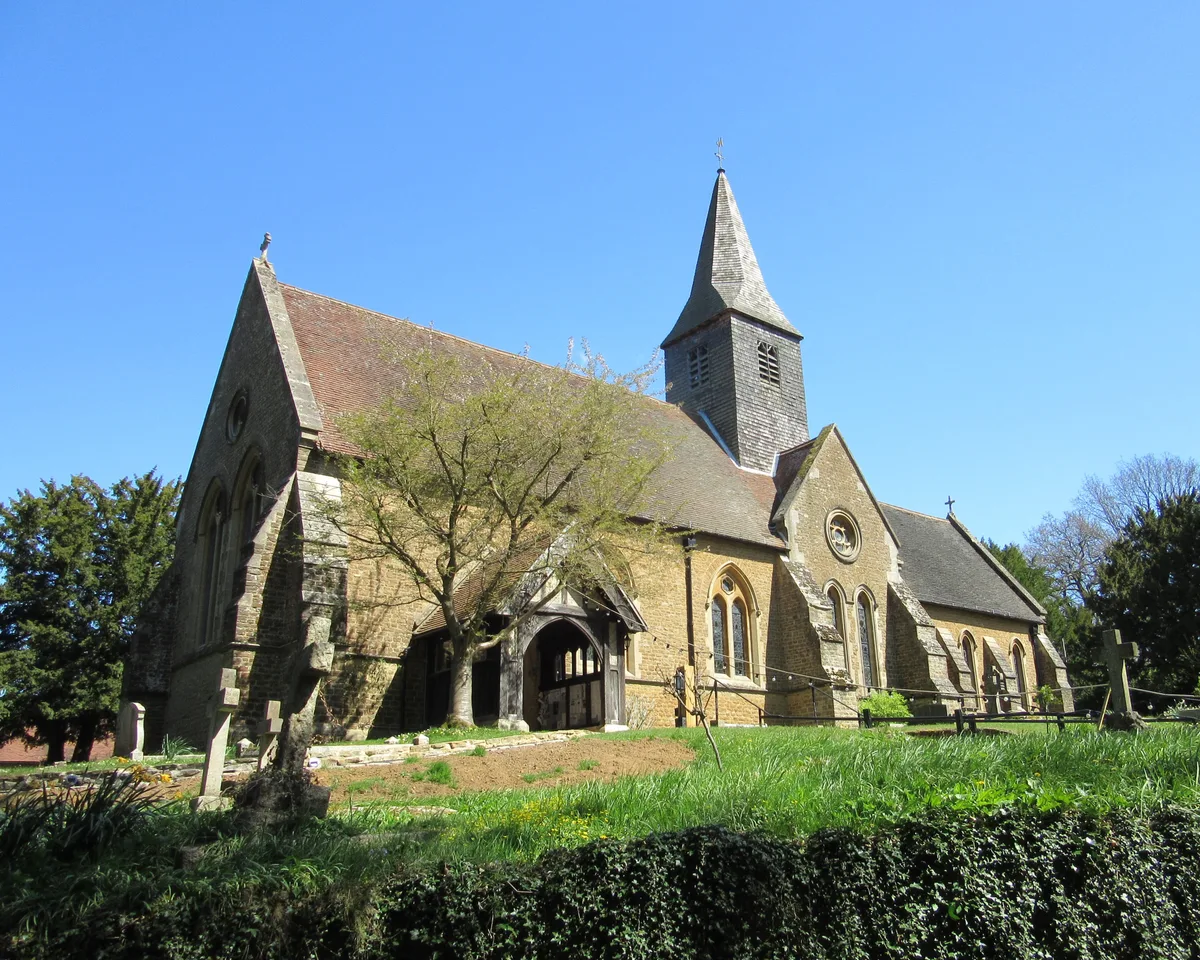
St John the Baptist Church, Busbridge
Historic churches · 0.1 km
_(14760674751).jpg?width=1200)
Munstead Wood
Gardens · 0.5 km

Munstead Water Tower
Memorials & monuments · 0.9 km

The Sham Bridge To Middle Pond Busbridge Lakes
Historic bridges · 1.0 km

Bridge Over Upper Way/Pond, Busbride Lakes
Historic bridges · 1.1 km

Busbridge Lakes
Natural landmarks · 1.1 km

The Wey Gallery
Public art & sculpture · 1.1 km

The Kings Arms and Royal Hotel
Hotels · 1.1 km

Lower Lake
Lakes · 1.1 km

80 High Street
Historic houses · 1.2 km

St Hilary's School
Historic churches · 1.2 km
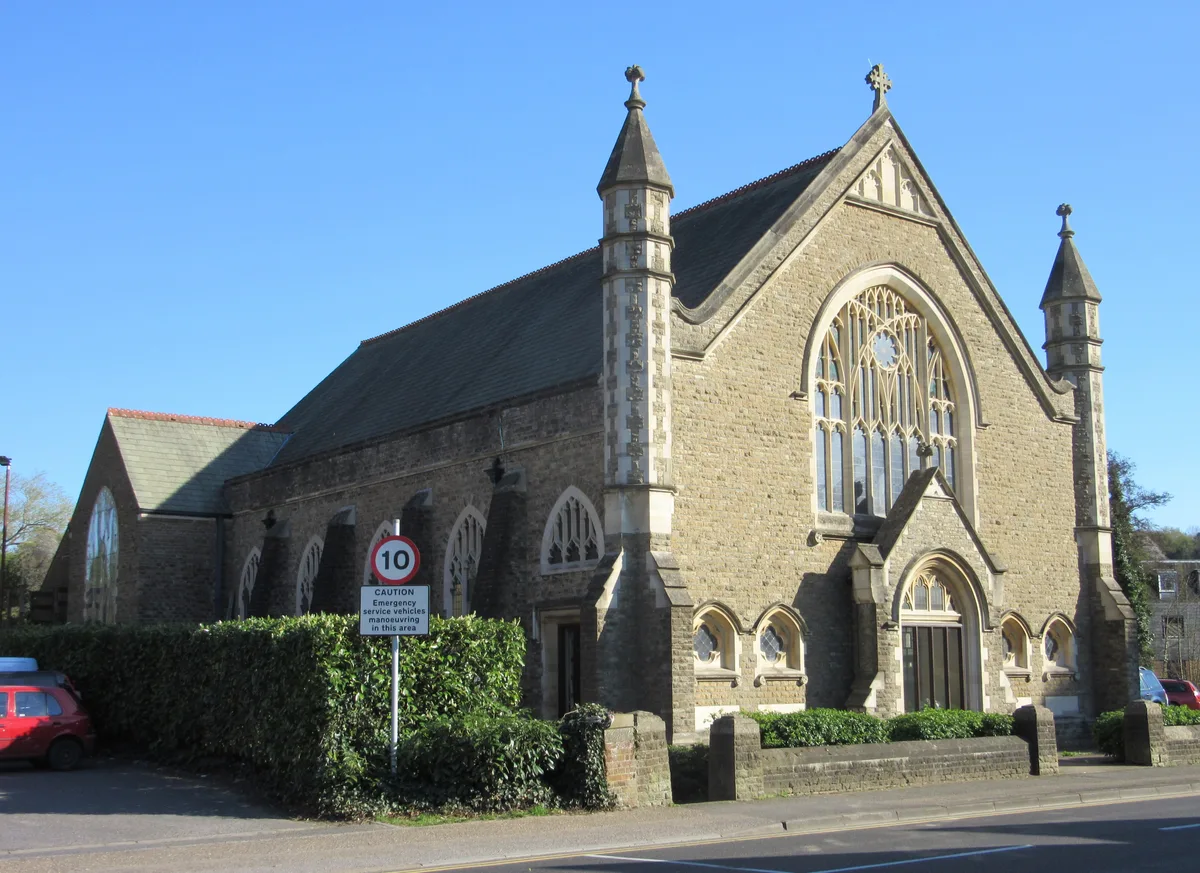
Godalming United Church
Historic churches · 1.3 km
Nearby
📷 5Historic churches · South East England
St John the Baptist Church, Busbridge
St John the Baptist Church, Busbridge — church in Busbridge, Waverley, Surrey, England, UK.
📷 5Gardens · South East England
Munstead Wood
Munstead Wood — Grade I listed house in Busbridge, Surrey, England, UK.
📷 5Memorials & monuments · South East England
Munstead Water Tower
Munstead Water Tower — a water tower in england-south-east, United Kingdom.
📷 5Historic bridges · South East England
The Sham Bridge To Middle Pond Busbridge Lakes
The Sham Bridge To Middle Pond Busbridge Lakes — Grade II listed building-listed bridge in england-south-east, United Kingdom.
📷 4Historic bridges · South East England
Bridge Over Upper Way/Pond, Busbride Lakes
Bridge Over Upper Way/Pond, Busbride Lakes — Grade II listed building-listed bridge in england-south-east, United Kingdom.
📷 5Natural landmarks · South East England
Busbridge Lakes
Busbridge Lakes — a other in england-south-east, United Kingdom.
Where to eat & stay near Busbridge War Memorial
Places to stay
📷 5Hotels · South East England
The Kings Arms and Royal Hotel
The Kings Arms and Royal Hotel — a hotel in england south east.
 📷 5
📷 5 📷 7
📷 7Hotels · South East England
Asperion Hotel
Asperion Hotel — a hotel in england london.
 📷 5
📷 5Campsites · South East England
Chantry Wood Campsite
Chantry Wood Campsite — a campsite in england london.
 📷 5
📷 5Hostels · South East England
Puttenham Barn Bunkhouse
Puttenham Barn Bunkhouse — a hostel in england south east.
 📷 7
📷 7Places to eat & drink
 📷 7
📷 7Historic pubs · South East England
The Richmond Arms Public House
The Richmond Arms Public House in England South East, United Kingdom.
 📷 5
📷 5Historic pubs · South East England
The Stag on the River
The Stag on the River in England South East, United Kingdom.
 📷 7
📷 7Historic pubs · South East England
The Star Public House
The Star Public House in England South East, United Kingdom.
 📷 5
📷 5Historic pubs · South East England
The Withies Inn
The Withies Inn in England South East, United Kingdom.
 📷 5
📷 5Cafés · South East England
Hambledon Village Shop
Hambledon Village Shop — a café in england south east. Cuisine: coffee shop;sandwich.
 📷 7
📷 7Historic pubs · South East England
The Seahorse Public House
The Seahorse Public House in England South East, United Kingdom.
Other works by Edwin Lutyens
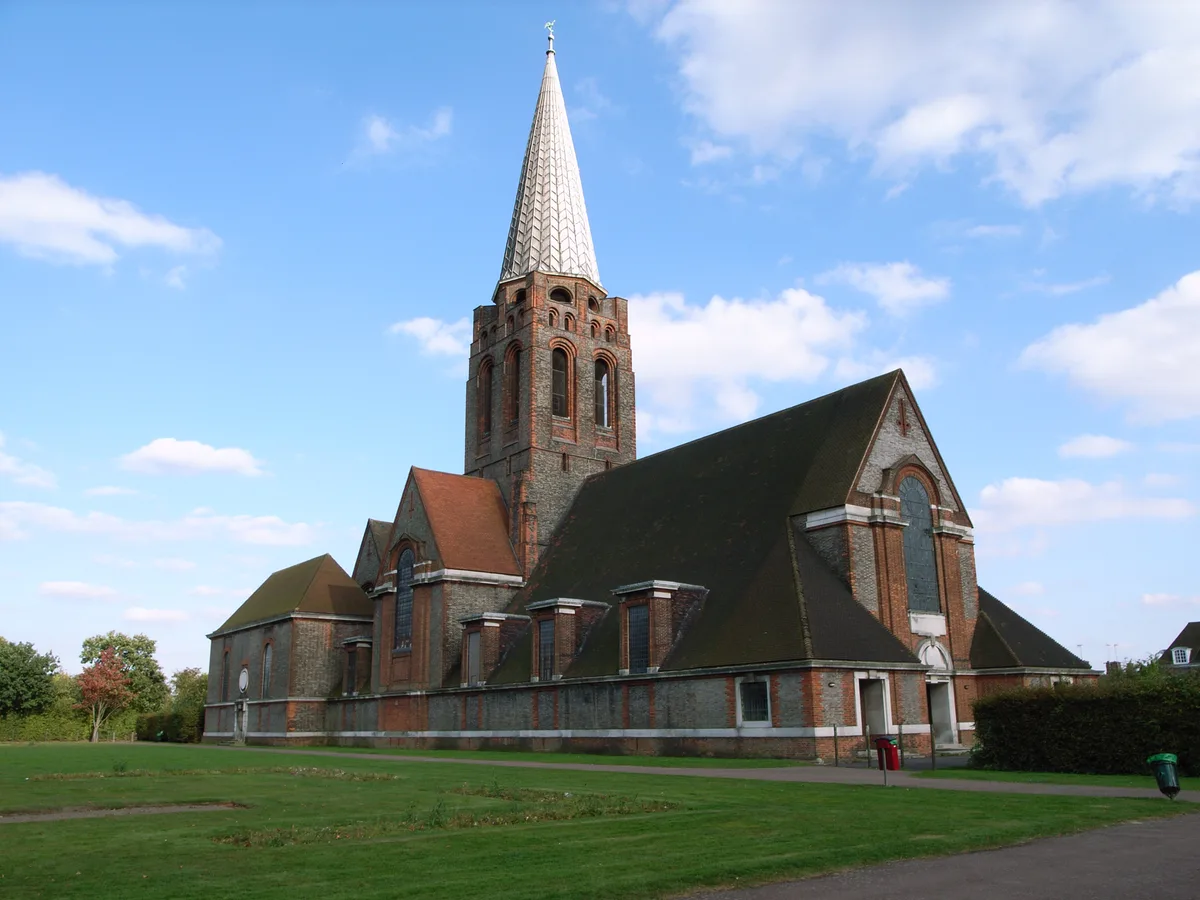 📷 5
📷 5Historic churches · London
St Jude's Church, Hampstead Garden Suburb
St Jude's Church, Hampstead Garden Suburb — church in London Borough of Barnet, UK.
 📷 5
📷 5Gardens · London
9, Salisbury Court Ec4
9, Salisbury Court Ec4 — a garden in england-london, United Kingdom.
 📷 5
📷 5Memorials & monuments · London
South African War Memorial, Richmond Cemetery
South African War Memorial, Richmond Cemetery — Grade II listed building-listed memorial in england-london, United Kingdom.
 📷 5
📷 5Memorials & monuments · London
The Mercantile Marine Memorial
The Mercantile Marine Memorial — Grade I listed building-listed memorial in england-london, United Kingdom.
More memorials in this region
 📷 5
📷 5Memorials & monuments · South East England
Air Forces Memorial
Air Forces Memorial is a memorial in the United Kingdom.
 📷 5
📷 5Memorials & monuments · South East England
All Saints Church
All Saints Church is a memorial in the United Kingdom.
 📷 5
📷 5Memorials & monuments · South East England
Bevans War Memorial
Bevans War Memorial is a memorial in the United Kingdom.
.jpg?width=1200) 📷 5
📷 5Memorials & monuments · South East England
Cumberland Obelisk
Cumberland Obelisk is a memorial in the United Kingdom.
Frequently asked questions
- Where is Busbridge War Memorial?
- Busbridge War Memorial is in Surrey, South-East England, United Kingdom (postcode GU7 1PH), in the parish of Godalming.
- What is Busbridge War Memorial?
- Busbridge War Memorial — Grade II* listed building-listed memorial in england-south-east, United Kingdom.
- How do I get to Busbridge War Memorial?
- The nearest railway station is Godalming, about 1.5 km away. The nearest town is Farncombe. Drivers can use postcode GU7 1PH.
- Is Busbridge War Memorial a listed building?
- Busbridge War Memorial is officially recognised as Grade II* listed building listed.
- Is Busbridge War Memorial a protected site?
- Yes — Busbridge War Memorial is part of the WEALDEN HEATHS National Nature Reserve and the Surrey Hills National Landscape (AONB).
- Is Busbridge War Memorial free to visit?
- Yes, Busbridge War Memorial is free to enter.
- How do I get to Busbridge War Memorial?
- The nearest railway station is Godalming, about 1.5 km away. Drivers can navigate to postcode GU7 1PH.