
Cemeteries · London
Bunhill Fields
In or near City of London.
Bunhill Fields is a cemetery in the United Kingdom.

Wikimedia Commons contributors — see linked file page for photographer and licence licence

Plan your visit
- Typical visit
- 30 min–1 h
- Nearest railway station
- Old Street · 0.2 km
- Free entry
- Family-friendly
- Dog-friendly
Getting there & planning your visit
To visit Bunhill Fields, the nearest railway station is Old Street, located 0.2 km away. Entry is free, and the postcode for sat-nav is EC1Y 2BG.
About
Bunhill Fields is a named cemetery in the United Kingdom. Records date its origin to 1665. Coordinates: 51.5235°, -0.0887°. This entry is part of The Great Britain Guide, a free, ad-free, open-data tourist directory.
Photo gallery
Official information
Bunhill Fields is a historic burial ground located in the City of London. It is the final resting place of notable figures such as William Blake and Daniel Defoe, offering visitors a glimpse into the area's rich cultural heritage.
From the Wikipedia article
Bunhill Fields is a former burial ground in central London, in the London Borough of Islington, just north of the City of London. What remains is about 1.6 hectares (4.0 acres) in extent and the bulk of the site is a public garden maintained by the City of London Corporation. It was first in devoted use as a burial ground from 1665 until 1854, in which period approximately 123,000 interments were estimated to have taken place. Over 2,000 monuments remain, for the most part in concentrated blocks. It was a prototype of land-use protected, nondenominational grounds, and was particularly favoured by nonconformists who passed their final years in the region. It contains the graves of many notable people, including John Bunyan (died 1688), author of The Pilgrim's Progress; Daniel Defoe (died 1731), author of Robinson Crusoe; William Blake (died 1827), artist, poet, and mystic; Susanna Wesley (died 1742), known as the "Mother of Methodism" through her education of sons John and Charles; Thomas Bayes (died 1761), statistician and philosopher; Isaac Watts (died 1748), the "Father of English Hymnody"; and Thomas Newcomen (died 1729), steam engine pioneer. Bunhill Fields Burial Ground is listed Grade I on the Register of Historic Parks and Gardens. It is now maintained by the Friends of City Gardens. Nearby, on the west side of Bunhill Row and behind the residential tower Braithwaite House, is a former Quaker burial ground, in use from 1661 to 1855, at times also known as Bunhill Fields. George Fox (died 1691), one of the founders of the movement, is among those buried there. Its remains are also a public garden, Quaker Gardens, managed by the London Borough of Islington.
Excerpt from Wikipedia under CC BY-SA 4.0. See the source article linked in Sources below.
Background
History
Bunhill Fields was part of the Manor of Finsbury (originally Fensbury), which has its origins as the prebend of Halliwell and Finsbury, belonging to St Paul's Cathedral and established in 1104. In 1315 the prebendary manor was granted by Archdeacon Robert Baldock to the Mayor and Commonalty of London. This enabled more general public access to the semi-fen or moor stretching from the City of London's boundary (London Wall), to the village of Hoxton. In 1498 part of the otherwise unenclosed landscape was set aside to form a large field for military exercises of archers and others. This part of the manor has sports and occasional military use: Artillery Ground. Next to this lies Bunhill…
Visiting
(died 1729). The inscription reads in part: "In 67 months she was tap'd [tapped] 66 times, Had taken away 240 gallons of water without ever repining at her case or ever fearing the operation."]] In keeping with this tradition, in 1665 the City of London Corporation decided to use some of the land as a common burial ground for the interment of bodies of inhabitants who had died of the plague and could not be accommodated in the churchyards. Outer walls were completed but Church of England officials never consecrated the ground nor used it for burials. A Mr. Tindal took over the lease. He allowed extramural graveyard burials in what was unconsecrated soil, thus popular with…
Sourced from Wikipedia under CC BY-SA 4.0.
- Coordinates
- 51.5235, -0.0887
- District
- Islington
- Parish
- Islington, unparished area
- Postcode
- EC1Y 2BG
- Parliamentary constituency
- Islington South and Finsbury
- Established
- 1665
- Nearest railway station
- Old Street — 0.2 km
- Official site
- www.cityoflondon.gov.uk
Sources
- osm: w263374781 (ODbL)
- wikipedia: Bunhill Fields (CC BY-SA 4.0)
- commons: William Blake's grave with flower.jpg (CC BY-SA 4.0)
Other places nearby

Obelisk Monument, Middle Enclosure
Forts · 0.0 km

John Bunyan
Memorials & monuments · 0.0 km

Bunhill Fields Historic Burial Ground
Memorials & monuments · 0.0 km

Daniel Defoe
Memorials & monuments · 0.0 km

Monument To Daniel Defoe, Bunhill Fields
Forts · 0.0 km

Thomas Bayes
Memorials & monuments · 0.0 km
William Blake
Memorials & monuments · 0.0 km

Armoury House
Historic houses · 0.1 km
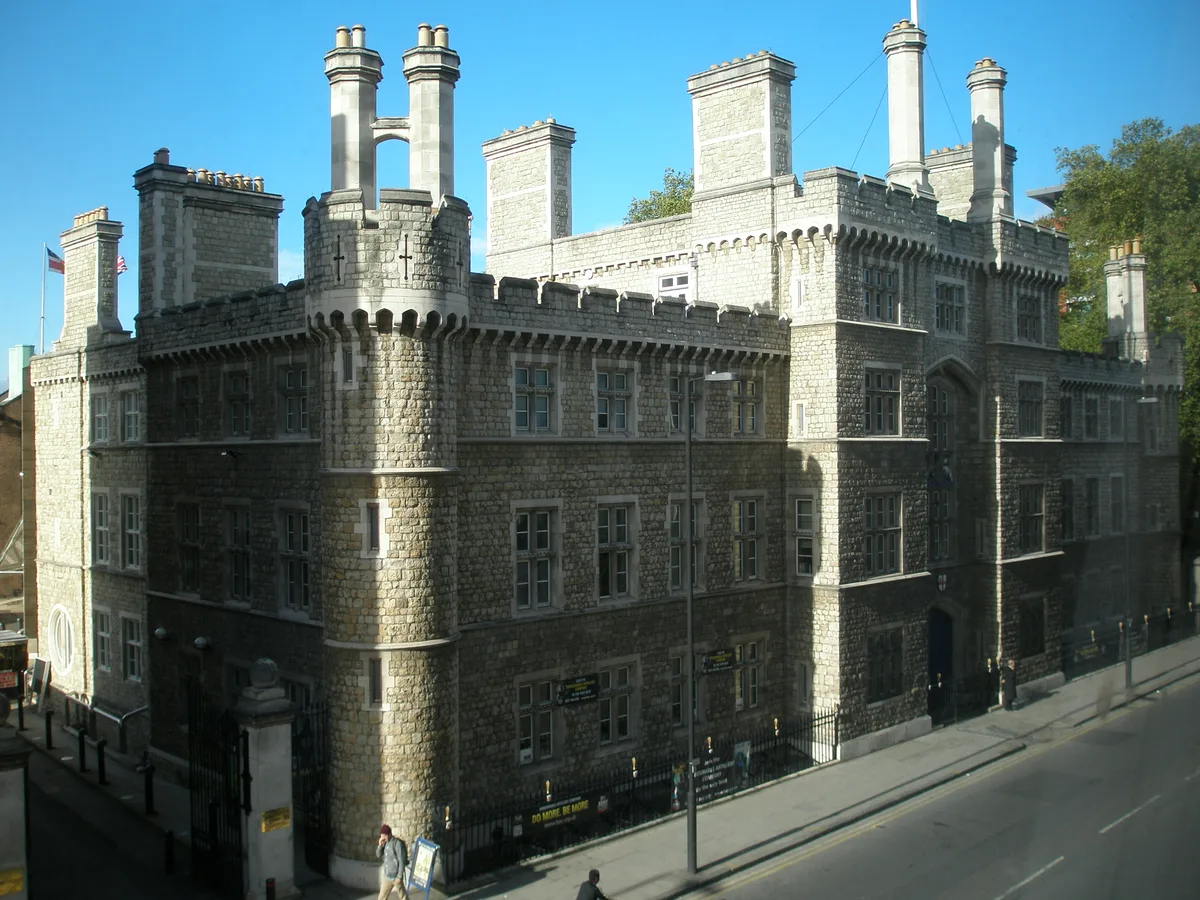
Honourable Artillery Company Museum
Museums · 0.1 km

Statue of John Wesley
Historic houses · 0.1 km
Susannah Wesley Memorial
Memorials & monuments · 0.1 km
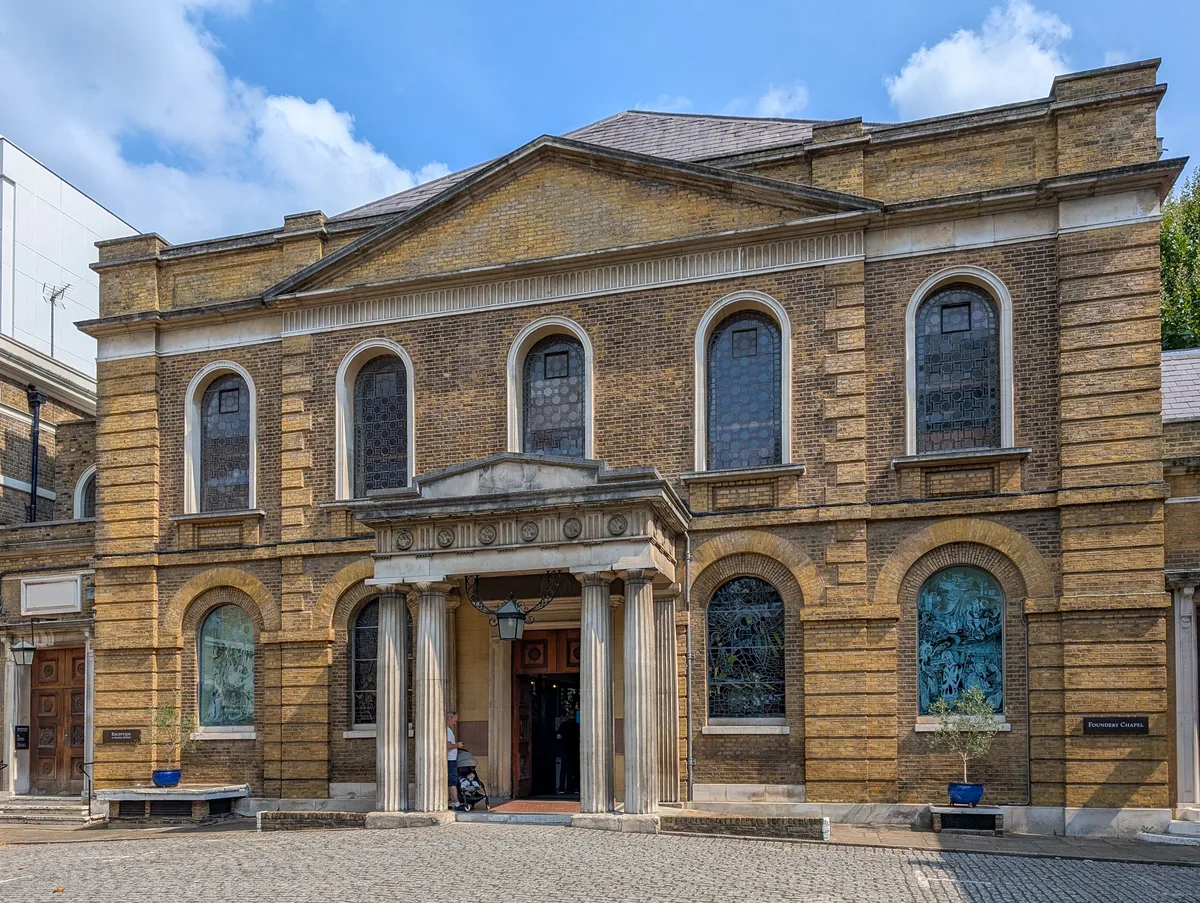
Wesley's Chapel
Historic churches · 0.1 km
Nearby
📷 5Forts · London
Obelisk Monument, Middle Enclosure
Obelisk Monument, Middle Enclosure — a martello broad in england-london, United Kingdom.
📷 5Memorials & monuments · London
John Bunyan
John Bunyan — a memorial in england-london, United Kingdom.
📷 5Memorials & monuments · London
Bunhill Fields Historic Burial Ground
Bunhill Fields Historic Burial Ground is a memorial in the United Kingdom.
📷 5Memorials & monuments · London
Daniel Defoe
Daniel Defoe — a memorial in england-london, United Kingdom.
📷 5Forts · London
Monument To Daniel Defoe, Bunhill Fields
Monument To Daniel Defoe, Bunhill Fields — a martello broad in england-london, United Kingdom.
📷 5Memorials & monuments · London
Thomas Bayes
Thomas Bayes — a memorial in england-london, United Kingdom.
Where to eat & stay near Bunhill Fields
Places to stay
 📷 5
📷 5 📷 5
📷 5Hotels · London
The Montcalm Royal London House
The Montcalm Royal London House — a hotel in england london.
 📷 5
📷 5Hostels · London
The Liverpool Street Hostel
The Liverpool Street Hostel — a hostel in england london.
 📷 7
📷 7Hotels · London
M by Montcalm Shoreditch
M by Montcalm Shoreditch — a hotel in england london.
 📷 5
📷 5Hotels · London
South Place Hotel
South Place Hotel — a hotel in england london.
 📷 7
📷 7Hotels · London
Hart Shoreditch Hotel London, Curio Collection by Hilton
Hart Shoreditch Hotel London, Curio Collection by Hilton — a hotel in england london. 4-star. Brand: Hilton.
Places to eat & drink
 📷 5
📷 5Restaurants · London
Chiswell Street Dining Rooms
Chiswell Street Dining Rooms — a restaurant in england london.
 📷 5
📷 5Historic pubs · London
The Flying Horse
The Flying Horse — Historic pub — listed building or notable heritage status.
 📷 7
📷 7 📷 5
📷 5 📷 7
📷 7Historic pubs · London
The Hat And Feathers Public House
The Hat And Feathers Public House in England London, United Kingdom.
 📷 5
📷 5Restaurants · London
Galvin La Chapelle
Galvin La Chapelle — a restaurant in england london.
More cemeteries in this region
 📷 5
📷 5 📷 5
📷 5 📷 5
📷 5Cemeteries · London
Alderney Road Cemetery
Alderney Road Cemetery is a cemetery in the United Kingdom.
 📷 5
📷 5Cemeteries · London
All Saints' Orpington
All Saints' Orpington is a cemetery in the United Kingdom.
Frequently asked questions
- Where is Bunhill Fields?
- Bunhill Fields is in London, United Kingdom (postcode EC1Y 2BG), in the parish of Islington, unparished area.
- What is Bunhill Fields?
- Bunhill Fields is a cemetery in the United Kingdom.
- How do I get to Bunhill Fields?
- The nearest railway station is Old Street, about 0.2 km away. The nearest town is City of London. Drivers can use postcode EC1Y 2BG.
- When was Bunhill Fields built?
- Built or established in 1665.
- Who owns Bunhill Fields?
- Bunhill Fields is owned by City of London Corporation.
- Is Bunhill Fields free to visit?
- Yes, Bunhill Fields is free to enter.
- How do I get to Bunhill Fields?
- The nearest railway station is Old Street, about 0.2 km away. Drivers can navigate to postcode EC1Y 2BG.