
Natural landmarks · West Midlands
Bronze Crucible
In or near Lower Penn.
Bronze Crucible — Public artwork (sculpture) by Andrew Burton.

Wikimedia Commons licence
Plan your visit
- Typical visit
- 1 h–2 h
- Nearest railway station
- Tipton · 1.9 km
- Free entry
- Dog-friendly
Getting there & planning your visit
To visit the Bronze Crucible in Dudley, the nearest railway station is Tipton, located 1.9 km away. Entry to the site is free.
About
Bronze Crucible is a place of interest in the United Kingdom. Wikidata describes it as: "Public artwork (sculpture) by Andrew Burton.". Coordinates: 52.5137°, -2.0731°.
Photo gallery
See it from the streetimagery from 2026
Imagery © Mapillary contributors, CC BY-SA 4.0
Official information
The Bronze Crucible is a public sculpture located at Castlegate Roundabout in Dudley. It features a collection of five artistic pieces, including a large crucible and various other elements that reflect medieval life.
From the Wikipedia article
Crucible steel is steel made by melting pig iron, cast iron, iron, and sometimes steel, often along with sand, glass, ashes, and other fluxes, in a crucible. Crucible steel was first developed in the middle of the 1st millennium BCE in Southern India and Sri Lanka using the wootz process. In ancient times, it was not possible to produce very high temperatures with charcoal or coal fires, which were required to melt iron or steel. However, pig iron, having a higher carbon content and thus a lower melting point, could be melted, and by soaking wrought iron or steel in the liquid pig-iron for a long time, the carbon content of the pig iron could be reduced as it slowly diffused into the iron, turning both into steel. Crucible steel of this type was produced in South and Central Asia during the medieval era. This generally produced a very hard steel, but also a composite steel that was inhomogeneous, consisting of a very high-carbon steel (formerly the pig-iron) and a lower-carbon steel (formerly the wrought iron). This often resulted in an intricate pattern when the steel was forged, filed or polished, with possibly the most well-known examples coming from the wootz steel used in Damascus swords. The steel was often much higher in carbon content (typically ranging in the area of 1.5 to 2.0%) and in phosphorus, which contributed to the distinctive water pattern. The steel was usually worked very little and at relatively low temperatures to avoid any decarburization, hot short crumbling, or excess diffusion of carbon. With a carbon content close to that of cast iron, it usually required no heat treatment after shaping other than air cooling to achieve the correct hardness, relying on composition alone. The higher-carbon steel provided a very hard edge, but the lower-carbon steel helped to increase the toughness, helping to decrease the chance of chipping, cracking, or breaking. In Europe, crucible steel was developed during the 1740s, by Benjamin Huntsman, of Sheffield,…
Excerpt from Wikipedia under CC BY-SA 4.0. See the source article linked in Sources below.
Background
History
Crucible steel is generally attributed to production centres in India and Sri Lanka where it was produced using the so-called "wootz" process, and it is assumed that its appearance in other locations was due to long-distance trade. Only recently it has become apparent that places in Central Asia like Merv in Turkmenistan and Akhsiket in Uzbekistan were important centres of production of crucible steel. The Central Asian finds are all from excavations and date from the 8th to 12th centuries CE, while the Indian/Sri Lankan material is as early as 300 BCE. India's iron ore had trace vanadium and other alloying elements leading to increased hardenability in Indian crucible steel which was…
Sourced from Wikipedia under CC BY-SA 4.0.
- Coordinates
- 52.5137, -2.0731
- District
- Dudley
- Parish
- Dudley, unparished area
- Postcode
- DY1 4RJ
- Parliamentary constituency
- Dudley
- Nearest railway station
- Tipton — 1.9 km
- Opening
- Access at all times
Sources
- osm: n2360929656 (ODbL)
- wikipedia: Crucible steel (CC BY-SA 4.0)
Other places nearby

Ruined Walls
Castles · 0.0 km
.jpg?width=1200)
Medieval Plough
Public art & sculpture · 0.0 km
.svg?width=1200)
Heraldic Lion
Public art & sculpture · 0.0 km

Cannon Balls
Castles · 0.0 km
.jpg?width=1200)
Bronze Cannon
Battlefields & battle sites · 0.0 km

Premier Inn Dudley Town Centre sculpture
Public art & sculpture · 0.1 km

Labyrinthine Earthwork
Public art & sculpture · 0.1 km

Crocodile Statue
Public art & sculpture · 0.2 km

Giraffe Statue
Public art & sculpture · 0.2 km

Sea Lion Statue
Public art & sculpture · 0.2 km
Spiral fossil
Public art & sculpture · 0.2 km

Film Spools (James Whale (1889-1957) Memorial)
Memorials & monuments · 0.2 km
Nearby
📷 3Castles · West Midlands
Ruined Walls
Ruined Walls — Public artwork (sculpture) by Andrew Burton.
📷 3Public art & sculpture · West Midlands
Medieval Plough
Medieval Plough — Public artwork (sculpture) by Andrew Burton.
📷 5Public art & sculpture · West Midlands
Heraldic Lion
Heraldic Lion — Public artwork (sculpture) by Andrew Burton.
📷 5📷 4Battlefields & battle sites · West Midlands
Bronze Cannon
Bronze Cannon — Public artwork (sculpture) by Andrew Burton.
📷 3Public art & sculpture · West Midlands
Premier Inn Dudley Town Centre sculpture
Premier Inn Dudley Town Centre sculpture — a public art in england-west-midlands, United Kingdom.
Where to eat & stay near Bronze Crucible
Places to stay
 📷 5
📷 5Hotels · West Midlands
Village Hotel
Village Hotel — a hotel in england west midlands. 3-star. Brand: Village Hotels.
 📷 7
📷 7Hotels · West Midlands
Holiday Inn Express
Holiday Inn Express — a hotel in england west midlands. 3-star. Brand: Holiday Inn Express.
 📷 5
📷 5Hotels · West Midlands
Domo Boutique Hotel
Domo Boutique Hotel — a hotel in england west midlands.
 📷 5
📷 5Hotels · West Midlands
Redwings Lodge Hotel
Redwings Lodge Hotel — a hotel in england west midlands.
 📷 5
📷 5 📷 5
📷 5B&Bs · West Midlands
The Old Court House
The Old Court House — a bed-and-breakfast in england west midlands.
Places to eat & drink
 📷 3
📷 3Historic pubs · West Midlands
The Red Lion
The Red Lion — Historic pub — listed building or notable heritage status.
 📷 4
📷 4Historic pubs · West Midlands
The Fountain Inn
The Fountain Inn — Historic pub — listed building or notable heritage status.
 📷 5
📷 5Historic pubs · West Midlands
The Old Swan Public House And Brewhouse At Rear
The Old Swan Public House And Brewhouse At Rear in England West Midlands, United Kingdom.
 📷 5
📷 5Historic pubs · West Midlands
The Old Bull's Head Public House And Brewhouse
The Old Bull's Head Public House And Brewhouse in England West Midlands, United Kingdom.
 📷 3
📷 3Historic pubs · West Midlands
The Court of Requests
The Court of Requests — Historic pub — listed building or notable heritage status.
 📷 3
📷 3Historic pubs · West Midlands
The Navigation
The Navigation — Historic pub — listed building or notable heritage status.
More natural landmarks in this region
 📷 5
📷 5Natural landmarks · West Midlands
Abbots Bromley School
Abbots Bromley School — a school heritage in england-east-midlands, United Kingdom.
 📷 5
📷 5Natural landmarks · West Midlands
Fair Oak Academy
Fair Oak Academy — a school heritage in england-east-midlands, United Kingdom.
 📷 5
📷 5Natural landmarks · West Midlands
The Hart School
The Hart School — a school heritage in england-east-midlands, United Kingdom.
 📷 3
📷 3Natural landmarks · West Midlands
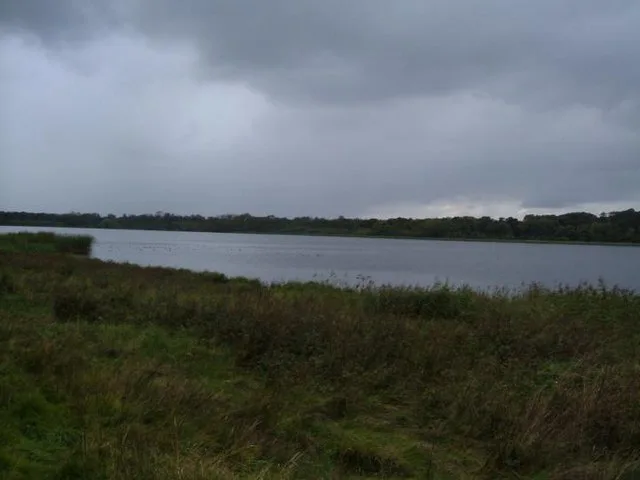
Aqualate Mere
Aqualate Mere is a natural landmark in the United Kingdom.
Frequently asked questions
- Where is Bronze Crucible?
- Bronze Crucible is in the West Midlands, United Kingdom (postcode DY1 4RJ), in the parish of Dudley, unparished area.
- What is Bronze Crucible?
- Bronze Crucible — Public artwork (sculpture) by Andrew Burton.
- How do I get to Bronze Crucible?
- The nearest railway station is Tipton, about 1.9 km away. The nearest town is Lower Penn. Drivers can use postcode DY1 4RJ.
- Is Bronze Crucible free to visit?
- Yes, Bronze Crucible is free to enter.
- How do I get to Bronze Crucible?
- The nearest railway station is Tipton, about 1.9 km away. Drivers can navigate to postcode DY1 4RJ.