
Memorials & monuments · London
Bishopsgate
In or near City of London.
Bishopsgate — a memorial in england-london, United Kingdom.

N Chadwick — CC BY-SA 2.0 via Wikimedia Commons licence

Plan your visit
- Typical visit
- 15 min–45 min
- Nearest railway station
- Liverpool Street · 0.2 km
- Free entry
- Dog-friendly
- Wheelchair accessible
Getting there & planning your visit
Bishopsgate is located in the City of London, with the postcode EC2M 3UE. The nearest railway station is Liverpool Street, which is 0.2 km away. Entry is free, and the site is wheelchair accessible.
About
Bishopsgate is a memorial located in england-london, United Kingdom. Sourced from OpenStreetMap (ODbL licence); see local listings for visitor information, opening hours and admission details.
Photo gallery
See it from the streetimagery from 2024
Imagery © Mapillary contributors, CC BY-SA 4.0
Official information
The artwork 'Action 180: At 9:15 am Sunday 28 May 1967' by Reza Aramesh is part of a series titled 'Site of the Fall – Study of a Renaissance Garden'. It features a hand-carved Carrara marble sculpture that reflects on themes of war and violence, reconstructed from reportage images of the Vietnam War.
From the Wikipedia article
Bishopsgate was one of the eastern gates in London's former defensive wall. The gate's name is traditionally attributed to Earconwald, who was Bishop of London in the 7th century. It was first built in Roman times and marked the beginning of Ermine Street, the ancient road running from London to York (Eboracum). The gate was rebuilt twice in the 15th and 18th centuries, but was permanently demolished in 1760. Bishopsgate gives its name to one of the 25 wards of the City of London, with the City forming the historic and financial centre of Greater London, England. The Ward of Bishopsgate is traditionally divided into Bishopsgate Within, inside the line of the former wall, and Bishopsgate Without beyond it. Bishopsgate Without is described as part of London's East End. The ancient boundaries of the City wards were reviewed in 1994 and 2013, so that the wards no longer correspond very closely to their historic extents. Bishopsgate Without gained a significant part of Shoreditch from the London Borough of Hackney, while nearly all of Bishopsgate Within was transferred to other wards. Bishopsgate is also the name of the street, being the part of the originally Roman Ermine Street (now the A10) within the traditional extent of the Ward.
Excerpt from Wikipedia under CC BY-SA 4.0. See the source article linked in Sources below.
Background
History
In the Roman period it was illegal to bury the dead within the city, so cemeteries were established outside the city gates. There were large burial grounds outside Bishopsgate, on both side of Ermine Street. The wards of London appear to have taken shape in the 11th century, before the Norman Conquest. Their administrative, judicial and military purpose made them equivalent to hundreds in the countryside. The primary purpose of wards like Bishopsgate, which included a gate, appears to be the defence of the gate, as gates were the weakest points in any fortification. The earliest origins of the wards reach back further than the 11th century but their emergence and evolution is uncertain and…
Description
The gate was first built in the Roman era, probably at the time the wall was first built. The road though the gate, Ermine Street (known at this point as Bishopsgate) was in place long before the wall and the gate. The gate is traditionally held to be named after Earconwald, a 7th-century Bishop of London (Bishop of the East Saxons). One of the ward's ancient churches, St Ethelburga-the-Virgin within Bishopsgate, is dedicated to Eorconwald's sister, St Ethelburga of Barking, the first Abbess of Barking Abbey. In 1471, during the Wars of the Roses, the Yorkist-turned supporter of the House of Lancaster Bastard Fauconberg attacked London, trying to force his way across London Bridge and also…
Sourced from Wikipedia under CC BY-SA 4.0.
- Coordinates
- 51.5163, -0.0816
- District
- City of London
- Parish
- City of London, unparished area
- Postcode
- EC2M 3UE
- Parliamentary constituency
- Cities of London and Westminster
- Nearest railway station
- Liverpool Street — 0.2 km
- Official site
- www.neighbourhood.statistics.gov.uk
Sources
- osm: node/4336765075 (ODbL)
- wikipedia: Bishopsgate (CC BY-SA 4.0)
Other places nearby

Bishopsgate Parish Memorial
Memorials & monuments · 0.0 km

Stagnight
Public art & sculpture · 0.0 km

Reclining Nude 1
Public art & sculpture · 0.0 km
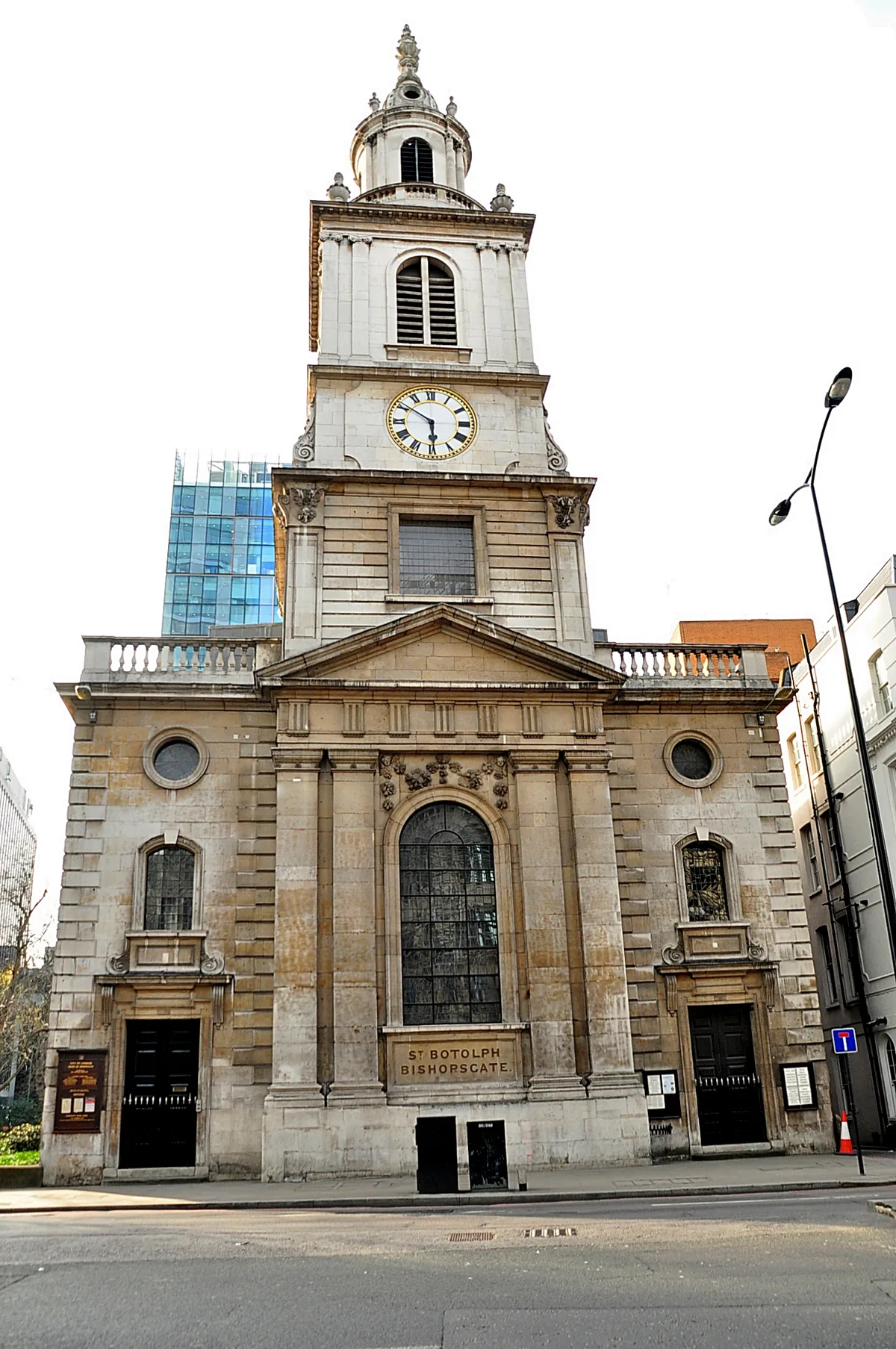
St Botolph-without-Bishopsgate
Historic churches · 0.0 km

Parish Clerks' Company
Memorials & monuments · 0.1 km

Fisher's Folly
Historic houses · 0.1 km
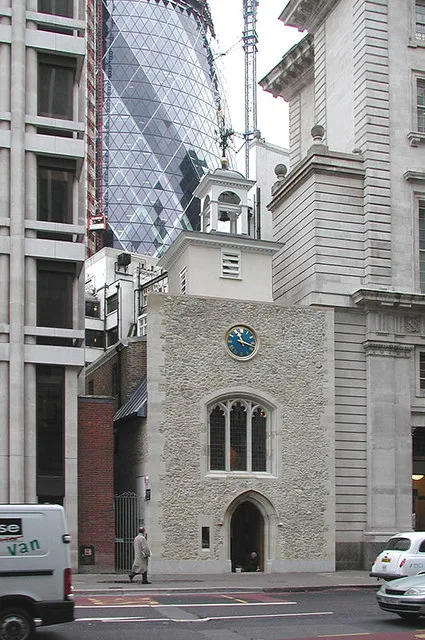
Church of St Ethelburga, Bishopsgate
Historic churches · 0.1 km

Site of the first Bethlehem Hospital
Memorials & monuments · 0.1 km

Andaz Liverpool Street
Hotels · 0.1 km

Great Eastern Railway War Memorial
Memorials & monuments · 0.2 km

The Garden of Floating Words
Public art & sculpture · 0.2 km

For the Child
Memorials & monuments · 0.2 km
Nearby
📷 5Memorials & monuments · London
Bishopsgate Parish Memorial
Bishopsgate Parish Memorial — Grade II listed building-listed memorial in england-london, United Kingdom.
📷 5Public art & sculpture · London
Stagnight
Stagnight — a public art in england-london, United Kingdom.
📷 5Public art & sculpture · London
Reclining Nude 1
Reclining Nude 1 — a public art in england-london, United Kingdom.
📷 5Historic churches · London
St Botolph-without-Bishopsgate
St Botolph-without-Bishopsgate — church in City of London, UK.
📷 5Memorials & monuments · London
Parish Clerks' Company
Parish Clerks' Company — a memorial in england-london, United Kingdom.
📷 5Historic houses · London
Fisher's Folly
Fisher's Folly — former house in Bishopsgate Street, in Bishopsgate Ward, City of London.
Where to eat & stay near Bishopsgate
Places to stay
📷 5Hotels · London
Andaz Liverpool Street
Andaz Liverpool Street — a hotel in england london.
 📷 5
📷 5 📷 5
📷 5Hotels · London
South Place Hotel
South Place Hotel — a hotel in england london.
 📷 5
📷 5Hostels · London
The Liverpool Street Hostel
The Liverpool Street Hostel — a hostel in england london.
 📷 7
📷 7Hotels · London
Canopy by Hilton London City
Canopy by Hilton London City — a hotel in england london. 4-star. Brand: Canopy.
 📷 7
📷 7Places to eat & drink
 📷 5
📷 5 📷 5
📷 5Restaurants · London
Boulebar Spitalfields
Boulebar Spitalfields — a restaurant in england london. Cuisine: french;coffee shop. 5-star. Brand: Boulebar.
 📷 5
📷 5Restaurants · London
Yeye's Noodle & Dumpling
Yeye's Noodle & Dumpling — a restaurant in england london.
 📷 6
📷 6 📷 5
📷 5Historic pubs · London
Jamaica Wine House
Jamaica Wine House in England London, United Kingdom.
 📷 5
📷 5Historic pubs · London
East India Arms
East India Arms in England London, United Kingdom.
More memorials in this region
.jpg?width=1200) 📷 5
📷 5Memorials & monuments · London
1st Surrey Rifles War Memorial
1st Surrey Rifles War Memorial is a memorial in the United Kingdom.
 📷 5
📷 5Memorials & monuments · London
24th East Surrey Division War Memorial
24th East Surrey Division War Memorial is a memorial in the United Kingdom.
 📷 5
📷 5Memorials & monuments · London
Abney Park Cemetery CWGC Cross
Abney Park Cemetery CWGC Cross is a memorial in the United Kingdom.
 📷 5
📷 5Memorials & monuments · London
Admiral Sir John Franklin
Admiral Sir John Franklin is a memorial in the United Kingdom.
Frequently asked questions
- Where is Bishopsgate?
- Bishopsgate is in London, United Kingdom (postcode EC2M 3UE), in the parish of City of London, unparished area.
- What is Bishopsgate?
- Bishopsgate — a memorial in england-london, United Kingdom.
- How do I get to Bishopsgate?
- The nearest railway station is Liverpool Street, about 0.2 km away. The nearest town is City of London. Drivers can use postcode EC2M 3UE.
- Is Bishopsgate free to visit?
- Yes, Bishopsgate is free to enter.
- How do I get to Bishopsgate?
- The nearest railway station is Liverpool Street, about 0.2 km away. Drivers can navigate to postcode EC2M 3UE.