
Historic bridges · London
Battersea Bridge
In or near City of Westminster.
Battersea Bridge is a historic bridge in the United Kingdom.

Wikimedia Commons contributors — see linked file page for photographer and licence licence

Plan your visit
- Typical visit
- 15 min–30 min
- Nearest railway station
- Imperial Wharf · 1.0 km
- Free entry
- Dog-friendly
Getting there & planning your visit
Battersea Bridge is located in Wandsworth, London, with the postcode SW11 3BG. The nearest railway station is Imperial Wharf, approximately 1 km away. Entry to the bridge is free.
About
Battersea Bridge is a named historic bridge in the United Kingdom. Coordinates: 51.4811°, -0.1725°. This entry is part of The Great Britain Guide, a free, ad-free, open-data tourist directory.
Photo gallery
See it from the streetimagery from 2025
Imagery © Mapillary contributors, CC BY-SA 4.0
Official information
SAAS Gallery is a contemporary art gallery located in Chelsea, London, founded by Sofya Abbott in 2018. The gallery focuses on promoting women artists and features both emerging and established creators, while also serving as a social club for educational events.
From the Wikipedia article
Battersea Bridge is a five-span arch bridge crossing the River Thames in London, England. It is situated on a sharp bend in the river, and links Battersea south of the river with Chelsea to the north. The bridge replaced a ferry service that had operated near the site since at least the middle of the 16th century. The first Battersea Bridge was a toll bridge commissioned by John, Earl Spencer, who had recently acquired the rights to operate the ferry. Although a stone bridge was planned, difficulties in raising investment meant that a cheaper wooden bridge was built instead. Designed by Henry Holland, it was initially opened to pedestrians in November 1771, and to vehicle traffic in 1772. The bridge was inadequately designed and dangerous both to its users and to passing shipping, and boats often collided with it. To reduce the dangers to shipping, two piers were removed and the sections of the bridge above them were strengthened with iron girders. Although dangerous and unpopular, the bridge was the last surviving wooden bridge on the Thames in London, and was the subject of paintings by many significant artists such as J. M. W. Turner, John Sell Cotman and James McNeill Whistler, including Whistler's Nocturne: Blue and Gold – Old Battersea Bridge, and his controversial Nocturne in Black and Gold – The Falling Rocket. In 1879 the bridge was taken into public ownership, and in 1885 demolished and replaced with the existing bridge, designed by Sir Joseph Bazalgette and built by John Mowlem & Co. The narrowest surviving road bridge over the Thames in London, it is one of London's least busy Thames bridges. The location on a bend in the river makes the bridge a hazard to shipping, and it has been closed many times due to collisions.
Excerpt from Wikipedia under CC BY-SA 4.0. See the source article linked in Sources below.
Background
History
Chelsea, about 3 mi west of Westminster on the north bank of the River Thames, has existed as a settlement since at least Anglo-Saxon times. The Thames at this point inflects through a sharp angle from a south–north to an east–west flow, and the slow-moving and relatively easily fordable river here is popularly believed to be the site of Julius Caesar's crossing of the Thames during the 54 BC invasion of Britain. Chelsea enjoyed good road and river connections to the seat of government at Westminster and the commercial centre of the City of London since at least the 14th century. It was a centre of the British porcelain industry, and a major producer of baked goods – at peak periods almost…
Sourced from Wikipedia under CC BY-SA 4.0.
- Coordinates
- 51.4811, -0.1725
- District
- Wandsworth
- Parish
- Wandsworth, unparished area
- Postcode
- SW11 3BG
- Parliamentary constituency
- Battersea
- Nearest railway station
- Imperial Wharf — 1 km
- Opening
- {{Start date and age|df=y|1890|7|21}}
Sources
- osm: w378295022 (ODbL)
- wikipedia: Battersea Bridge (CC BY-SA 4.0)
- commons: Battersea Bridge - geograph.org.uk - 493706.jpg (CC BY-SA 4.0)
Other places nearby

James McNeill Whistler
Heritage railway stations · 0.1 km

In Town
Public art & sculpture · 0.1 km

Crosby Hall, London
Gardens · 0.2 km

Mrs Gaskell
Memorials & monuments · 0.2 km

Marc Isambard Brunel and Isambard Kingdom Brunel
Memorials & monuments · 0.2 km

Awakening Sculpture, Roper's Garden
Public art & sculpture · 0.2 km

Awakening
Other places · 0.2 km
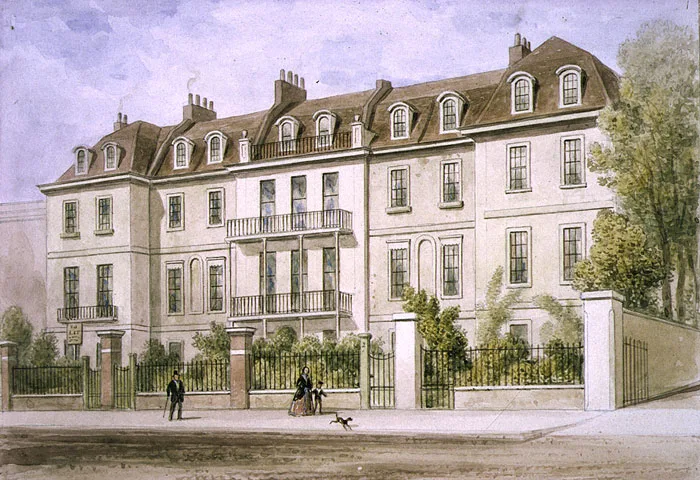
Lindsey House, Chelsea
Historic houses · 0.2 km

Walter Greaves
Memorials & monuments · 0.2 km

Lamp Standard
Heritage railway stations · 0.2 km

Sir Thomas More
Public art & sculpture · 0.2 km

1957 Royal Institute of British Architects Award
Memorials & monuments · 0.2 km
Nearby
📷 5Heritage railway stations · London
James McNeill Whistler
James McNeill Whistler — Public artwork (statue) by Nicholas Dimbleby.
📷 5Public art & sculpture · London
In Town
In Town — a public art in england-london, United Kingdom.
📷 5Gardens · London
Crosby Hall, London
Crosby Hall, London — a garden in england-london, United Kingdom.
📷 5Memorials & monuments · London
Mrs Gaskell
Mrs Gaskell — a memorial in england-london, United Kingdom.
📷 5Memorials & monuments · London
Marc Isambard Brunel and Isambard Kingdom Brunel
Marc Isambard Brunel and Isambard Kingdom Brunel — a memorial in england-london, United Kingdom.
📷 5Public art & sculpture · London
Awakening Sculpture, Roper's Garden
Awakening Sculpture, Roper's Garden in England London, United Kingdom.
Where to eat & stay near Battersea Bridge
Places to stay
 📷 6
📷 6 📷 7
📷 7Hotels · London
Chelsea Harbour Hotel
Chelsea Harbour Hotel — a hotel in england london.
 📷 5
📷 5 📷 5
📷 5Hotels · London
DoubleTree by Hilton Hotel London - Chelsea
DoubleTree by Hilton Hotel London - Chelsea — a hotel in england london. 4-star. Brand: DoubleTree.
 📷 7
📷 7Hotels · London
Sydney House Chelsea
Sydney House Chelsea — a hotel in england london.
 📷 5
📷 5Hotels · London
Sonder – Chelsea Green
Sonder – Chelsea Green — a hotel in england london.
Places to eat & drink
 📷 5
📷 5Restaurants · London
The Cross Keys
The Cross Keys — a restaurant in england london.
 📷 5
📷 5 📷 7
📷 7 📷 5
📷 5Restaurants · London
Gordon Ramsay
Gordon Ramsay — a restaurant in england london.
 📷 5
📷 5Restaurants · London
Maze Grill
Maze Grill — a restaurant in england london.
 📷 5
📷 5More bridges in this region
 📷 5
📷 5 📷 5
📷 5Historic bridges · London
Albert Bridge
Albert Bridge is a historic bridge in the United Kingdom.
 📷 5
📷 5Historic bridges · London
Arnos Park Viaduct
Arnos Park Viaduct is a historic bridge in the United Kingdom.
 📷 5
📷 5Historic bridges · London
Barnes Bridge
Barnes Bridge is a historic bridge in the United Kingdom.
Frequently asked questions
- Where is Battersea Bridge?
- Battersea Bridge is in London, United Kingdom (postcode SW11 3BG), in the parish of Wandsworth, unparished area.
- What is Battersea Bridge?
- Battersea Bridge is a historic bridge in the United Kingdom.
- How do I get to Battersea Bridge?
- The nearest railway station is Imperial Wharf, about 1.0 km away. The nearest town is City of Westminster. Drivers can use postcode SW11 3BG.
- Is Battersea Bridge free to visit?
- Yes, Battersea Bridge is free to enter.
- How do I get to Battersea Bridge?
- The nearest railway station is Imperial Wharf, about 1.0 km away. Drivers can navigate to postcode SW11 3BG.