
Heritage railway stations · East Midlands
Alfred, Lord Tennyson
Also known as: Alfred, Arglwydd Tennyson
In or near Lincoln.
Alfred, Lord Tennyson — Public artwork (statue).
.jpg?width=1200)
Wikimedia Commons contributors — see linked file page for photographer and licence licence
.jpg)
Plan your visit
- Typical visit
- 1 h–2 h
- Nearest railway station
- Lincoln · 1.0 km
- Free entry
Getting there & planning your visit
To visit Alfred, Lord Tennyson, the nearest railway station is Lincoln, which is 1 km away. The postcode for your sat-nav is LN2 1PN. Entry is free.
About
Alfred, Lord Tennyson is a place of interest in Lincolnshire, the East Midlands. Built or established in 1905, it dates from the modern period. It sits within the Lincoln parliamentary constituency. The nearest railway station is Lincoln, about 1.0 km away. Postcode area LN2.
Photo gallery
Official information
Lincoln Cathedral, consecrated in the 11th century, is a significant place of worship and pilgrimage. It attracts visitors with its stunning architecture, rich history, and a variety of events throughout the year.
From the Wikipedia article
Alfred Tennyson, 1st Baron Tennyson (; 6 August 1809 – 6 October 1892) was an English poet. He was Poet Laureate of the United Kingdom during much of Queen Victoria's reign. In 1829 he was awarded the Chancellor's Gold Medal at Cambridge for one of his first pieces, "Timbuktu". He published his first solo collection of poems, Poems, Chiefly Lyrical, in 1830. "Claribel" and "Mariana", which remain some of Tennyson's most celebrated poems, were included in this volume. Some critics described Tennyson as overly sentimental. However, his poems proved popular and brought Tennyson to the attention of well-known writers of the day, including Samuel Taylor Coleridge. Tennyson's early poetry, with its medievalism and powerful visual imagery, was a major influence on the Pre-Raphaelite Brotherhood. Tennyson also focused on short lyrics, such as "Break, Break, Break", "The Charge of the Light Brigade", "Tears, Idle Tears", and "Crossing the Bar". Much of his verse was based on classical mythological themes, such as "Ulysses" and "The Lotos-Eaters". "In Memoriam A.H.H." was written to commemorate his friend Arthur Hallam, a fellow poet and student at Trinity College, Cambridge, after he died of a stroke at the age of 22. Tennyson also wrote notable blank verse, including Idylls of the King, "Ulysses", and "Tithonus". During his career, Tennyson attempted drama, but his plays enjoyed little success. A number of phrases from Tennyson's work have become commonplace in the English language, including "Nature, red in tooth and claw" ("In Memoriam A.H.H."), "'Tis better to have loved and lost / Than never to have loved at all", "Theirs not to reason why, / Theirs but to do and die", "My strength is as the strength of ten, / Because my heart is pure", "To strive, to seek, to find, and not to yield", "Knowledge comes, but Wisdom lingers", and "The old order changeth, yielding place to new". He is the ninth most frequently quoted writer in The Oxford Dictionary of Quotations.
Excerpt from Wikipedia under CC BY-SA 4.0. See the source article linked in Sources below.
Background
Description
featuring Charles Dickens, Archibald Lampman, Walter Scott, Lord Byron, Tennyson, William Shakespeare, and Thomas Moore]] As source material for his poetry, Tennyson used a wide range of subject matter, from medieval legends to classical myths and from domestic situations to observations of nature. The influence of John Keats and other Romantic poets published before and during his childhood is evident from the richness of his imagery and descriptive writing. He also handled rhythm masterfully. The insistent beat of "Break, Break, Break" emphasises the relentless sadness of the subject matter. Tennyson's use of the musical qualities of words to emphasise his rhythms and meanings is…
Sourced from Wikipedia under CC BY-SA 4.0.
- Coordinates
- 53.2351, -0.5353
- County
- Lincolnshire
- District
- Lincoln
- Parish
- Lincoln, unparished area
- Postcode
- LN2 1PN
- Parliamentary constituency
- Lincoln
- Established
- 1905
- Nearest railway station
- Lincoln — 1 km
- Opening
- Daily from Morning Prayer until the end of Evensong or Evening Prayer; charges apply between 10am and 4pm Mon-Sat, and 11.30am-2.30pm Sun.
Sources
- osm: w257786616 (ODbL)
- commons: Statue of Alfred, Lord Tennyson, Lincoln (cropped).jpg (CC BY-SA 4.0)
- wikipedia: Alfred, Lord Tennyson (CC BY-SA 4.0)
Other places nearby

Remains of north tower of Roman East Gate
Historic houses · 0.0 km
.jpg?width=1200)
The Bishop's House
Historic houses · 0.1 km

The Priory And Attached Section Of Close Wall
Abbeys & priories · 0.1 km

Atherstone Place
Historic houses · 0.1 km
Roman Wall Between Eastgate And North Wing Of Eastgate Hotel
Historic houses · 0.1 km

Lincoln Cathedral
Cathedrals · 0.1 km

Diocese of Lincoln
Museums · 0.1 km
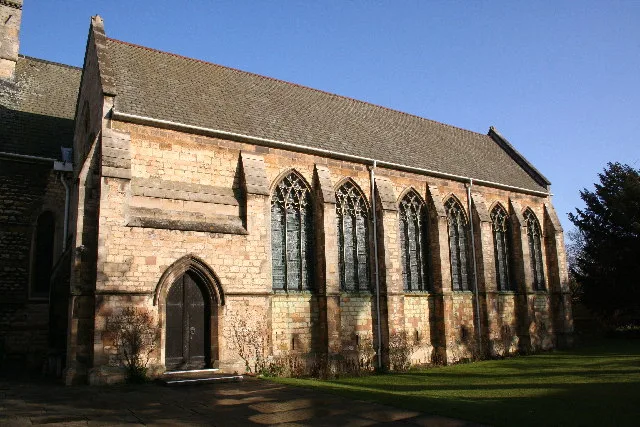
St. Peter in Eastgate, Lincoln
Historic churches · 0.1 km

Close Wall And Tower In The Garden Of Number 10 Close Wall And Tower In The Garden Of Number 2 Close Wall And Tower In The Garde
Gardens · 0.1 km

The Chancery
Historic houses · 0.1 km

Saffron
Restaurants · 0.1 km

Cantilupe Chantry South
Historic houses · 0.2 km
Nearby
📷 3Historic houses · East Midlands
Remains of north tower of Roman East Gate
Remains of north tower of Roman East Gate — a Grade I-listed historic house in england-east-midlands, United Kingdom.
📷 3Historic houses · East Midlands
The Bishop's House
The Bishop's House — Grade I listed building in Lincoln, United Kingdom.
📷 3Abbeys & priories · East Midlands
The Priory And Attached Section Of Close Wall
The Priory And Attached Section Of Close Wall — a Grade I-listed abbey in england-east-midlands, United Kingdom.
📷 3Historic houses · East Midlands
Atherstone Place
Atherstone Place — a Grade I-listed historic house in england-east-midlands, United Kingdom.
📷 3Historic houses · East Midlands
Roman Wall Between Eastgate And North Wing Of Eastgate Hotel
Roman Wall Between Eastgate And North Wing Of Eastgate Hotel — a Grade I-listed historic house in england-east-midlands, United Kingdom.
★ Iconic📷 5Cathedrals · East Midlands
Lincoln Cathedral
World's tallest building 1311–1549; holds a Magna Carta and the famous Lincoln Imp.
Where to eat & stay near Alfred, Lord Tennyson
Places to stay
📷 5B&Bs · East Midlands
Cathedral View Guest House
Cathedral View Guest House — a bed-and-breakfast in england east midlands.
 📷 5
📷 5Hotels · East Midlands
The Old Palace Lodge
The Old Palace Lodge — a hotel in england east midlands.
 📷 5
📷 5 📷 5
📷 5 📷 5
📷 5 📷 7
📷 7Hotels · East Midlands
DoubleTree by Hilton Lincoln
DoubleTree by Hilton Lincoln — a hotel in england east midlands. 4-star. Brand: DoubleTree.
Places to eat & drink
📷 7 📷 5
📷 5Restaurants · East Midlands
Cafe Zoot
Cafe Zoot — a restaurant in england east midlands.
 📷 5
📷 5 📷 5
📷 5Historic pubs · East Midlands
268, High Street
268, High Street in England East Midlands, United Kingdom.
 📷 5
📷 5Cafés · East Midlands
Madame Waffle
Madame Waffle — a café in england east midlands.
 📷 5
📷 5Cafés · East Midlands
Little Lincoln Cafe
Little Lincoln Cafe — a café in england east midlands.
Other places from this era
 📷 5
📷 5Heritage railway stations · London
A Bullet from a Shooting Star
A Bullet from a Shooting Star — Public artwork (sculpture) by Alex Chinneck.
 📷 5
📷 5Heritage railway stations · London
A Pear and a Fig
A Pear and a Fig — Public artwork (sculpture) by Ali Grant.
 📷 5
📷 5Heritage railway stations · London
Admiral Lord Nelson
Admiral Lord Nelson — Public artwork (statue).
.jpg?width=1200) 📷 5
📷 5Heritage railway stations · London
Assembly
Assembly — Public artwork (installation) by Peter Burke.
More places in this region
 📷 5
📷 5Heritage railway stations · East Midlands
Stamford railway station
Stamford railway station — a Grade II-listed railway station in england-london, United Kingdom.
 📷 5
📷 5Heritage railway stations · East Midlands
Peakirk railway station
Peakirk railway station — a Grade II-listed railway station in england-london, United Kingdom.
 📷 3
📷 3Heritage railway stations · East Midlands
Boy and Gander
Boy and Gander — Public artwork (sculpture).
 📷 3
📷 3Heritage railway stations · East Midlands
Lion statue
Lion statue — Public artwork (sculpture).
Frequently asked questions
- Where is Alfred, Lord Tennyson?
- Alfred, Lord Tennyson is in Lincolnshire, the East Midlands, United Kingdom (postcode LN2 1PN), in the parish of Lincoln, unparished area.
- What is Alfred, Lord Tennyson?
- Alfred, Lord Tennyson — Public artwork (statue).
- How do I get to Alfred, Lord Tennyson?
- The nearest railway station is Lincoln, about 1.0 km away. The nearest town is Lincoln. Drivers can use postcode LN2 1PN.
- When was Alfred, Lord Tennyson built?
- Built or established in 1905.
- Is Alfred, Lord Tennyson free to visit?
- Yes, Alfred, Lord Tennyson is free to enter.
- How do I get to Alfred, Lord Tennyson?
- The nearest railway station is Lincoln, about 1.0 km away. Drivers can navigate to postcode LN2 1PN.