
Public art & sculpture · London
Agriculture
Also known as: Amaeth
In or near City of Westminster.
Agriculture — a public art in england-london, United Kingdom.

Peter Trimming — CC BY-SA 2.0 via Wikimedia Commons licence

Plan your visit
- Typical visit
- 1 h–2 h
- Nearest railway station
- St. James's Park · 0.5 km
- Free entry
- Dog-friendly
- Limited wheelchair access
Getting there & planning your visit
To visit the public art installation "Agriculture," head to Westminster, London, with the postcode SW1A 1AA. The nearest railway station is St. James's Park, located 0.5 km away. Entry is free, but please note that wheelchair accessibility is limited.
About
Agriculture is a public art located in england-london, United Kingdom. Sourced from OpenStreetMap (ODbL licence); see local listings for visitor information, opening hours and admission details.
Photo gallery
See it from the streetimagery from 2026
Imagery © Mapillary contributors, CC BY-SA 4.0
From the Wikipedia article
Agriculture is the practice of cultivating the soil, planting, raising, and harvesting both food and non-food crops, as well as livestock production. Broader definitions also include forestry and aquaculture. Agriculture was a key factor in the rise of sedentary human civilization, whereby farming of domesticated plants and animals created food surpluses that enabled people to live in the cities. While humans started gathering grains at least 105,000 years ago, nascent farmers only began planting them around 11,500 years ago. Sheep, goats, pigs, and cattle were domesticated around 10,000 years ago. Plants were independently cultivated in at least 11 regions of the world. In the 20th century, industrial agriculture based on large-scale monocultures came to dominate agricultural output. As of 2021, small farms, of which the vast majority are one hectare (about 2.5 acres) or smaller, produce about one-third of the world's food. Moreover, five of every six farms in the world consist of fewer than 2 hectares (4.9 acres) and take up only around 12% of all agricultural land. In terms of total land use, large farms are dominant. While only 1% of all farms globally are greater than 50 hectares (120 acres), they encompass more than 70% of the world's farmland. Further, nearly 40% of all global agricultural land is found on farms larger than 1,000 hectares (2,500 acres). Farms and farming greatly influence rural economics and greatly shape rural society, affecting both the direct agricultural workforce and broader businesses that support the farms and farming populations. The major agricultural products can be broadly grouped into foods, fibers, fuels, and raw materials (such as rubber and timber). Food classes include cereals (grains), vegetables, fruits, cooking oils, meat, milk, eggs, and fungi. Global agricultural production amounts to approximately 11 billion tonnes of food, 32 million tonnes of natural fibers and 4 billion m3 of wood. However, around 14% of the world's food is lost from production before reaching the retail level. Modern agronomy, plant breeding, agrochemicals such as pesticides and fertilizers, and technological developments have sharply increased crop yields, but also contributed to ecological and environmental damage. Selective breeding and modern practices in animal husbandry have similarly increased the output of meat, but have raised concerns about animal welfare and environmental damage. Environmental issues include contributions to climate change, depletion of aquifers, deforestation, antibiotic resistance, and other agricultural pollution. Agriculture is both a cause of and sensitive to environmental degradation, such as biodiversity loss, desertification, soil degradation, and climate change, all of which can cause decreases in crop yield. Genetically modified organisms are widely used, although some countries ban them.
Excerpt from Wikipedia under CC BY-SA 4.0. See the source article linked in Sources below.
Background
History
The development of agriculture enabled the human population to grow many times larger than could be sustained by hunting and gathering. Agriculture began independently in different parts of the globe, and included a diverse range of taxa, in at least 11 separate centers of origin. Wild grains were collected and eaten from at least 105,000 years ago. In the Paleolithic Levant, 23,000 years ago, cereals cultivation of emmer, barley, and oats has been observed near the sea of Galilee. Rice was domesticated in China between 11,500 and 6200 BC with the earliest known cultivation from 5700 BC, followed by mung, soy and azuki beans. Sheep were domesticated in Mesopotamia between 13,000 and 11,000…
Sourced from Wikipedia under CC BY-SA 4.0.
- Coordinates
- 51.5017, -0.1408
- District
- Westminster
- Parish
- Westminster, unparished area
- Postcode
- SW1A 1AA
- Parliamentary constituency
- Cities of London and Westminster
- Nearest railway station
- St. James's Park — 0.5 km
Sources
- osm: node/5353083727 (ODbL)
- wikipedia: Agriculture (CC BY-SA 4.0)
Other places nearby

Manufacture
Public art & sculpture · 0.0 km

Naval and Military Power
Public art & sculpture · 0.0 km
.jpg?width=1200)
Victoria Memorial
Memorials & monuments · 0.0 km

Art and Science
Public art & sculpture · 0.0 km

Progress
Public art & sculpture · 0.0 km

Buckingham Palace
Palaces · 0.1 km

North Screen To Buckingham Palace Forecourt With Gateway To Gardens
Palaces · 0.1 km

Buckingham Palace
Castles · 0.2 km

Canada Memorial
Memorials & monuments · 0.2 km

Sullivan's Plaque
Memorials & monuments · 0.2 km

Wilfrid Scawen Blunt
Memorials & monuments · 0.2 km
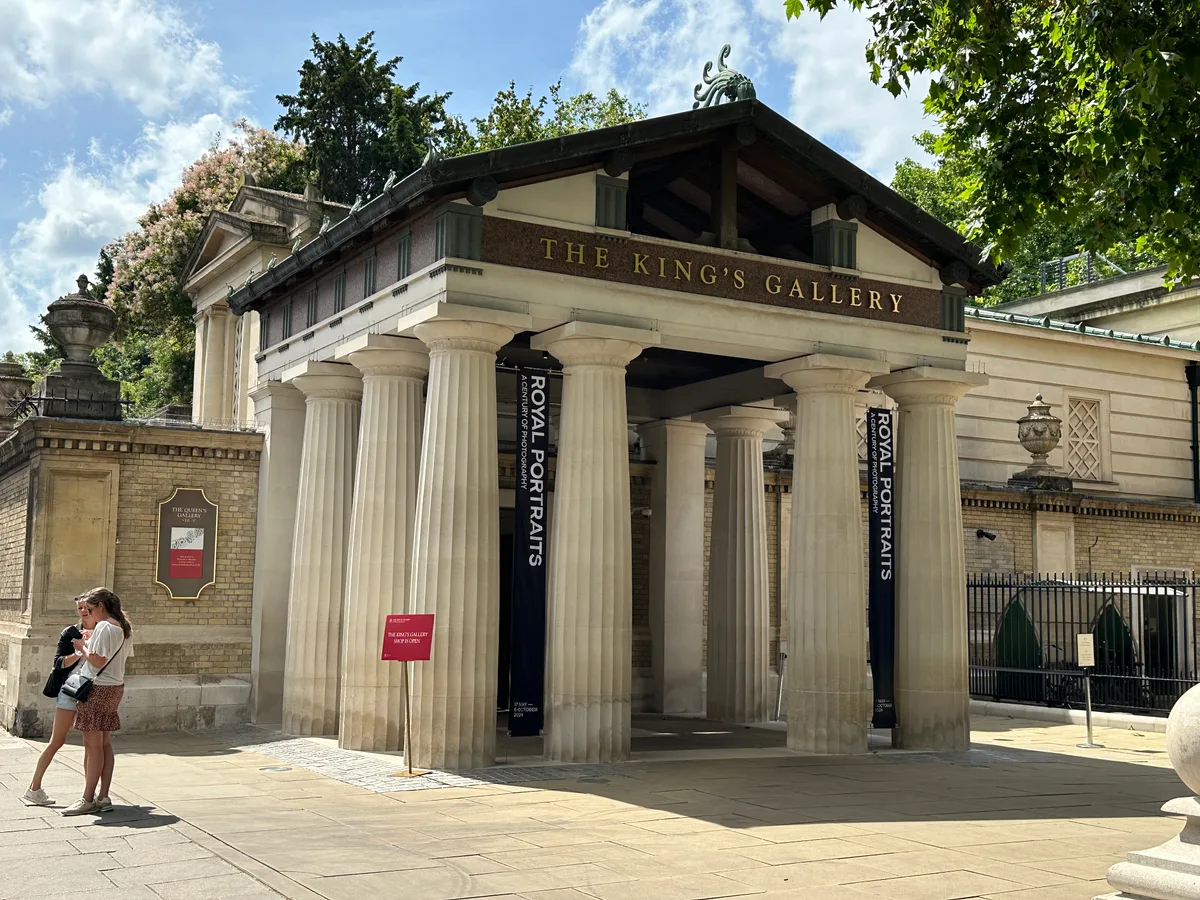
King's Gallery
Galleries · 0.2 km
Nearby
📷 5Public art & sculpture · London
Manufacture
Manufacture — a public art in england-london, United Kingdom.
📷 5Public art & sculpture · London
Naval and Military Power
Naval and Military Power — a public art in england-london, United Kingdom.
📷 5Memorials & monuments · London
Victoria Memorial
Victoria Memorial — Monument, dating to 1911.
📷 5Public art & sculpture · London
Art and Science
Art and Science — a public art in england-london, United Kingdom.
📷 5Public art & sculpture · London
Progress
Progress — a public art in england-london, United Kingdom.
★ Iconic📷 10Where to eat & stay near Agriculture
Places to stay
 📷 5
📷 5Hotels · London
Taj 51 Buckingham Gate Suites and Residences
Taj 51 Buckingham Gate Suites and Residences — a hotel in england london. Brand: Taj.
 📷 5
📷 5Hotels · London
The Rubens at the Palace
The Rubens at the Palace — a hotel in england london.
 📷 5
📷 5 📷 7
📷 7 📷 7
📷 7Hotels · London
St James's Hotel and Club
St James's Hotel and Club — a hotel in england london.
 📷 6
📷 6Places to eat & drink
📷 7 📷 5
📷 5 📷 5
📷 5 📷 5
📷 5Restaurants · London
Langan's Brasserie
Langan's Brasserie — a restaurant in england london.
 📷 7
📷 7 📷 5
📷 5Restaurants · London
Quaglino's
Quaglino's — a restaurant in england london. Cuisine: french;italian pizza;seafood.
More places in this region
 📷 5
📷 5 📷 5
📷 5Public art & sculpture · London
A Conversation with Oscar Wilde
A Conversation with Oscar Wilde — Public artwork (sculpture).
 📷 5
📷 5Public art & sculpture · London
A Sculpture for Mary Wollstonecraft
A Sculpture for Mary Wollstonecraft — Public artwork (sculpture) by Maggi Hambling.
 📷 5
📷 5Public art & sculpture · London
A Slice of Reality
A Slice of Reality — Public artwork (installation) by Richard Wilson.
Frequently asked questions
- Where is Agriculture?
- Agriculture is in London, United Kingdom (postcode SW1A 1AA), in the parish of Westminster, unparished area.
- What is Agriculture?
- Agriculture — a public art in england-london, United Kingdom.
- How do I get to Agriculture?
- The nearest railway station is St. James's Park, about 0.5 km away. The nearest town is City of Westminster. Drivers can use postcode SW1A 1AA.
- Is Agriculture free to visit?
- Yes, Agriculture is free to enter.
- How do I get to Agriculture?
- The nearest railway station is St. James's Park, about 0.5 km away. Drivers can navigate to postcode SW1A 1AA.